
- Michele Filgate, “‘Fear can be the enemy of empathy’: Leslie Jamison on Ferguson, Ebola and America’s painful 2014” (Salon)
- Mignon Fogarty, “2014 Word of the Year: Adulting” (Grammar Girl)
- , “Like Pushing an Elephant Into a Volkswagen” (The Morning News)
- Alissa Quart, “Hypereducated and on Welfare” (Elle)
- Xan Rice, “Miracle of the Tsunami” (New Statesman)
- Candace Rose Rardon, “The Power of (Not) Unplugging” (Intelligent Travel)
- Marybeth Seitz-Brown, “Young Women Shouldn’t Have to Talk Like Men to Be Taken Seriously” (Slate)
Category Archives: Reading
finally cleared out my drafts
Nothing too exciting, but you may enjoy my epic post about Samantha’s Secret Room, Insufferable Cousin Josh, and the worst. ending. ever. (Read this post first for context.)
Some things I read this month
- Wei-Huan Chen, “Not so ‘bad’: Why we need Roxane Gay” (Journal and Courier Online)
- Felicity Cloake, “How to make the perfect grilled cheese sandwich” (The Guardian)
- Eric Felton, “The Road to Wellville” (National Geographic Travel)
- Elisa Gabbert, “How Writers Read (Vol. 1)” (The Believer Logger)
- Roxane Gay, “Only Words” (The Toast)
- Johannah King-Slutzky and Joe Howley, “In Which Three Adults Discuss A Wrinkle in Time Seriously and At Length” (The Toast)
- John Lanchester, “Shut Up and Eat” (The New Yorker)
- Edan Lepucki, “I Just Didn’t Like Her: Notes on Likeability in Fiction” (The Millions)
- Nick Ripatrazone, “Gestation of Ideas: On Vertical Writing and Living” (The Millions)
- Jon Sands, “So That If I Died It Mattered” (The Millions)
13: Bad Feminist
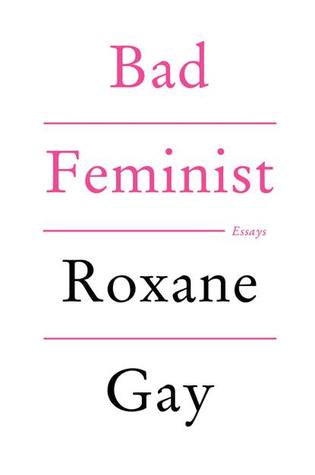 Bad Feminist: Essays by Roxane Gay
My rating: 4 of 5 stars
Bought at Chapters on Robson.
Read August – November 2014.
When feminism falls short of our expectations we decide the problem is with feminism rather than with the flawed people who act in the name of the movement. (“Introduction,” x)
Ok, so it looks like I took forever to read this, but it was mostly off-and-on during Sept/Oct. I’d read most of these essays before, so even though the book was new, it was almost like a re-read and I didn’t feel the need to race through.
She is grieving, after all, and in grief, there is a certain amount of indulgence for bad behavior. Sorrow allows us a freedom happiness does not. (“Reaching for Catharsis,” 114)
I don’t typically read books when they’re newly released, and reading Bad Feminist (and An Untamed State earlier this year) at the same time as everyone else and their dog reminded me why I prefer reading random backlist over new releases. The cacophony of opinions on new releases is… overwhelming. I mean, yes, I can ignore it, and I do try for the most part, but it still feels like everything there is to be said has been said many times over (whether that’s true or not) and makes me less interested in writing about the book myself. This is probably weird. Whatever. Here’s Roxane’s Bad Feminist page! Go read what other people had to say. 😉
Or just read it. It’s on basically every best nonfiction book list of 2014.
The solutions are obvious. Stop making excuses. Stop saying women run publishing. Stop justifying the lack of parity in prominent publications that have the resources to address gender inequity. Stop parroting the weak notion that you’re simply publishing the best writing, regardless. There is ample evidence of the excellence of women writers. Publish more women writers. If women aren’t submitting to your publication or press, ask yourself why, deal with the answers even if those answers make you uncomfortable, and then reach out to women writers. If women don’t respond to your solicitations, go find other women. Keep doing that, issue after issue after issue. Read more widely. Create more inclusive measures of excellence. Ensure that books by men and women are being reviewed in equal numbers. Nominate more deserving women for the important awards. Deal with your resentment. Deal with your biases. Vigorously resist the urge to dismiss the gender problem. Make the effort and make the effort and make the effort until you no longer need to, until we don’t need to keep having this conversation. (“Beyond the Measure of Men,” 171-172)
Best of? I think “What We Hunger For” (fingers crossed her next book—titled Hunger—is connected to this essay). I also esp. like: “Not Here to Make Friends” (on unlikable female characters) and “The Politics of Respectability”:
We must stop pointing to the exceptions—these bright shining stars who transcend circumstance. We must look to how we can best support the least among us, not spend all our time blindly revering and trying to mimic the greatest without demanding systemic change. (“The Politics of Respectability,” 260)
Some things I read this month
- Hannah Gerson, “One Long Country Song: What Friday Night Lights Taught Me About Storytelling” (The Millions)
- Kathleen Hale, “‘Am I being catfished?’ An author confronts her number one online critic” (The Guardian)
- Jessica Lahey, “How Stephen King Teaches Writing” (The Atlantic)
- Jen Sookfong Lee, “When the media fog looks eerily familiar“
- Lauren Markham, “The New Farmers” (Orion)
- Melissa Martin, “Do You Know About Jian” (Nothing In Winnipeg)
- Jon Michaud, “S. E. Hinton and the Y.A. Debate” (The New Yorker)
- Emily Nussbaum, “The Female Bad Fan” (The New Yorker)
- Brandon Schultz, “Frankie Grande on Big Brother and the Hetero-Homo ‘Zankie’ Showmance That Had Everyone Talking” (Out)
- Brandon Schultz, “Big Brother Star Zach Rance Sets Record ‘Straight’ on Frankie Grande Showmance” (Out)
Some things I read this month
- Sonya Chung, “On the Nightstand: On Deciding What to Read Next” (The Millions)
- Michelle Huneven, “The Trouble with Writing” (The Millions)
- Paige Brown Jarreau, “Why Every Journalism Student Should Blog” (SciLogs)
- Steven Pinker, “Why Academics Stink at Writing” (The Chronicle)
Some things I read this month
- Kerry Clare, “If Life Gave Me Lemons” (Joyland)
- Timothy Denevi, “The Historical Precursor to ADHD” (The Atlantic)
- Rebecca Mead, “The Pleasure of Reading to Impress Yourself” (The New Yorker)
- Matt Zoller Seitz, “Different Rules Apply” (MZS.)
- Dani Shapiro, “A Memoir Is Not a Status Update” (The New Yorker)
Some things I read this month
- Jessa Crispin, “An Interview with Pamela Bannos” (about Vivian Maier; Bookslut)
- Roxane Gay, “Noble Things” (fiction; A Public Space)
- Maria Konnikova, “Being a Better Online Reader” (The New Yorker)
- Sarah Menkedick, “Notes from the Milk Cave” (The Paris Review)
- Joyce Carol Oates, “To Invigorate Literary Mind, Start Moving Literary Feet” (from 1999; The New York Times)
- Vanessa Veselka, “Green Screen: The Lack of Female Road Narratives and Why it Matters” (The American Reader)
12: Summer Sisters

My rating: 3 of 5 stars
From the Fall 2013 VPL Book Sale.
Read in June 2014.
Victoria (Vix) is a lower middle class / working class kid in Santa Fe. Caitlin is the popular new kid in school. At the end of the year (6th grade), Caitlin asks Vix to spend the summer with her at her father’s summer home. Eventually, Vix’s parents agree to let her go.
Vix is the oldest of 4 kids. Her youngest brother has muscular dystrophy. Caitlin has a brother, Sharkey, who doesn’t talk much and hums. Also a dog. They live with her father, Lamb, year-round. (Lamb is short for Lambert. Sharkey is also Lambert. He was going to be called “Bert” but his toddler enthusiasm for sharks saved him fro m that fate.)
Lamb’s summer home is on Martha’s Vineyard. At first, Vix thinks Lamb is struggling with money because the house is rundown and filled with shabby furniture and it smells. But obvs. he’s a trust fund kid. (He’s Lambert III, Sharkey’s IV.) Lamb and his sister were raised by their imperious and racist grandmother after their parents were killed whilst drunk-driving at age 25. Good times.
Vix makes it through the summer, unlike Caitlin’s past guests, and keeps returning year after year. After the first summer, Caitlin tells Vix she’s going to private school. Lamb and his new wife, Abby, arrange a scholarship for Vix at Caitlin’s school.
Caitlin and Vix are bffs during the summers (“summer sisters”) but during the school year C ignores V. Of course. Vix does well at school. She gets into Harvard, though she suspects it is less her grades and more her connections. Caitlin gets accepted at Wellesley, but goes traveling instead.
There are boys. Natch. Sharkey turns out well (my favorite bit!). V’s family falls apart. C is an asshat. Not sure why, really. That was my main quibble. I guess some people just are. No reason.
Some things I read this month
- Nadia Bozak, “Last Word: Nadia Bozak on writing intuitively” (Quill & Quire)
- Jared Gottlieb, “The Art of Mindful Photography” (Intelligent Travel)
- Blanche Howard, “The Stories We Tell” (guest post at Allyson Latta’s blog)
- Leslie Madsen-Brooks, “On fear at 39” (The Clutter Museum)
- Anne Helen Petersen, “Why You Should Read Like A Teen Again” (Buzzfeed)
- Kate Petersen, “Lives in Letters” (The Millions)
- Robert Reid, “The Ultimate Digital Detox: Walking” (Intelligent Travel)
- Sam Sacks, “Absent Friends: Lean Years of Plenty” (on Katherine Mansfield’s book reviews; Open Letters Monthly)
- Brittani Sonnenberg, “Home as a Verb: Writers on Choosing to Live Overseas” (The Millions)
- Sam Stephenson, “An Absolute Truth: On Writing a Life of Coltrane” (The Paris Review)
- James Wood, “On Not Going Home” (London Review of Books)
 The Remainder Table