Author Archives: Theryn

BookCamp Vancouver 2010 – Part 2

From Paper to ECatalogues: The complicated problem of replacing something simple

The first session I attended was about shifting publishers’ catalogs from paper to digital (these are the catalogs that publishers use to sell books to booksellers). I decided to go this one because it’s an example of a print to digital shift that is actually happening (not hypothetical, like the death of the book ;-)).

They started by noting how frequently paper catalogs have to be put out due to corrections, additions, etc. A new paper book is published every half-hour (300,000k / year) just in the US. A benefit of ecatalogs is that they can be constantly updated, so the listings are always current.

One important thing that ecatalogs enable is curation. With an ecatalog, salespeople who are familiar with their clients’ interests can create custom catalogs tailored to their interests. That is, if a salesperson knows that a client is interested in books on X, Y, and Z, she can put together a catalog that only contains books on those topics. (The flip side is that a custom catalog precludes serendipity.)

Most books are sold and bought by people who haven’t read them (wait, what? you’re not reading 300k books/year? slacker ;-)), so the catalog copy (kind of like a jacket blurb) is really important. Most books are bought on this basis. Catalog copy is not written by the author (who does write it? someone at publishing house, I guess?).

There’s a romanticizing of new books, but the backlist is really important. (Assume ecatalog is better for backlist, keeps it visible, whereas print would just feature new releases?)

@chelseathe In the world of 3000000 titles, the curatoial role of the sales rep becomes even more important #ecat

@boxcarmarketing The role of the sales rep is even more important with ecatalogues  #ecat

Book industry is cutting edge! The ISBN innovation (assigning an individual # to each edition of a book) in ‘80s came from within the book industry. Apparently, this is one reason why Jeff Bezos decided Amazon would sell books—they were ready for the internet.

Challenges of going digital: clients must be able to flip, browse through catalog as quickly online as in print. There can’t be any refresh time. Need to be able to move from one book to the next seamlessly, as if flipping through a paper catalog.

I perked up when they said this, because OMG, yes. This is designing with the user in mind. I want to contrast it with my experiences trying to read ebooks on SFU Library website. Gah, awful, will not use unless desperate. Now, I’m no Luddite, so why not?

  1. Major refresh/lag time, which is super annoying.
  2. Too much visual clutter to read onscreen.
  3. If you try to skim through the book to see if it will be useful to you, i.e. flip, as you would with a paper book, a warning pops up saying you’re going too fast (this, as you’re weeping in frustration at the lag time), and you have to confirm that you are not stealing the book before you can continue. No, I am not joking.
  4. If you decide that there’s a portion of the book that will be useful to you (say, one chapter) and and you decide to print it out to read offline because of the uber-annoying interface, it will probably tell you you’ve exceeded your page quota before you get all the pages you want printed. Yes, I only needed 2/3 of that chapter, thanks.
  5. So, after all that aggravation, you end up having to make the 2-hour round trip to the library anyway to get the paper book. Grrr.

It’s pretty obvious that these ebooks are designed from the pov that copyright must be protected at all costs and all readers are thieves. What I’m not clear on is why they even bother, unless it’s to sour readers on the whole experience so they flee from ebooks forever (I don’t think that’s going to happen). I mean, they definitely  discouraged me from making use of these ebooks unless I can’t make a trip to the library, but it’s not like I’m rushing out to buy a copy of the book instead; I’m just taking the paper version out of the library.

Moral of this long-winded anecdote: Be Ye Not Annoying to Your Readers.

The number one  thing that sells a book is the cover, not the description, so it’s important that the cover image be prominent (Raincoast has it at 1/3 screen). (Takeaway: adding images to TC was a great idea.)

Right now, they are using ecatalogs in conjunction with print catalogs. Going cold turkey is not the most efficient because of the learning curve. It’s easier for sales reps to sit down with a client and flip through a paper catalog together. Also, they want people to choose to use the ecatalog, not force them to use it.

@chelseathe Think of the ecatalogue as just another tool to add on to the print, not as ‘the future’ #ecat

Sales reps generally make a lot of annotations in their catalogs. They have a master copy for themselves and have to transfer (rewrite) these annotations for clients. The ecatalog software allows sales reps to make both public and private annotations on the book listings, which eliminates the necessity of repetitively copying these notes (can just refer clients to the ecatalog).

(I think this’d be something to think about for TC, but I’d like it to be hidden, i.e. click to read notes/comments, because I want to keep visual clutter to a minimum.)

Publishers are also able to link from a book’s listing to book trailers, author website, publisher website, etc. (Similar to what we’re trying to encourage in author bios.)

@boxcarmarketing Cool – BookNet’s ecatalogue system will link to video and audio  #ecat

Yesterday: introduction

Tomorrow: recap of the second session
Dignity

The dignity pay confers upon work.  I think this about sums it up.  So let this be a warning to you, citizen journalism enthusiasts.  In the end, what you are doing really is enhancing somebody else’s bottom line.  And think for a minute what it means when you throw yourself into working for a place, as I did, without first walking into the company’s human resources office to sign some paperwork that legally binds you and your employee to a relationship.

Mayhill Fowler

For-profits should be banned from using (in more ways than one) volunteers.

If you want to volunteer, choose a non-profit.

BookCamp Vancouver 2010 – Part 1

One day in early August I saw someone on Twitter mention BookCamp Vancouver registration was open. Intrigued by the name, I went to see what it was about. Well, it turned out to be a one-day UNconference (modeled on BarCamp) about books and publishing and reading—“BookCamp Vancouver 2010 Unconference: Exploring New Ideas in Books, Publishing and the Future of Reading”—and it was being held at SFU downtown (so convenient!) and it was free (the perfect price for a perpetual student!). So I registered.

I figured at the very least I’d get an Absolute Blank article out of the deal.

In the end I found a supervisor for my committee (woohoo!), met TC’s current Best of the Boards winner in person, had a (much-needed) day away from working on comps essays and SSHRC proposal, got lots of great ideas, both about (e)books/writing/reading for my research and for generating support for Toasted Cheese, and yes, got more than enough material for an AB article. BookCamp ftw!

Unsurprisingly, when I sat down to write a post recapping the day, it ended up being more than a single post. So here’s my recap, broken up into six parts, article to come sometime in the future. Haven’t quite figured out the angle yet, but maybe a more general “what to expect at an unconference” kind of thing?

I’ve interspersed my notes—taken on my phone, haha! (is the use of electronic devices at a book conference ironic? discuss) and fleshed out here—with my tweets and some tweets from other attendees.

At #bcvan10 … first attempt at livetweeting! 9:37 AM Oct 1st via Seesmic for Android

Tomorrow: recap of first session.

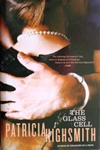
18: The Glass Cell

The Glass Cell by Patricia Highsmith

Hmm, I haven’t read any Highsmith since 2005? How did that happen? Hmm. Well, I picked up two at The Book Shop this summer so I can now rectify that. (Although, I have to say there’s something to be said for consuming a favorite author’s work slowly, especially when you know their ouevre is finite.)

In the The Glass Cell, the MC is an ordinary guy who is wrongly convicted of a crime. The first half of the book covers his six years in prison; the second half what happens when he returns “home” (i.e. to where his wife now lives). This being Highsmith, I don’t think I’m being spoilery by saying there is no cheesy TV movie–style happy ending. What happens is pretty much what you expect to happen when you’re not expecting a happy ending.

TGC is billed as a psychological thriller, but that’s not really accurate. It works as a psychological study, but it’s lacking the sense of suspense (I was never surprised or on the edge of my seat, er, pillow) that Highsmith’s more well-known books have. It’s not thrilling. It is sad. It was almost like reading long-form journalism (where you already know the outcome, but you’re reading to see how the MC went from A to B), rather than a novel. If you’re looking for cheery escapism, this is not your book.

Discover an Unknown

The e-book is good news for some. Big-name authors and novels that are considered commercial are increasingly in demand as e-book readers gravitate toward best sellers with big plots. Unlike traditional bookstores, where a browsing customer might discover an unknown book set out on a table, e-bookstores generally aren’t set up to allow readers to discover unknown authors, agents say. Brand-name authors with big marketing budgets behind them are having the greatest success thus far in the digital marketplace.

It’s a different story for debut fiction writers and those with less commercial potential, who might have print runs of 10,000 copies or less. [It’s] difficult to sell a debut novel about small-town life because many editors are no longer committing to new writers with the expectation that their story-telling skills will evolve with the second, third and fourth books. In the past, many literary authors were able to build careers because of such patience.

Jeffrey A. Trachtenberg

Feelings

[A]cknowledge the reality of other people’s feelings. Don’t deny feelings like anger, irritation, fear, or reluctance; instead, articulate the other person’s point of view.  … Experts say that denying bad feelings intensifies them; acknowledging bad feelings allows good feelings to return.

Gretchen Rubin

Domestic Objects

In The Comfort of Things, the anthropologist Daniel Miller refutes “the myth of materialism,” the assumption that “our relationships to things” thrive “at the expense of our relationships to people.” He argues, on the contrary, that our experiences with objects and people “are much more akin and entwined than is commonly accepted.” Based on the ethnographic study that he conducted in a South London neighborhood, the book shows that domestic objects not only represent their owners but also accrue meanings from the relationships that their possessors have with other people. Inevitably some of the objects in the households he visited had been intentional or unintentional legacies: They were left to their owners by family members or friends now dead, or, more simply, they were what was left of these loved ones. Photographs, clothes, jewelry, paintings, sports equipment, figurines, tools, and music CD’s are typical of the objects through which survivors remembered, indeed, continued to relate to, those who were gone, and most of the objects were on display in their homes.

Deborah Kaplan

Like a Street

I’ve taken to Twitter like a duck to water. Its simplicity allows the user to customize the experience with relatively little input from the Twitter entity itself. I hope they keep it simple. It works because it’s simple. I was never interested in Facebook or MySpace because the environment seemed too top-down mediated. They feel like malls to me. But Twitter actually feels like the street. You can bump into anybody on Twitter.

William Gibson

Prior Decisions

As a teacher I often think of Thoreau’s dictum. Much of the trouble that writers get into is caused by cart-before-the-horse disease. Writers fixate on the successful final product, forgetting that they will only create that product if they start at the beginning and get the process right. I’ve found that most writers embarking on a memoir can already picture the jacket of the book. They can also see the narrative line of their story in its seamless chronology. Their only problem is how to find an agent and get the book published. They have thought of everything except how to write the book: all the prior decisions—matters of shape, content, tone, and attitude.

William Zinsser