
Thousands of people might only read on their iPads or Kindles in the future; they may never buy another printed-on-paper novel. Thousands more will never have books; they will tell their stories by firelight and kerosene lamp in a circle of people as they always have … . And thousands more of us will only read books we can hold in our hands and pass on.
Category Archives: Reading
21: In the Fold
In the Fold by Rachel Cusk
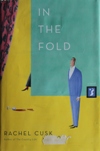
First new-to-me author in a while. I’d seen Rachel Cusk mentioned/quoted a few places this year and she sounded like someone I might like to read, so when I saw a couple of her books at the library sale I picked them up. And I still think that might be the case, but I wasn’t particularly enthused by In the Fold.
In the Fold is about Michael, who is invited to his university roommate Adam’s sister’s 18th birthday party. He goes to the party, at the family home (estate? farm?), and develops an impression of the Hanburys that he carries with him throughout his life (eccentric, bohemian, etc.). He starts a career, marries, has a son, and falls out of touch with Adam, though he keeps thinking about him and his family. As his marriage goes south, he contacts Adam and is invited to visit. Michael becomes reacquainted with the family and realizes they’re not so much charmingly eccentric as boorish and self-centered.
At first I thought, maybe it’s just too British (i.e. maybe I’m just not getting it). I do think there’s a whole class thing going on here, the nuances of which I, in my provincial North-American-ness cannot fully understand. But I don’t know, it was more that all the characters were unpleasant to be around. Yes, even 3-year-old Hamish. It a very tiring read. I don’t think characters need to be likable (in the sense you want your friends and family to be likable) but they need to have some kind of appeal. (Tom Ripley isn’t likable—he’s a psychopath!—but he is fascinating.) Or else there needs to be some kind of urgency that propels the reader forward. But there was no urgency. And the only emotion these characters generated was a halfhearted impulse to slap them upside the head.
Actually, my mention of Tom Ripley has helped me pin down the issue: I think it was that it was that there was no doubt that the reader was supposed to find these characters unpleasant. In a character study, I want to be more conflicted about the characters, to be drawn to—despite his/her faults—the despicable character or to be repulsed by—despite his/her attributes—the virtuous character. Here everyone was unrelentingly mean and selfish and vapid. Which I suppose is a statement on modern society, but… meh.
At any rate, Cusk’s writing was very good, so I will try again with the second book I picked up (Arlington Park).
Silver Lining
It seems to me that if you’re going to spring for an actual book instead of an electronic edition, you might as well buy the most beautifully designed one you can find. (Perhaps that’s the silver lining in this publishing revolution — actual, physical books are going to have to get even more beautiful in order to survive.)
The medium of creation and consumption is critical
One could argue that writing is writing – it’s all communication – whether it’s scratches on a cave wall, glyphs in stone, ink on papyrus, pencil on paper, typed characters on bond stationery, or digits in the ether. I disagree. In writing and reading, no less than in art, the medium of creation and consumption is critical to a work’s effect. That’s not to say that writing longhand is better than writing on a typewriter, or that writing on a typewriter is better than writing on a laptop; rather, it’s to say that each of these acts is different from the others and will yield different types of prose. All writers and even the most casual readers sense this.
Violating the contract
In his essay “Mr. Difficult,” [Jonathan] Franzen presents two models of how fiction and readers relate: the Status and Contract models. The Status model says that “the best novels are great works of art, the people who manage to write them deserve extraordinary credit, and if the average reader rejects the work it’s because the average reader is a philistine.” The Contract model says, “difficulty is a sign of trouble. In the most grievous cases, it may convict an author of violating the contract with his own community; of placing his self-expressive imperatives or his personal vanity or his literary-club membership ahead of the audience’s legitimate desire for connection—of being, in other words, an asshole.”
Getting the message
Reading isn’t merely being able to pronounce the words correctly, a fact that surprises most people. Reading is being able to make sense from the marks on the page. Reading is being able to make the print mean something. Reading is getting the message.
—Mem Fox
(via)
A specific copy
One reads a certain edition, a specific copy, recognizable by the roughness or smoothness of its paper, by its scent, by a slight tear on page 72 and a coffee ring on the right-hand corner of the back cover.
—Alberto Manguel,
in A History of Reading
(via)
A gift we as writers are trying to give to readers
I began to think of myself as trying to write a book that would matter to Helen. And, I have to tell you, it changed my writing. I’d seen, rather suddenly, that writing is not only an exercise in self-expression, it is also, more important, a gift we as writers are trying to give to readers. Writing a book for Helen, or for someone like Helen, is a manageable goal.
It also helped me to realize that the reader represents the final step in a book’s life of translation.
One of the more remarkable aspects of writing and publishing is that no two readers ever read the same book. We will all feel differently about a movie or a play or a painting or a song, but we have all undeniably seen or heard the same movie, play, painting or song. They are physical entities. …
WRITING, however, does not exist without an active, consenting reader. Writing requires a different level of participation. Words on paper are abstractions, and everyone who reads words on paper brings to them a different set of associations and images.
The next big narrative form
In the academic world, there’s a building consensus that video games are the next big narrative form; there are an increasing number of games studies programs. I’m not a gamer, and not particularly convinced of their artistic value; but the argument could certainly be made that one of the futures of the book — particularly the future of the desire for entertainment, which was first taken from the book by film and then by television — has moved on to the game world.
The syncing up of story worlds
As an academic and a bit of a bookworm, I take a certain delight in this representation of the syncing up of story worlds: in addition to the obvious usefulness of shared references in prosaic domains, there is something fantastically intimate (romance novels aside, even) about the experience of reading something someone else is reading.
 The Remainder Table