
Here’s the deal: men, without thinking, will almost without fail select men. And women, without thinking, will too often select men. It’s a known fact that among children, girls will happily read stories with male protagonists, but boys refuse to read stories with female protagonists.
…
Our cultural prejudices are so deeply engrained that we aren’t even aware of them: arguably, it’s not that we think men are better, it’s that we don’t think of women at all. The absence of women from lists and prizes leads, then, to the future absence of women from lists and prizes. Now, lists and prizes mean nothing, of course; except that they inform curious readers about who and what to read.
Category Archives: Reading
Time for Books
Just about everyone I know complains about the same thing when they’re being honest—including, maybe especially, people whose business is reading and writing. They mourn the loss of books and the loss of time for books. It’s no less true of me, which is why I’m trying to place a few limits on the flood of information that I allow into my head.
…
There’s no way for readers to be online, surfing, e-mailing, posting, tweeting, reading tweets, and soon enough doing the thing that will come after Twitter, without paying a high price in available time, attention span, reading comprehension, and experience of the immediately surrounding world. The Internet and the devices it’s spawned are systematically changing our intellectual activities with breathtaking speed, and more profoundly than over the past seven centuries combined. It shouldn’t be an act of heresy to ask about the trade-offs that come with this revolution. In fact, I’d think asking such questions would be an important part of the job of a media critic.
A Luxury
Somewhere along the way, though, [reading] has become a luxury. Something I promise myself, if I just – finish – those – fifteen – tasks – first. … I have somehow lost the ability to say ‘yes this is something I need to do’ and so I barely get in a guilty twenty minutes or so to read a chapter before going to do something else.
Books I really really want to read, books I was so excited about that I pre-ordered them to get them early, are lying around unread, or partially read, stacking up against the walls and the chairs. Luxury, my brain tells me. Not now, my brain tells me.
I’m beginning to suspect that my brain and I are not on the same page.
The thought of himself in a hat
[I]f you ask a 21-year-old poet whose poetry he likes, he might say, unblushing, ”Nobody’s.” He has not yet understood that poets like poetry, and novelists like novels; he himself likes only the role, the thought of himself in a hat.
A bridge thrown between myself and another
[W]ord is a two-sided act. It is determined equally by whose word it is and for whom it is meant. As word, it is precisely the product of the reciprocal relationship between speaker and listener, addresser and addressee. … A word is a bridge thrown between myself and another. If one end of the bridge depends on me, then the other depends on my addressee. A word is territory shared by both addresser and addressee, by the speaker and his interlocutor.
—V.N. Voloshinov
in Marxism and the Philosophy of Language (1986, p.86).
Private Stuff
Early in the novel “When You Reach Me,” which last week won the John Newbery Medal for the most outstanding contribution to children’s literature, the narrator, Miranda, falls into an uncomfortable conversation with a schoolmate about her favorite book, “A Wrinkle in Time” by Madeleine L’Engle.
Miranda, who is 11, doesn’t want to have the discussion. “The truth is that I hate to think about other people reading my book,” she thinks. “It’s like watching someone go through the box of private stuff that I keep under my bed.”
Blame Writers
So there’s this article titled “The Death of Fiction?” in which Ted Genoways laments the demise of various print journals, etc. The gist: writers are writing self-absorbed crap so no one wants to read it. (Not addressed: why he’s—I guess—publishing said crap.)
Anyhow. Genoways is the editor of The Virginia Quarterly Review, a university-sponsored print journal. Apparently he makes $134,000/year for editing VQR, a figure I am gobsmacked by. I had no idea any literary journal editor made that much (solely from their position as editor).
In light of that tidbit, I wanted to comment on the accompanying blog post:
Here at VQR we currently have more than ten times as many submitters each year as we have subscribers. And there’s very, very little overlap. We know—we’ve checked. So there’s an ever-growing number of people writing and submitting fiction, but there’s an ever-dwindling number of people reading the best journals that publish it.
…
We dare say that half of the top fiction venues of the last decade—and indeed some of the great American fiction venues of all time—are in danger of folding or have already folded for lack of readership. And yet the number of fiction writers grows and grows. Fiction writers, we’re asking you directly: Why don’t you subscribe to just one or two magazines? Is $50 too high a price for the future of literary fiction?
Unfortunately, yes, there are people who write (not well) but don’t read. It’s been a peeve of mine since forever. But that crowd aside, it’s fallacious to assume that just because writers don’t subscribe to your publication, they aren’t reading it (and it’s a huge leap from there to assume that they aren’t reading at all).
So why aren’t writers (the ones who do read) subscribing to “the best journals that publish it” at the same rate they’re submitting? Well, it’s not hard to figure out. Let me unpack it for you.
First, it’s pretty much guaranteed that any writer submitting to VQR via the slush pile makes far less than $134,000/year given that the median income in the US (where presumably most of his unsolicited subs come from) is $32,140.
For some of those submitting, the best way to spend $50 may be on food (or some other necessity of life). A library card is free and gives one access to an array of journals. It’s still ok to go to the library, right?
But assuming I have $50 to spend on lit journals, I have to decide whether a subscription to a single literary journal is the best use of my money. As a writer, I’m not just reading to read, I’m reading to see where my work will fit. It follows that, as a writer, it’s more prudent for me to go to a bookstore and spend my $50 on individual copies of four different literary journals, which gives me insight into four potential venues for my work. (“Best of” anthologies appeal to writers for similar reasons.) A subscription, as nice as that would be, only gives me insight into one (and, ack, maybe it’s not the right one for me).
On the other hand, for a reader (who doesn’t write), a subscription is a good idea. Assuming you like the editorial direction, it makes sense to subscribe—you know you’ll get more of the same quality/aesthetic every issue. This is, I think, the main reason more non-writers than writers commit to a subscription.
One more thing to keep in mind is, everything else being equal, it makes sense that non-writer readers would have more subscriptions. Assuming writers-with-day jobs have the same amount of free time to spend writing and/or reading as readers-with-day jobs, the readers have more time to read. Because they’re only reading. Writers have to read and write.
I mean, if what you really want is for writers to produce good work, you have to allow they need time to write, right?
Oh, but that’s not really what you’re saying at all, is it? Really what you’re saying is: Great unwashed masses who think you are writers? You’re not. Stop submitting to us, already. In fact, just stop writing. Go away. Oh, but, hey? Before you go, please buy a subscription. Pretty please? You owe it to Fiction! All paid up? Good. Now fuck off out of my lit journal’s slush pile.*
Seriously? If you don’t want to read slush, close your journal to unsolicited subs. Otherwise, keep reading and just say no to the stuff that doesn’t cut it. It’s not that hard: “No, thanks.” (Wait, do you even send out rejections?) Whining about how many subs you get when you probably don’t even read them until they’ve been through a few rounds of vetting by unpaid undergrad interns is just annoying. Talk about navel-gazing.
/long-winded answer
My question is, would Genoways still edit VQR if the position were unpaid?
*Apologies to Gordon Ramsay.
A wave of ill-informed goodwill
In “Formal Theories of Mass Behaviour”, William McPhee noted that a disproportionate share of the audience for a hit was made up of people who consumed few products of that type. (Many other studies have since reached the same conclusion.) A lot of the people who read a bestselling novel, for example, do not read much other fiction. By contrast, the audience for an obscure novel is largely composed of people who read a lot. That means the least popular books are judged by people who have the highest standards, while the most popular are judged by people who literally do not know any better. An American who read just one book this year was disproportionately likely to have read “The Lost Symbol”, by Dan Brown. He almost certainly liked it.
This explains why bestselling books, or blockbuster films, occasionally seem to grow not just more quickly than products which are merely very popular, but also in a wholly different way. As a media product moves from the pool of frequent consumers into the ocean of occasional consumers, the prevailing attitude to it—what Hollywood folk call word of mouth—can become less critical. The hit is carried along by a wave of ill-informed goodwill.
[It also explains why the fact people who haven’t read a book since high school are enthusiastic about your manuscript isn’t persuasive to editors.]
1: Secret Son
Secret Son by Laila Lalami
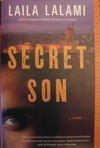
I have a basic policy of trying to read books written by bloggers with whom I have interacted. I don’t really know these people, and perhaps it is a form of wanting a connection with the famous (used loosely), but I find it interesting to see how their writing works in long from as opposed to blogging. —From review of Secret Son at Collected Miscellany
For several years now, I’ve taken to scanning the shelves each time I hit a bookstore, looking for books by people I’m familiar with via their blogs (or forums). Partly it is wanting to see how book-form writing compares to blogging. And partly it’s my way of supporting fellow writers whose writing I have enjoyed for x years. Should I ever complete and publish a novel, I would hope my fan (I do have one!) would do the same.
Anyhow, it’s often easier said than done.* Want Dan Brown? No worries. Want Laila Lalami or Tayari Jones? Er… So let me tell you, I was shocked when I saw Secret Son on the shelf in the Chapters on Robson in December. One copy. Hardcover. Y’all know I never buy hardcovers unless they’re on the remainder table. But then, in continuing to browse, more shock! I also found Jaden Hair’s Steamy Kitchen Cookbook and Heidi Swanson’s Super Natural Cooking. So then I decided it must be my day and bought all three. Solstice prezzie to self! Hurrah!
Cookbook reviews to follow. For now, Secret Son.
I’ve read Laila Lalami’s blog for a long time. Since back when it was called Moorish Girl. Since before she published her first book (Hope and Other Dangerous Pursuits, which I have yet to find), when she was just another book blogger. One of the the things she’s written about is her decision to write in English (her third language). Part of it is that English is not fraught with the connotations that Arabic and French have for her. But as well, she’s writing for a predominantly English-speaking audience. I think translations can sometimes have the effect of erasing the language difference, i.e. you forget that you’re reading a translation and impose your own language-view on the text.
Here are excerpts from a couple reviews:
“Secret Son” gives us an insider’s view of the underlying turmoil of Morocco, access we probably wouldn’t have if she had written in another language. But something has been lost in her attempt to bypass translation: perhaps it’s the cadences of the inner courtyards of her upbringing. Her English prose, although clean and closely observed, lacks music, and her similes can be predictable, as when Youssef’s half sister, returning from California to Casablanca, feels “like a fish that had been taken out of water and put back.” —New York Times
Lalami’s portrayal of indecision, abetted by her characters’ plainly outlined conflicts, lacks tension. When she does successfully transcend her own stylistic shortcomings, which happens in two scenes that revisit key events from different characters’ perspectives à la Rashomon, such structural cunning is deadened by the same rhythmless style, where rage is always “blinding” and a character’s regret is expressed by the narrator’s asking, “What had he done with his life?” —Quarterly Conversation
What these criticisms of her writing style seem to be missing is that she’s made a deliberate choice to write that way, and I think it’s an important one. The way it’s written, to me, is designed to not let the reader slip into the mistake of thinking that the characters are native English speakers. It’s written the way a non-native English speaker, who is fluent in English, but for whom writing in English is still not the main way they communicate, writes in English. It’s one of the first things I noticed. Of course, the story is being told about the characters, but still, I think taking this approach of writing like the characters would in English makes sense because you don’t lose the sense of them being Moroccan.
The other thing is that its written in close third person. Multiple povs, yes, but close third. It’s not omniscient. Which means the writer is limited to what the characters know. She can’t break into a soliloquy on the Moroccan condition. So true, it’s not a “big” novel; it’s an intimate one. It’s looking at the world from the perspective of the characters, not looking at the characters from the perspective of The World. I actually loved the scenes that were seen from the perspectives of two characters, seeing the subtle differences between their remembrances. Really important for a novel so focused on truths and lies. I liked the ideas explored here: identity/family, dual loyalties, the old “education will set you free” trope ;-), choices (or lack thereof). I like that while the characters’ secrets are revealed, their problems aren’t solved.
It did seem like the pacing really sped up in the last quarter or so of the book, and I was wishing it would slow down a bit. But I’m going to have to think about whether or not that is a flaw or not. Although it felt like there was a rush to the ending, I can see how that might be intentional, designed to mimic how the MC, Youssef, was feeling.
Other Links:
- First Chapter
- Book Notes “In the Book Notes series, authors create and discuss a music playlist that relates in some way to their recently published books.“
- Interview with Laila Lalami about Secret Son.
*Yes, I’m fully aware I could just order from Amazon. However, one of my great pleasures dating from pre-internet life is haunting bookstores new and used, looking for somewhat obscure titles. Nothing beats the heart-skip you get when you see a long sought-after book sitting on the shelf in front of you. Buying online does not provide the same thrill.
Thinking, Drafting and Re-drafting
The coming into existence of the paper-and-print book has many accomplishments, two of which, it seems to me, were scarcely foreseeable in 1455. They are entirely remarkable. One was to enable the emergence and wide appreciation of novels and short-stories: forms in which authors spend months and years on a work, thinking, drafting and re-drafting, so that they can reach all the way down into the subjects they treat. The other has been the possibilities for readers to enter into relationships—quite intimate relationships—with books, with authors, with fictional characters.
 The Remainder Table