Tag Archives: Books

3: Swann

Swann by Carol Shields

Swann

A few years back I read Shields’s short story compilation Dressing Up for the Carnival (I guess before I started these book posts). It was definitely a remainder table book; I remember picking it up because I kept hearing about Shields, but had never read anything of hers. Maybe I wasn’t sure if I’d like her writing or not?

Here’s the title story in Dressing Up for the Carnival and some reviews (January Magazine and The New York Times).

Anyhow, it turned out I liked Dressing Up for the Carnival more than I expected, so I picked up The Stone Diaries, her Governor General’s Award and Pulitzer Prize-winning novel, on a used-bookstore excursion. It’s still on my to-be-read shelf, but…

I took an English course this summer and the first thing we read was Swann (sometimes titled Swann: A Mystery). Swann is about farmwife Mary Swann and how she is “discovered” and turned into a minor poet worthy of academic analysis. Despite the sometimes-subtitle, Swann is more wry and cutting than mysterious. (There is a mystery, but it’s a rather transparent one.) Although it’s a novel, it’s really a critique of the literary and academic publishing worlds. The book is also kind of experimental—each section is told in a different way. The first section is most novelistic; the final section is written like it’s a screenplay. I think the execution may turn people off (as in this reader review), but I think the choices Shields made were very deliberate and it’s interesting to consider why she made them. Anyhow, I thought Swann was funny (and true), but I’m not sure I would have appreciated it as much if I wasn’t an insider, so to speak. Here’s an excerpt.

More links:

2: The Mysteries of Pittsburgh

The Mysteries of Pittsburgh by Michael Chabon

The Mysteries of Pittsburgh

Ok, so I really like the movie Wonder Boys. Wonder Boys the movie is based on a book written by Michael Chabon.

At the time I first saw the movie, that name meant nothing to me, but a few years back, I stumbled across a short-lived blog written by Ayelet Waldman (Bad Mother). I’d never heard of her before that, either, but the blog was funny. Anyhow… somewhere in there I learned that she was married to Michael Chabon, who was supposedly a Great Writer. O rly? So I guess I Wikipediaed him or something and made the Wonder Boys connection.

Fast-forward to one of our annual pilgrimages to The Book Shop in Penticton, and I spot The Mysteries of Pittsburgh by Michael Chabon. It’s not Wonder Boys, but I decide to give it a shot. Especially since one of the cover blurbs compares it to The Catcher in the Rye. O rly? How come I’ve never heard of it then? And why is everything compared to TCitR?

Aside: Honestly, sometimes I feel like I’m living on another planet literature-wise. I’ve read a lot of books, a great many of which would be classified as literature, and yet… too frequently the litblogosphere will be fussing all over someone and I’ll be all “who?” (David Foster Wallace) or “obviously I know who he is, but I’ve never read him—am I the only one?” (John Updike). I’m starting to think maybe I have a (perhaps deliberate) blind spot for white male American literary authors with a certain pedigree: the kind of dudes who used to have BAs from Ivy League schools, professorships in English departments, wear tweed jackets with suede elbow patches and smoke pipes and now have MFAs from Ivy League schools, professorships in creative writing departments, wear black T-shirts and well-worn jeans and smoke well, you know.

So anyway… Michael Chabon. The Mysteries of Pittsburgh. Well, first of all, apparently he wrote this when he was 24, so props to him. When I was 24… well, actually 24 was a pretty good year for me. But I didn’t write a novel.

I actually found TMoP pretty entertaining, but not realistic. at. all. It’s about this dude (Art) who’s on the verge of graduating from university and works at a bookstore having a bit o’ an existential crisis. His friends/romantic interests are all quirky oddballs (of course). So far pretty standard early-twenties stuff. Except then it goes all Sopranos. Yes, his dad is a noted mobster. And one of his friends is a low-level enforcer. It displeases dear ol’ dad that he’s associating with such a lowlife. Etcetera. So it ends up kind of surreal. Which may or may not float your boat, but there it is.

As for the comparisons to CitR… I didn’t really find this to be a coming-of-age story so much as an “ordinary person in improbable situation” story. Like Nancy Botwin in Weeds. Except not as deep and with less-interesting characters (esp. the female ones).

In conclusion, I’m not buying the Literary God rhetoric, but I still want to read Wonder Boys.

1: House of Sand and Fog

House of Sand and Fog by Andre Dubus III

House of Sand and Fog

My mom passed this one along to me. Of course, I heard about it when it was an Oprah pick back in the day, but I’d never read it. I’ve also seen the trailers for the movie based on the book, but I’ve never actually seen the movie.

So anyway, based on what I knew about it, I expected House of Sand and Fog to have two main characters: the woman who loses her house (Kathy) and the man who buys it (Colonel Behrani). And indeed, they were there, but there was also a third character (whose name is, perhaps not coincidentally, only two degrees of separation from “Loser”) whom I hadn’t anticipated.

This was a quick read, and I give kudos to ADIII (aside: I wonder if he signs his letters like that—Cheers! ADIII or perhaps all best, adiii—ok, I’ll stop) for writing a story in which all three main characters are rather unlikable (each in his/her own way), but you still want to keep reading to find out what happens anyhow. The two key characters do generate some sympathy, but that’s tempered by how they handle the situation (hint: badly). The third character, though, he’s just plain unsympathetic.

The story plays out as a tragedy. Unfairness kicks off the sequence of events, but ultimately, everyone is done in by their own failings.

Message? Perhaps:

  1. Do not ignore bills even if they are sent to you in error (righteous indignation won’t keep a roof over your head).
  2. Do the compassionate thing, even if it derails your plans to regain former social status.
  3. Do not hook up with meddling, loose cannon law enforcement agents who have a misplaced sense of entitlement.

Hmm! Maybe it’s supposed to be seven deadly sins thing:

  • Kathy: sloth, gluttony, wrath
  • The Colonel: pride, greed, wrath
  • L-s-er: lust, envy, wrath

Ah yes, good ol’ wrath. A pinch of rage mixed with a dash of spite. But have we learned nothing? Beware the spite, people, it will get you nowhere:

Jerry: “Excuse me. I’d like to return this jacket.”
Clerk: “Certainly. May I ask why?”
Jerry: “For spite.”
Clerk: “Spite?”
Jerry: “That’s right. I don’t care for the salesman that sold it to me.”
Clerk: “I don’t think you can return an item for spite.”
Jerry: “What do you mean?”
Clerk: “Well, if there was some problem with the garment. If it were unsatisfactory in some way, then we could do it for you, but I’m afraid spite doesn’t fit into any of our conditions for a refund.”
Jerry: “That’s ridiculous, I want to return it. What’s the difference what the reason is?”
Clerk: “Let me speak with the manager… excuse me… Bob!”
(walks over to the manager and whispers)
Clerk: “…spite…”
(Manager walks over)
Bob: “What seems to be the problem?”
Jerry: “Well I want to return this jacket and she asked me why and I said for spite and now she won’t take it back.”
Bob: “That’s true. You can’t return an item based purely on spite.”
Jerry: “Well, so fine then… then I don’t want it and then that’s why I’m returning it”
Bob:
“Well, you already said spite so…”
Jerry: “But I changed my mind.”
Bob: “No… you said spite… too late.”

Seinfeld, “The Wig Master

(See? Everything comes back to Seinfeld. 😉 )

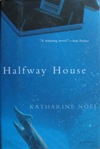
4: Halfway House

Halfway House by Katharine Noel

Halfway House

I actually finished reading this in late October—you know, back when I was still looking forward to spending November focusing on NaNo. AYKB, between TC stuff and offline chaos, that did not happen, and this post kept getting shuffled to the bottom of my to-do list. And now it’s the end of the year, and it’s still there, the last thing needing to be scratched off before 2008 ends.

So… here we go. I guess it’s somehow fitting that it’s taken me so long to get around to writing this review, given how long it took me to read the book. Looking back, I see I knocked a couple books off quite quickly right after I turned in the final draft of my thesis, but this one took me weeks to get through. I’m not really sure why; it wasn’t that the book was a slog or difficult or anything like that. For whatever reason, I just seemed content to read a single chapter at a time. That kind of a reading approach doesn’t always work out, of course; with a lot of books you’d end up having to flip back to refresh your memory each time because you couldn’t remember what happened up to your bookmark. But Halfway House had the stickiness necessary to be a satisfying slow read; whenever I picked it up, I didn’t have any problem continuing on as if I had just put it down.

Halfway House is Katharine Noel’s debut novel. Essentially it is the story of what happens to an “ordinary” family (mother/father/daughter/son) after the daughter develops a mental illness (bipolar disorder). I say “ordinary,” because I didn’t find them that ordinary to begin with: Pieter, the father/husband, is a professional musician and Jordana, the mother/wife, is the daughter of his friend/mentor. They first meet when she is a child and he is dating someone else; she crushes on him and they end up together, so she’s like 15 years younger than him. The kids (Angie & Luke) are exceptional athletes (swimmers), especially Angie, and she is also a brilliant student. There’s an expectation that she, at least, will attend an Ivy League school. (And… if you think $35k for a year‘s tuition is reasonable, you’re not ordinary. That is all.)

So, it’s very much about how easily a seemingly perfect family unit can fall apart when one thing (albeit a big thing) changes. At first, they try to go along as before, but it eventually becomes clear that—even if the right combination of meds is found—Angie is not going to simply recover and resume her before-life where she left off. Pieter and Jordana’s marriage falters and they separate. Luke ends up going to school in the Midwest, where he meets an actual ordinary girl ;-). In reality, of course, the cracks were already there; Angie’s break just widened them.

There was a lot packed into this book; maybe not all of it needed to be there, but I didn’t mind it. The writing is great; the descriptions are vivid and the characters do seem authentic. It felt like a world that had been percolating in someone’s mind for a long time. (My first thought was “MFA thesis” and after doing my usual post-read investigation, I think that might be right.) Still… I think one of the reasons I didn’t feel an urge to read this book faster is that I never really found myself attaching to any of the characters. Everything seemed to be taking place at arm’s length; there was a distance between reader and characters, rather than the immediacy one tends to expect with fiction. It felt like we (author and readers) were analyzing the characters rather than engaging with them. But maybe this is just a reflection of New Englander reticence?

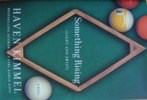
3: Something Rising (Light and Swift)

Something Rising (Light and Swift) by Haven Kimmel


I feel the same way about Something Rising as I did about A Girl Named Zippy, which I read back in 2005 (unfortunately, back then I was keeping track of books read, but hadn’t yet started to write reviews): it teeters on the brink of being brilliant, but never quite makes it there. The writing is great (I suspect if I read an excerpt, I’d give it a higher rating than I would the whole book), so much so that I find myself wanting to like the story more than I do. But if I’m honest with myself, this ends up in the “liked but did not love” pile.

Which is weird, because Cassie Claiborne is a character I should love. She’s a pool-playing tomboy with an innate understanding of geometry. She drives a beater Mazda. And Cassie is short for Cassiopeia.

It’s not so much that nothing happens. Stuff does happen (all the realm of regular-stuff-that-happens-to-regular-people, but that’s fine). It’s that Cassie (and all the other characters) seem to be sleepwalking through life. Cassie’s mother (Laura) and her boo-hoo, I should’ve married the dude I was engaged to when I ran off with your no-good dad. Gahhh! Get over it, already. Oh, well, maybe she might have if she had ever (in 30 years!) bothered to look him up and find out he’s a bigger loser than her deadbeat ex. Argh. Cassie’s sister (Belle) and her (undiagnosed!) hypochondria/phobias/whatever she has. She won’t leave the house—except she managed to go to university for 4 years, so she can conveniently have a work-from-home editing job.

But the biggest problem is that even though Cassie is the MC, I have no idea what she wants. (I mean in a concrete way—obviously she has some abstract desires.) She plays pool and does day labor and has never filed a tax return. Ok. But what does she want?! In the end there’s a deus ex machina, which combined with a foreshadowed (called it!) development, gets Cassie out of her rut… the end.

Essentially, everyone is passive and only ever does anything in reaction to events that happen to them. Passivity is fine to a certain extent (it was ok early on in the story, when Cassie was a child/teen), but if that’s all there ever is (by the end of the book, she’s well into adulthood), it’s frustrating. You want to shake all the characters and slap some life into them. And it’s not an era thing; according to the timeline, Cassie’s supposed to have grown up around the same time I did. I think this adds to my impatience.

The other thing is… the prologue starts off by foregrounding Cassie’s math skills (this is after she starts playing pool). In fact, it ends:

In this, the spring of her tenth-grade year, she had done poorly in everything but math. Her teacher, astonished, had sent a letter to Laura that said one thing: She’s a natural.

Since the prologue ended like this, my expectation was that Cassie’s pool-playing abilities were going to lead to something else (what else I don’t know, but something). Instead, they just led to more pool. (Which mostly happens off-screen, btw. I mean, if pool is to be the focus, more pool, please!) Even at the end, when she finally makes a move, the intimation is that she’s just going to continue playing pool. Which, ok, that’s fine. In real life. But it’s not very interesting in a novel. She was playing pool in the beginning and she’s still playing pool at the end… And? And? That unfulfilled expectation was the biggest let-down, I think.

When I finished A Girl Named Zippy, I didn’t love it enough to actively seek out another Kimmel book. However, I knew that if I should ever run across one on the remainder table, I would probably pick it up. Kimmel’s writing was just too promising to not give her another chance. And so when I saw Something Rising on the remainder table at Chapters, I bought it. Now I’ve read it and I feel the same way. So will I give Kimmel a third chance? Probably. 😉

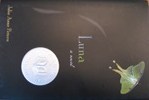
2: Luna

Luna by Julie Anne Peters

Hmm, it’s been a while. Time to get back to reading for pleasure. My first pick: Luna, a young adult novel I picked up off the remainder tables at Chapters. Not only that, but it was a “buy 3, get 1 free” sale (which, yes! even applied to the remaindered books) so I think I got 4 new hardcovers for $20. Quel deal!

Onto the book. It had an interesting premise and it had that award sticker, so I figured at the very least it would be interesting from a writing perspective. So, in a nutshell, the book’s protagonist is Regan, age 16. The dilemma is that Regan’s older brother Liam is transgendered and is transitioning to become a girl (Luna). Regan is the only one who knows (or at least she thinks she is) and keeping the secret is taking a toll on her.

From a writing standpoint, it helped me sort out something I’ve been thinking about: why you would have the MC be an essentially passive character (I was thinking about one of my characters and trying to articulate to myself why she is the MC when she mainly reacts to others’ actions). In this case, it would seem logical to write the story from Liam/Luna’s pov, or perhaps one/both of the parents. At least, that would be the case if this were a regular novel (not YA). From a YA perspective, though, writing from Regan’s pov does make sense. After all, that’s a key characteristic of being a kid/teen–not having control of what happens to you. And an essential component of coming-of-age is taking control (acting instead of reacting). Ok, so now it seems obvious.

Anyhow, I read Luna in about 3 hours and I did like it, although I felt it had some problems. Characterization was a strong point. Regan was a relatable character, and in general, the characters seemed realistic. I did feel that it skimmed the issues a bit. The focus on Luna’s interest in makeup, dresses, shopping, etc. makes it seem like being female is tied to stereotypically girly things, which… sigh. While it’s true that Regan was the MC, so from her pov, why Luna knew she was female wasn’t really the key issue, as a YA issue book 😉 it seems like why Liam knows he is a girl could be articulated better—that is, something beyond the fact that he doesn’t want to do stereotypically male things (play sports) but does want to do stereotypically female things.

Quibbles… Regan’s series of clumsy mishaps, while amusing the first and possibly second time, went on way too long. And I didn’t really understand why, especially since Liam was apparently so well-known at school, no one would know who Regan was. That seemed contrived. People know who siblings are (especially when they’re only a year or two apart). I also thought it was rather convenient that Liam/Luna was a computer genius who was thus essentially independently wealthy. Most 17/18-year-olds are not going to be so fortunate—and so it left me wondering what the take-away would be for someone reading this who was in Luna’s position.

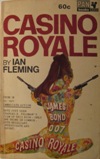
1: Casino Royale

Casino Royale by Ian Fleming

Casino Royale

So in December, one of the movie channels had a Bondathon—all the Bond movies except for the Pierce Brosnan ones and the latest one with Daniel Craig. They were all blurring together by the end, especially since various actors appeared as different characters in different movies. But watching them all like that got me curious about the books. So I headed on out to Pulpfiction Books to see if they had any. And hey, they did! So I grabbed Casino Royale—the very first book—and On Her Majesty’s Secret Service.

I figured CR would be typical, well, pulp fiction. As it turns out, Ian Fleming (no relation 😉 ) was a better writer than I expected, though his style is quite dry and analytical. Everything is described in excruciating detail. This does work, though, because of who/what Bond is supposed to be. However, I could see readers finding it boring. What especially stood out for me was that the book had none of the humor of the movies. Instead, Bond’s kind of a morose character. He’s described as looking like Hoagy Carmichael. He drives a Bentley.

Another thing that was different from the movies was that Bond doesn’t believe in mixing women and business (women are for after business is complete): “…he wanted to sleep with her but only when the job had been done.” (p.40) And there was only one female interest in CR (Vesper Lynd). Bond sees Lynd as somewhat of a nitwit to begin with, but at the end it is revealed that she was in fact not. Also, in addition to being sexist (which I expected, obviously), Bond is somewhat racist (has a tendency to stereotype people).

There is one scene late in the book that is most definitely in the latest movie.

He does actually use the Bond, James Bond line (p. 50):

“My name’s Felix Leiter,” said the American. “Glad to meet you.”
“Mine’s Bond — James Bond.”

Bond’s drink: “Three measures of Gordon’s, one of vodka, half a measure of Kina Lillet. Shake it very well until it’s ice-cold, then add a large thin slice of lemon-peel” (p.51). Later, after Bond learns Vesper Lynd’s given name, he asks if he can name his drink after her.

I think I understand Baccarat now. Banco!

22: Man Walks into a Room

Man Walks into a Room by Nicole Krauss

Man Walks into a Room

Sneaking in one last book for 2007. Appropriately, it is actually a remainder table find 🙂

Man Walks into a Room is Nicole Krauss’s first (or debut, as the literati like to say) novel. Krauss is married Jonathan Safran Foer. Foer is, aykb, a literary darling. I haven’t read any of his work (though I might have to now) because having read MWiaR, I have to wonder why he gets all the attention.

Loved this book.

One of the dust jacket blurbs says, “Man Walks into a Room is that rare thing: an evocative, finely written first novel that is a true work of fiction.” —A.M. Homes. (In that respect, it reminded me of Eden and her first novel, which she really needs to find a publisher for!)

Samson Greene is a 36-year-old literature professor with a wife and a life in New York city until the removal of a benign brain tumor causes him to lose the last 24 years of his memory. MWiaR is about his reaction to that loss, but it is also an exploration of mind and memory, loneliness and intimacy:

…then and there it occurred to him that maybe the emptiness he’d been living with all this time hadn’t really been emptiness at all, but loneliness gone unrecognized. How can a mind know how alone it is until brushes up against some other mind? A single mark had been made, another person’s memory imposed onto his mind, and now the magnitude of his own loss was impossible for Samson to ignore. (pp. 192-193)

Near the end of the book, there was a riff on WASPy nicknames like Pip and Chip and Kick. Would’ve been a throwaway bit, except one of the names was Apple. Had to check the dates to see if she was poking fun at Gwyneth Paltrow, but no, Gwyneth’s daughter wasn’t born until 2004. I guess she was just prescient 😉

Some links:

21: Birds of America

Birds of America by Lorrie Moore

Birds of America

Lorrie Moore was one of those names I kept hearing around the book blogosphere, so when I saw this in fave used bookstore (I know, getting a little repetitive in the “where I got this book” department…) I picked it up.

Birds of America is a collection of short stories. What is there to say? Moore’s writing is really, really good. And the stories are really, really sad. So, you might think that this wouldn’t be the best choice for late-night-when-you-can’t-sleep reading (which is what I found myself doing a few times), and yet… somehow it was okay, because they are funny (witty, clever, biting, sarcastic) as well as sad.

Not having read any of Moore’s work before, I kept waiting for her to veer into slit-your-wrists territory, but she always pulled back before she got there (now that’s talent). The negative reviews at Amazon (I do so love reading those after I finish a book! hee!) call the book depressing, but I disagree. It’s sad, but not depressing.

Since BoA was published in 1998, I couldn’t resist a trip back to the early days of the interwebs:

One of the best things I’ve read this year!

20: The Last Good Day

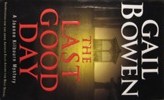
Gail Bowen, The Last Good Day
The Last Good Day

I was looking for a fun weekend afternoon read and grabbed this off the to-read shelf. I think I got it from a pile of books my mom was discarding. (Free!)

I really wanted to like this book. The narrator sounded cool (55yo female university professor/amateur sleuth). It’s set in Saskatchewan! I don’t think I’ve ever read a book set in Saskatchewan that wasn’t CanLit. And the reviews on the back cover are glowing: “a treat from first page to final paragraph” (Globe & Mail), “Bowen is a national treasure” (Ottawa Citizen), etc. Apparently it was also shortlisted for the Arthur Ellis Award for best novel.

Really?! Did we read the same book? Because I actually thought it was really bad. I love Canadianisms as much as the next Canadian, but some of the CanCon here seemed soooo deliberate. Like, “Hey, I think I’ll stick in a priest with a West Indies accent (even though said character doesn’t actually have a speaking role—or a name, for that matter) because, aykb, Canada’s a multicultural society!” Or the completely random mention of a character carrying a Zeller’s bag. (Groan.)

[digression] Been thinking about this, because I think this is an important thing to remember when writing fiction. Random mentions feel like you’re working off a checklist (or namedropping). Stuff should have a reason for being there. If you’re going to mention a priest with a West Indies accent (interesting detail), then he should play a role in the story (he doesn’t). If you’re going to mention a Zeller’s bag (rather than a plain old plastic bag), then the fact it’s a Zeller’s bag should be significant (it isn’t). OTOH, the references to the RCMP felt perfectly natural, because there was a legitimate reason for them to be there. Good lesson here I think. I know I’ve been guilty of no-reason namedropping. But I think it’s important to note that it’s not just brand names—any detail can come across as awkward if it stands out and doesn’t serve a purpose. [/digression]

It was also excessively telly. Early in the book, a character dies. The narrator has been acquainted with this person for less than 24 hours, and has had exactly one 10-minute conversation with him (in which he confides his deepest, darkest secret — and… can I just say, unrealistic much? — yes, I always go around confiding my intimate secrets to complete strangers). Anyhow, after he dies, narrator goes on and on and on about how shattered she was by his death. Now granted, she witnessed his car driving into a lake and attempted a rescue (hint: it’s easier to break a window in a sinking car than to try to open a door!), so that would be somewhat disturbing. But she didn’t know the guy. The significance that the narrator kept saying this had on her seemed all out of proportion with what we had been shown of these characters.

The telliness also meant the characters were flat and uninteresting. There were a lot of characters, but none of them were fleshed out. Nobody felt real. The “Winners’ Circle” was annoying (I mean, honestly. On principle, who wouldn’t hate a group of law school students who named themselves the Winners’ Circle and still referred to themselves by that name 25 years later? How irritating must they be?). I couldn’t work up an iota of sympathy for these people.

The inciting incident basically made no sense. A work-related transgression (by guy who dies early in book) was blown out of proportion by a character who we don’t actually get to know first-hand (making the reasoning behind what she did in response to her discovery even less understandable). And then his reaction (driving his car into a lake, amongst other things) to that is also way beyond realistic.

But here’s the thing that drove me absolutely batty: this book was published in 2004. In the book, the characters are happily using email and have GPS in their cars. So, it is set in present day. However, when they are told that a character has moved to Vancouver to work at a law firm there, but are suspicious as to whether this is true or not, not one person thinks to use Google to check out the story. Isn’t that the first thing you would do? I mean, all medium-to-large law firms have websites! Generally with all the lawyers listed. Now, granted, some small ones don’t. But then there’s also the Law Society website, which lists all practicing and non-practicing lawyers in the province! Seriously, this story would take like two minutes to check out. I just could not get past this.

Maybe the characters couldn’t either, as they seemed inclined to take themselves out. Yes, the number of suicides (3*) in this novel outnumber the murders (1). So not only was it a frustrating read (Gooooooogle!), it was also depressing. Not exactly what I look for in a mystery. (ymmv, of course. I could not find one negative review of this book, so I am definitely in the minority.)

*Technically, that includes a murder-suicide, but as it was a pact between the two individuals, it was essentially a double-suicide.