Tag Archives: Books

19: The Mirror and the Veil

Viviane Serfaty, The Mirror and the Veil: An Overview of American Online Diaries and Blogs.

The Mirror and the Veil

The Mirror and the Veil was another book I read for my Directed Reading course this summer. Here’s Serfaty’s explanation of the title:

[The computer screen] operat[es] as a paradoxical, twofold metaphor, that of a veil and that of a mirror. … The screen, which mediates Internet access, thus establishes a dialectical relationship between disclosure and secrecy, between transparency and opacity. There is no such thing as private content on the Internet; the pretence of privacy is de facto shattered to pieces, since anyone can gain access to any site the world over, yet the diarists feel protected by the very size of the Internet. (p.13)

The most valuable thing about this book for me was Serfaty’s discussion of her methodological approach and her reasoned justification for taking the approach that she did because it gives me a precedent for the approach I plan to take with my thesis.

Serfaty discusses the privacy issues with respect to researching diaries and discusses the literary and the social scientific approaches to such research. The literary approach rests on the assumption that the protagonist is a fictional construct (to a certain extent): “personal writings on the Internet are not be viewed as ‘slice-of-life’ documents or faithful reflections of reality. Attention is instead focused on the internal logic of the text, seen as a self-contained, self-referential artifact.” (p.10) The social scientific approach, on the other hand, requires the researcher to look beyond the text and make contact with the diarists.

Serfaty finds this problematic for a number of reasons. It requires the researcher to engage in participant observation, which is difficult and modifies the behavior of the observed (exactly my concern). Also, the exchange of correspondence between researcher and diarist creates “an intimate pact” that isn’t a very scientific approach to research. Familiarity with the diarist is likely to lead to further problems: either breaching the diarist’s trust, or conversely, being reluctant to expose unflattering aspects of the diarist’s life. Serfaty’s approach was thus to carefully avoid any interaction with the diarists she studied.

Another key issue is anonymity (or the lack thereof). The AoIR approach is to use pseudonyms. However, as Serfaty points out (and as I have reiterated many times) URLs of the blogs must be cited, making pseudonyms moot. Serfaty takes the approach that while blogs are often personal and intimate, they are not private. “Anyone who engages in self-representational writing on the Internet is not producing private material, but is engaging instead in ‘public acts deliberately intended for public consumption'” (p. 12).

On a less serious note, she quotes these very bloggy moments from “The Importance of Being Earnest” (Oscar Wilde):

Miss Prism: I really don’t see why you keep a diary at all.
Cecily: I keep a diary in order to enter all the wonderful secrets of my life. If I didn’t write them down, I should probably forget all about them.

Cecily: I am afraid you must be under some misconception. Ernest proposed to me exactly ten minutes ago. [shows diary]
Gwendolen: [examines diary through her lorgnette carefully] It is certainly very curious, for he asked me to be his wife yesterday afternoon at 5:30. If you would care to verify the incident, pray do so. [produces diary of her own.] I never travel without my diary. One should always have something sensational to read in the train.

Algernon: Do you really keep a diary? I’d keep anything to look at it. May I?
Cecily: Oh no. You see, it is simply a very young girl’s record of her own thoughts and impressions, and consequently meant for publication. When it appears in volume form I hope you will order a copy.

If Oscar were around today, I bet he’d blog. Funniest play ever, I tell ya. Must go read it again.


18: Writing a Woman’s Life

Writing a Woman’s Life by Carolyn Gold Heilbrun

Writing a Woman’s Life

I read this for my directed reading course this summer. At the top of my notes I wrote: “This might be worth buying.” That was in June. Then in July, on my annual Book Shop spree, I stumbled upon a copy of the book. Fate?

Heilbrun (1926-2003) was an English professor at Columbia when female professors were rarities and she was pissed off at how male academics treated their female colleagues. It probably would have made her life easier if she had publicly hidden that anger (and ranted in private, as one does) but she felt it was important that women express anger so that other women could learn from their experiences (or realize they are not alone):

The expression of anger has always been a terrible hurdle in women’s personal progress. Above all, the public and private lives cannot be linked, as in male narratives. … [W]omen are therefore unable to write exemplary lives: they do not dare to offer themselves as models, but only as exceptions chosen by destiny or chance. (p.25)

What matters is that lives do not serve as models; only stories do that. And it is a hard thing to make up stories to live by. We can only retell and live by the stories we have read or heard. We live our lives through texts. (p.37)

I like that last bit especially. Quote for my thesis, perhaps.

This has nothing to do with my thesis but I did find it amusing/sad in light of recent news articles:

In the last years of the twentieth century, it is unclear whether women who refer to themselves as, for example, Mrs. Thomas Smith know what servitude they are representing in that nomenclature. The same might be said today of women who exchange their last name for their husband’s. … Any possible ambivalence about this matter should surely have ended by the beginning of the 1980s at the latest. (p.85)

The 1980s! Haha! Heilbrun would no doubt be chagrined to learn that name-giving-up is more popular now than it was in the ’80s and that a Gen-Yer in Quebec (where “married names” have been legally prohibited since 1981) is suing so she can take her husband’s name. Gah. (Of course, the irony of Heilbrun’s position is that she adopted her husband’s name. That was, however, 40+ years prior to her writing this book, so I guess she had time to change her mind πŸ˜‰ )

So anyway… after I finished the book, I looked Heilbrun up (ironically because I was curious about this series of detective novels she’d written—the Kate Fansler mysteries, as Amanda Cross) and that’s when I discovered that she quit her position at Columbia (age 66) because she felt unwelcome. Then she committed suicide (age 77) apparently because she felt her life had been completed.

Ack. Everything I’ve read tries to put a positive spin on this, in the vein of she wrote her own ending to her own story. But I can’t help but thinking: isn’t that classic cutting off your nose to spite your face? From what I’ve read a lot of women looked up to her as a role model. And she said herself that people need stories to follow. So for those who were following her story—they’re left with what? The jerks of the world will always win (or at least they’ll wear you down so you get tired of fighting) so you may as well kill yourself?

Ugh.

I really liked this book—but this coda left me conflicted. Lots to think about anyhow. Here are a few more links:

17: Skin Divers

Skin Divers by Anne Michaels

Skin Divers

Anne Michaels’s The Weight of Oranges / Miner’s Pond is probably my favorite poetry collection (really two collections in one volume) of all time. Maybe because so many of the poems are about rain.

From “Rain Makes Its Own Night” (The Weight of Oranges):

Rain makes its own night, long mornings with the lamps left on.
Lean beach grass sticks to the floor near your shoes,
last summer’s pollen rises from damp metal screens.

This is order, this clutter that fills clearings between us,
clothes clinging to chairs, your shoes in a muddy grip.

Mmm. Anyhow, Skin Divers is her third volume of poetry. This was another used bookstore find. A few weeks ago, feeling the need for a poetry fix, I plucked it off the To Read shelf and read it all in one sitting. It’s a slim volume, as they say—only 68 pages including the acknowledgments—so this was not a great feat. But… I always feel a little guilty reading a book so fast when I know how long it probably took to write it. (And that feeling is not helped by the quote on the back cover of the dust jacket which closes: “This is a book to be grateful for, to read, and be read by, slowly.”) !!! Way to pour on the guilt, Don McKay πŸ˜‰ I’ll try to make up for speed with re-readings.

When I’m evaluating poetry, the most important thing for me is that it sound right. It should have rhythm. It should flow. If it sounds right, it doesn’t have to be logical. It’s poetry. So much of the “poetry” we receive at TC is clunky and prosaic. Inserting random line breaks does not turn prose into poetry. (This is what happens when people write poetry, but don’t read it, methinks. But that’s a rant for another day.)

Michaels’s poetry sounds right. It’s… deceptively simple. Some lines you might think: I (or anyone) could have written that. And then you read it again and think: wow, that’s amazing.

From “Skin Divers”:

Like the moon, I want to touch places
just by looking. To tell
new things at three in the morning, when we’re
awake with rain or any sadness, or slendering through
reeds of sleep, surfacing to skin. In this room
where so much has happened, where love
is the clink of buttons as your shirt slides
to the floor, the rolling sound of loose change;
a book half open, clothes
half open. Again we feel
how transparent the envelope
of the body, pushed through the door
of the world.

Oh, hey. Rain again πŸ™‚

16: The Partly Cloudy Patriot

The Partly Cloudy Patriot by Sarah Vowell

The Partly Cloudy Patriot

I :heart: Sarah Vowell in the same way I :heart: Tina Fey. Witty, snarky, incisive. What more do you need?

I read Take the Cannoli back in 2005, after I had started keeping track what I was reading, but before I started writing posts about each book (which, btw, was the best. idea. ever. I don’t care if everyone else thinks they’re dull as doornails). The Partly Cloudy Patriot I picked up at The Book Shop (shocking! ;-)). There was a book mark inside the front cover from a bookstore called The Book Mark (a book mark from The Book Mark!) with an address in Atlantic Beach, Florida. Oh, I do like to think that this book traveled all the way from Florida to Penticton. It just seems so apropos.

The Partly Cloudy Patriot was published in 2002 and is a collection of essays. The date is significant because it’s packed with pop culture references (as well as nerd humor and historical tourism). So while I adore Vowell’s sense of humor, I’m thinking those who can’t remember said references might not be similarly amused. Remember this post where I asked my students (millennials, formerly known as gen-Y) what their first media memory was? Some of them couldn’t even remember back to 2001/02!

Memory-challenged millennials aside, this is a fast, entertaining read. Which is not to say it doesn’t tackle serious issues. You know, like the 2000 US election. (Poor Al, done in by his nerdiness.) Showing her prescience, one essay is called “Tom Cruise Makes Me Nervous.” Ha! There’s even one on Canada (“Cowboys vs. Mounties”). Unsurprisingly, she confesses that some of her favorite comedians (Kids in the Hall!) are Canadian. Of course they are. It’s the snark, I tell ya.

15: The Untelling

The Untelling by Tayari Jones

The Untelling

I’ve been reading Tayari’s Blog for over two years now. IIRC, I found it through a guest post she had made at another blog. Tayari’s published two novels (The Untelling is her second) and is working on a third. Leaving Atlanta is her first novel. She teaches creative writing, and is currently assistant professor at Rutgers-Newark (she moves around a lot!).

Tayari’s blog is one of my favorites. It’s a great writing-about-writing blog. But extra-appealing because she’s my age and is doing the academic thing, too. I’ve wanted to read her novels since I started reading it. So what took me so long? Well, apparently bookstores here don’t carry them :-S (I haven’t seen Laila Lalami‘s Hope and Other Dangerous Pursuits either). Yes, I could have ordered from Amazon or Chapters. But my to-read bookshelf is already overflowing (because I have no resistance when I see a book I want in person) without also ordering books online (where would it stop?!). I tell myself I can buy books online if I whittle down the to-read pile, but just when I think I’m getting there, I go on a used bookstore (or remainder table) spree and eek! it’s overflowing again. (Oh, but you know I wouldn’t have it any other way.)
/digression

Anyhow, happily I did stumble across The Untelling in The Book Shop this summer and of course snapped it up. The Untelling‘s mc is Ariadne (called Aria). When Aria was not-quite 10, her family was in a car accident in which her father and baby sister died. Unsurprisingly, this tragedy has affected Aria enormously, and her relationships with her mother and her older sister continue to be strained. In the now of the story (mid-’90s), Aria is in post-university limbo. She’s 25, living with her best friend Rochelle in a somewhat sketchy neighborhood (starting to be gentrified, but not quite there yet), and teaching literacy to people studying for their GEDs. Rochelle is engaged and will soon move out. Aria daydreams about her boyfriend Dwayne moving in when Rochelle moves out, even though Dwayne doesn’t like the neighborhood.

And then she tells people something that turns out not to be true. She thinks it’s the truth; only later she finds out she is mistaken and must figure out how to “untell” it. This is complicated by why she was mistaken and the post-traumatic stress and guilt she’s still suffering from. (I know that’s a little vague, but I’m trying not to be spoilerish.)

One thing I really liked about reading this was seeing so many things Tayari has mentioned in her blog pop up in the story. For example, she’s written about having this word processor—one of those typewriter-like devices that saved a few lines so you could check your typing before the words actually went on the page—and one of those shows up in the story. (One of the girls on my residence floor in first year had one—was v. jealous at the time. Haha!)

Now I want to read Leaving Atlanta.

November 29, 1918 – September 6, 2007

Madeleine L’Engle died yesterday. She was 88.

Something to think about: L’Engle’s career didn’t really take off until the 1960s, when she was already over 40. A Wrinkle in Time was finally published (after many rejections) in 1962. She continued to publish prolifically into her 80s.

ETA: I made a Madeleine L’Engle category. (Includes my three-part review of the elusive Ilsa.)

Also found this in an old writing file:

Back in the day, I kept my Madeleine L’Engle books on a separate shelf and called them my “special books.” Every time I went into a new library, I’d look to see if there were any books listed that I hadn’t heard of and every time I entered a bookstore, I’d head to the Ls to see if they had any books I hadn’t read.

But I never wrote her a letter.

In fact, the idea didn’t even occur to me until I was out of university and found her book A Circle of Quiet. In the book, she writes about finding an apartment on West End Avenue. She wrote the address. I thought, I wonder if she still lives there? Curious, I headed to the library and looked her up in the NY phone book (on microfiche!) It was listed, not under her name, but under that of her late husband, Hugh Franklin. Imagine that. A reasonably well-known actor and a writer with a listed phone number. So now, I had her address. I even had her phone number. I could write her a letter. I could call. But I didn’t.
I tried to write a letter, but it just came out sounding dumb. You’re my favorite author! I’ve read everything of yours that I could get my hands on! Why is Ilsa out of print? Will you ever write about Vicky as an adult? etc. I couldn’t bring myself to send something so dorky. Eventually I deleted it from my hard drive.

And that was the closest I got to writing a fan letter.

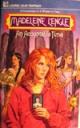
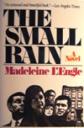
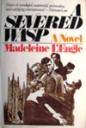
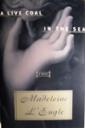
ETA Part 2: Since nearly every tribute I’ve seen begins and ends with A Wrinkle in Time, I thought I’d add this: Madeleine L’Engle’s bibliography and my personal L’Engle collection:

Austin Family. This is my favorite series; The Moon by Night is my favorite of her fiction books.

Meet the Austins, 1960 The Moon By Night, 1963 The Young Unicorns, 1968
A Ring of Endless Light, 1980 Troubling a Star, 1994

Murry – O’Keefe Family. My favorites are A Swiftly Tilting Planet and The Arm of the Starfish.

A Wrinkle in Time, 1962 A Wind in the Door, 1973 Many Waters, 1986 A Swiftly Tilting Planet, 1978
The Arm of the Starfish, 1965 Dragons in the Waters, 1976 A House Like a Lotus, 1984 An Acceptable Time, 1989

Katherine Forrester. The Small Rain was her first novel.

The Small Rain, 1945 A Severed Wasp, 1982

Camilla Dickinson.

Camilla, 1965 A Live Coal in the Sea, 1996

Miscellaneous Fiction.

Ilsa, 1946 And Both Were Young, 1949 A Winter’s Love, 1957
The Love Letters, 1966 The Other Side of the Sun, 1971 Certain Women, 1992

Autobiographical. A Circle of Quiet is my favorite of her non-fiction books. Must-read for writers.

A Circle of Quiet, 1972 The Summer of the Great Grandmother, 1974 The Irrational Season, 1977 Two-Part Invention, 1988

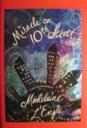
Miscellaneous Non-Fiction. Miracle on 10th Street is a mixture of non-fiction & fiction. Contains two Austin family stories: The 24 Days Before Christmas and A Full House.

Reflections on Faith and Art, 1980 Miracle on 10th Street, 1998

14: S is for Silence

S is for Silence by Sue Grafton

S is for Silence

So I finished the final paper of my coursework (thesis, here I come) and wanted to read something fast and fun. The Kinsey Millhone series is a holdover from another era; I read some of the early books when they first came out (A, B, etc.) and while I haven’t kept up with the series, I’ll read them if they fall into my lap. My mom passed this one on to me.

S is set in 1987; Kinsey is 37. Out of curiosity, I looked up when A is for Alibi was first published—1982 (hmm, that really was another era!). Since Kinsey was 32 in the first book, this means that the initial book of the series was set in the present, but now the series is set firmly in the past. Nothing against setting stories in the past, but this is kind of weird for a series, don’t you think? To have it be contemporary to begin with, but become historical? I mean, this book reads very differently to me now than A did when I read it in the early 80s.

I imagine there are two reasons Grafton might have decided to do this. One, had the books remained contemporary, Kinsey would now be 57. While she certainly could still be a PI at 57, it seems likely that other aspects of her life would have changed in that period of time. Like she might not be living in a garage apartment, her landlord (who was 80-something in A) would probably not be still living, and Chardonnay might no longer be her drink of choice. And we all know that genre books like to maintain their worlds once they’ve been established. Two: the Internet & cell phones. Kinsey is still using payphones, answering machines, and doing research at the library. And while I can see plenty of reasons why an author might want to set a story pre-Internet & cell phone, in a series this long, I think it would have been more interesting for readers to see Kinsey adapt to these changes (as real PIs have had to do if they have been in business over the past 25 years).

In S, Kinsey investigates a cold case. A woman hires her to investigate her mother’s disappearance in 1953. The story flips between Kinsey’s 1987 world and flashbacks to 1953 (various characters). Since Kinsey is not a party to the 1953 flashbacks, the reader always knows more than she does. I’m not thrilled with this device. In a detective story, I think it’s best if we stick to the detective’s PoV—this is the only way the reader can play along (and isn’t that what a detective story is about?). Also not thrilled with the ending; while not quite a deus ex machina, the baddy turns out to be peripheral character (it is foreshadowed, but it still seems lame). It’s a soap opera ending, the easy way out. Overall, the story was kind of plodding. The flashbacks contributed to this, I think, but also the overly long description. Everything was described in great detail! (Were the earlier books like this? I don’t remember.) Too much. And I like description.

Random tidbit: Grafton’s pet word is “ease”: people are forever easing onto stools, cars easing out of driveways, etc. etc.

13: Dispatches from the Edge

Dispatches from the Edge: A Memoir of War, Disasters, and Survival by Anderson Cooper

Dispatches From the Edge

Ok, so it’s no surprise I read this. We all know I heart AC. (I just know if I’d have been rich & gone to Yale, we’d have met in the dorms and become BFFs! As it is, I’ll have to make do with those twinny moments when he says the exact thing I just said except he’s on TV and people actually hear him.) The only surprising thing is how long it took me to buy it. I meant to buy it as soon as it came out in paperback, but then I got distracted with all that directed-reading reading and visits from-and-to friends & rellies over the summer. All good, but how could I have forgotten AC? And then on a bookstore foray I saw it. eep! Immediately book was purchased so it could be read on vacay. Yes! I bought a full price new book! Second one this year! Possibly a record! (j/k)

So anyway… if you’ve read his Details columns or his posts on the AC360 Blog, then the writing style will be familiar. If you like it there, you’ll like it here and vice versa. I like the contrast of the simplicity of the writing with the chaoticness of the situations, but I realize that won’t work for everyone. When I looked at the Amazon reviews, I noticed some people think his emotions seem too subdued, but I disagree, because that uber-quiet/shutdown reaction is exactly how I get when I’m really upset (if I’m ranting/raving, I’m fine). The other nitpick is (of course) that he doesn’t discuss his present day personal life. I think those people are missing the point of this book, which is really about how his career has been a way for him to deal with the deaths of his father (when he was 10) and his brother (when he was 21). So the book flips back-and-forth between his present-day reporting and the past, making connections between the two. It’s a memoir, not an autobiography. Memoir doesn’t have to be all-inclusive; it can focus on certain events or elements of one’s life.

Because AC was only 10 when his father died, his love for his dad is that of a 10-year-old—uncomplicated by adult conflict—and it makes you think about both the good and the bad of that. Because we’re so close in age and I also have one brother (I know he has two much older half-brothers, but they aren’t mentioned here), it was hard not to do the “what if…” thing. Without the extraordinary circumstances of the deaths of two of his immediate family, he probably wouldn’t have obtained a fake press pass and headed off to a war zone. In fact, he could have led a very comfortable life without doing much of anything (or at least anything of substance—as we know many children of the very rich do). But I think not only was he on a quest to make sense of his losses, but he also had an awareness of mortality that most people in their twenties don’t have, since there was a history of early deaths on his father’s side of the family. So that probably pushed him to take more risks than the average person—and also to not wait till some magical future date to do the things he wants to (like so many people do).

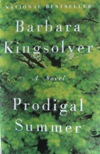
12: Prodigal Summer

Prodigal Summer by Barbara Kingsolver

Prodigal Summer

I read Kingsolver’s epic, The Poisonwood Bible, around the time it first came out (summer of 2000, I think). I recall that it was a good read, but I certainly didn’t have that “best. book. ever!” response that so many people seemed to have at the time. Then there was the time that someone told me a writing prompt response I wrote sounded like Prodigal Summer (having now read PS, I don’t see the connection). That was years ago too. I guess I wasn’t enthralled enough with TPB to immediately seek out PS upon hearing this comment, but I did remember it when I saw the book on the shelf at The Bookshop last summer. And then it sat on my shelf for a year…

But when I finally picked it up, I read it in a couple days; it was a quick read. I think I liked it better than TPB. I say I think because TPB is a bit vague for me, plotwise, but going on gut reaction. PS immediately hooked me in a way that TPB didn’t. I read it in big gulps. And it was funny, reading PS right after writing this:

(The fact that I read the TNITL for fun should in itself have been a strong indication that I should have majored in English, but I was too busy cutting off my nose to spite my face at the time to realize this.)

because PS is the type of book that makes me happy that I majored in biology. You know, because a degree in something other than writing/English gives me something to write about. Also, it makes for quirky cocktail conversation. Like so:

Acquaintance: What’s your undergrad in?

Me: Biology.

Acquaintance: !!!

Or, alternatively: Me too! (Yes, apparently I am not alone in my weirdness.)

But I digress. PS starts out as three separate stories, but as the book progresses, we find out that all three are more or less connected. In Predators, we meet Deanna, who has parlayed her master’s degree into a job for the Forest Service (essentially discouraging hunters from poaching wildlife). In Moth Love, we have Lusa, who gave up her postdoctoral grant to marry tobacco farmer Cole and is struggling to adjust to life as an outsider in a small community. And finally, in Old Chestnuts, we have retired schoolteacher Garnett and his neighbor/nemesis Nannie. Deanna’s thing is coyotes, Lusa loves moths, Garnett’s trying to revive the American chestnut, and Nannie grows organic apples.

The book is all about sex, not in the porn sense, but in the cycle-of-life sense. The story functions as a polemic for Kingsolver. Characters frequently launch into long “as you know, Bob” monologues on the evils of hunting or pesticides or tobacco farming. If you’re a left-coasty granola (*cough*), this is pretty standard stuff, but where the story’s set (Appalachia), her views are probably less de rigueur.

I liked that the secondary characters always remained a bit of mystery (as people do) and that everything wasn’t tied up neatly in a bow at the end (life goes on…). Initially I wasn’t sure about the headhopping between chapters—just when you get hooked on Deanna’s story, it leaps to Lusa, etc. and at first I found myself reading fast so I could get back to the first storyline (and then the second & so on) because at first it’s like three separate stories. But as the three stories became entwined, the headhopping starts to make sense—they’re three different PoVs within the same setting. So in the end, I thought the strategy worked.

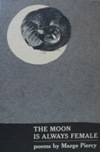
11: The Moon is Always Female

The Moon is Always Female by Marge Piercy

The Moon is Always Female

Ack. I actually finished reading this ages ago. It’s been sitting on my desk looking at me for most of the summer, as a reminder to write a post about it. Meanwhile, I’ve been otherwise occupied reading books for my directed reading course (and by extension, my thesis). But that project is nearing completion, and it’s time for some just-for-fun reading to finish off the summer. Before starting something new, here are my two cents on The Moon is Always Female.

Marge Piercy is one of the poets I first came into contact with when reading The Norton Introduction to Literature when undoubtedly I should have been doing something else. Like reading that Poli Sci textbook I never realized I owned until an hour before the final exam. (The fact that I read the TNITL for fun should in itself have been a strong indication that I should have majored in English, but I was too busy cutting off my nose to spite my face at the time to realize this.) The poem was “To have without holding.” The first stanza (p. 40):

Learning to love differently is hard,
love with the hands wide open, love
with the doors banging on their hinges,
the cupboard unlocked, the wind
roaring and whimpering in the rooms
rustling the sheets and snapping the blinds
that thwack like rubber bands
in an open palm.

Heh. I just noticed the first comment under “Most Helpful Customer Reviews” at Amazon is from my close personal friend Eden. How apropos, since I picked this up when I saw it at my favorite used bookstore last summer because of the many times she’s mentioned it. Let’s see what she had to say:

Piercy’s poems in this collection touch my every emotion. They make me laugh, cry, consider, ache, scream and everything in the spaces between. I “had” to read this for a contemporary lit course in college over ten years ago. Problem was, I couldn’t stop reading it. It was the first book I couldn’t bring myself to sell back. It’s exceptional, from the words on the pages to the typeface itself. Favorite include: “For the young who want to” “For strong women” “Poetry festival lover” and of course “The moon is always female.” After reading it, you will feel like you know Piercy. And you will also better know yourself.

Hmm, thanks for doing my work for me, E! I’d also add that it’s the kind of collection that it’s nice to leave out where you can pick it up and randomly re-read a poem or two when the mood strikes you. “For the young who want to” is one of my favorite poems (by any poet) and I never tire of re-reading it. The last stanza (p. 85):

The real writer is one
who really writes. Talent
is an invention like phlogiston
after the fact of fire.
Work is its own cure. You have to
like it better than being loved.