Tag Archives: Books

2006 Books Read – #5

The Best American Short Stories of the Eighties edited by Shannon Ravenel

The Best American Short Stories of the Eighties

Whew!

This is an uber-anthology consisting of two stories from each of the Best American anthologies from 1980-1989. I picked it up because the author names are mostly well-known ones that you see bandied about a lot, but I hadn’t read any of these stories before.

I actually started reading it last year, got about halfway through and set it aside. This isn’t a knock on the quality of the stories. The problem is that it’s an anthology. I couldn’t finish a story and immediately jump into the next one. I had to give each story time to settle between readings. This made for a much slower read than a novel or even a short story collection. And I get a little antsy when I’m reading the same book for a really long time, hence the break.

Onto the content: There’s no question that these stories are good. But that said, I didn’t like all of the stories equally well. There was one story I couldn’t get through (basically, I found the style annoying). I connected with more of the later stories than the earlier ones (they were arranged chronologically).

Some of the stories (particularly “The Way We Live Now” – Susan Sontag and “The Management of Grief” – Bharati Mukherjee) felt like historic records of moments in time. I found reading “The Management of Grief” (about the aftermath of Air India) especially poignant, given that the trial only took place last year and the defendants were acquitted.

The stories that will stay the longest with me are probably “Helping” by Robert Stone and “The Management of Grief.” I’ll definitely look for other work by Mukherjee.

So what’s in it?

  • From 1980, “The Old Forest” by Peter Taylor & “The Emerald” by Donald Barthelme
  • From 1981, “The Shawl” by Cynthia Ozick & “A Working Day” by Robert Coover
  • From 1982, “Cathedral” by Raymond Carver & “Exchange Value” by Charles Johnson
  • From 1983, “Deaths of Distant Friends” by John Updike & “Sur” by Ursula K. LeGuin
  • From 1984, “Nairobi” by Joyce Carol Oates & “In the Red Room” by Paul Bowles
  • From 1985, “Sarah Cole: A Type of Love Story” by Russell Banks & “Fellow-Creatures” by Wright Morris
  • From 1986, “Gryphon” by Charles Baxter & “Health” by Joy Williams
  • From 1987, “The Way We Live Now” by Susan Sontag & “The Things They Carried” by Tim O’Brien
  • From 1988, “Dede” by Mavis Gallant & “Helping” by Robert Stone
  • From 1989, “The Management of Grief” by Bharati Mukherjee & “Meneseteung” by Alice Munro

Which literature classic are you?

So I’ve actually read this! It’s even on my bookshelf. Which I suppose means the result is somewhat accurate…

orlando
Virginia Woolf: Orlando. You are a challenge, for
outer events, the outside world, the time
etc. play no importance to you. Your focus is
in writing, in gender issues, and inside your
own head. Self-analysis and exploration of
yourself as well as the outer world hold
great importance to you.

Which literature classic are you?
brought to you by Quizilla

2006 Books Read – #4

Contentment: wisdom from around the world by Gillian Stokes

Contentment

This book was given to me as a gift a while ago and it’s been sitting on my shelf since then. I read it this morning while waiting for the Vancouver part of the Olympics closing ceremony. I wanted to read something fast to up my book count for this year 😉 It took me about an hour to read with one eye on the TV. Which is funny, because a good part of the book is about concentrating on whatever you’re doing, not multi-tasking or having the TV on in the background. Haha!

So, the book itself is like a coffeetable book, except smaller. Thick paper, some nice art prints, attractive layout. The content consists of quotes mixed with the author’s musings. What makes her an expert, I don’t know. There’s no bio or anything. But the advice seems sound (if mostly common sense) and the quotes are pretty good.

There’s a Thomas Jefferson quote that made me laugh because Lawrence Lessig uses it in The Future of Ideas to bolster the Creative Commons concept. (Yes, I am a nerd.)

It did disturb me somewhat that someone gave me this book now when I’m probably more content than I’ve ever been (I think sometimes people read snarky/cynical as unhappy?). But no doubt I’m reading too much into what is, after all, just a gifty-book. What I thought about most while reading this: Hmm, how many words is this? How do you pitch a piece o’ fluff like this? Wonder what the profit on something like this is… 😉

2006 Books Read – #3

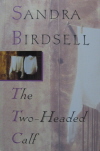
The Two-Headed Calf by Sandra Birdsell

The Two-Headed Calf

This was a collection of short stories. Some were loosely connected (same town, characters from one story mentioned in another, that sort of thing) while others weren’t connected except via geography (they were all set in the prairies, mostly Manitoba). I don’t know if I liked that. I think maybe I like it better when the stories in a collection are either all separate or all connected. I never really thought about that before, but it occurred to me here. I guess the mixture makes it seem kind of “well, this is what I had on hand…”

These stories were very readable, but they didn’t wow me. I’m not sure why (the back cover had kudos from writers who do wow me–Alice Munro and Michael Ondaatje and Jane Urquhart, which is probably why I picked it up in the first place). Maybe I’m just prairied out. Perhaps I shouldn’t have read two Manitoba-based books in a row. I thought it was a good segue. On second thought, I don’t think that’s it. I think I just didn’t connect with the characters. I’m sure others would find them appealing, I just wasn’t having those “yes!” moments that you do when writing really resonates.

2006 Books Read – #2

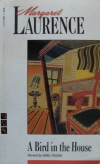
A Bird in the House by Margaret Laurence

A Bird in the House

This is the 4th book in a five-book series that Margaret Laurence wrote about the fictional Manitoba town of Manawaka (based on her hometown of Neepawa). It’s not a “series” in the sense that one normally thinks of a series; the books are only loosely connected–each one has a different main character–and so they really stand alone. There’s no need to read them in order or together.

The 5th book, The Diviners, was given to me as a gift when I was 14. I’d hung onto it and re-read it a few times over the years, and somewhere along the line, I decided I’d like to read the others, so I started picking them up when I saw them in used bookstores (this adds an element of chance to it that I find exciting. YMMV). A Bird in the House was the last of the five that I had yet to read. I found it a few weeks ago.

This is a book that I think I could re-read over and over again. It’s actually not a novel, but eight interconnected short stories. Which is interesting to me, because I’m working on a book like that. The stories center on the childhoood of a girl who grows up to be a writer, essentially depicting the process of how a child becomes a writer. I smirked to (at?) myself in amusement numerous times.

The other books in the series are: The Stone Angel, A Jest of God, and The Fire-Dwellers.

2006 Books Read – #1

Purple Hibiscus by Chimamanda Ngozi Adichie

Purple Hibiscus

I picked up this book because I recognized the author’s name. Back in the day, she posted at The Site Where the Snarkers Met (as Amanda Ngozi). I remembered her writing & that I liked it, so when I heard about this book that was enough to send me to the bookstore looking for it.

So. I liked it. It was an easy read, meaning the writing didn’t tax my brain, which is precisely what I needed. It was interesting, in that it was set in Nigeria, so I got some insight into another part of the world. Always good. And I think it was quite perceptive; I related a lot to what the story had to say about family. I’d read more by this author.

Books Read May – December 2005

The brevity of this list reminds me of how prolific a reader I used to be. In grade seven, my teacher had us start a list of books read at the back of one of our notebooks. I think it was more of a suggestion than an assignment because I don’t remember anyone else keeping up with it. But I did, and by the end of the school year, I had read ~120 books. I remember being so thrilled when I hit 100. Anyhow, the school year being approximately 10 months, that’s about 12 books / month. Or a book every 2.5 days.

Okay, so I can still read a book in two days. Or one, even. But these days I seem to spend a lot of my time reading Stuff That Is Not Books. Like blogs. Or submissions. 🙂

  1. Saints of Big Harbour by Lynn Coady n
  2. The Chimney Sweeper’s Boy by Barbara Vine n#
  3. A Child’s Book of True Crime by Chloe Hooper n+
  4. Wide Open by Nicola Barker n+#*
  5. Ripley’s Game by Patricia Highsmith n#
  6. Time Off for Good Behavior by Lani Diane Rich n+
  7. A Girl Named Zippy by Haven Kimmel m+
  8. Take the Cannoli by Sarah Vowell e+#
  9. Geographies of Home by Loida Maritza Perez n+
  10. Liza’s England by Pat Barker n#*
  11. For Rabbit, With Love & Squalor by Anne Roiphe e#
  12. Letting Loose the Hounds by Brady Udall s+#
  13. The Digital Sublime by Vincent Mosco nf+
  14. The Real World of Technology by Ursula Franklin nf+
  15. Under Technology’s Thumb by William Leiss nf+
  16. The Small Details of Life by Kathryn Carter nf+
  17. The Extraordinary Work of Ordinary Writing by Jennifor Sinor nf+#
  18. Reading Between the Lines by Betty Jane Wylie nf+

Revisions

Writer Cody talks about changes to his novel ‘Ricochet River’

[T]his new version of the coming-of-age novel is missing certain sexual references and profanity that Cody thinks caused some high schools to ban it from their classrooms.

In one, the book’s main characters — all teens — spend the night in a hotel room in The Dalles. It’s a comic scene that has been one of Cody’s favorites for out-loud readings. But it involves alcohol and sex, and Cody understood parents’ and teachers’ discomfort with the messages the scene might send to high schoolers.

Cody removed this scene and toned down another that occurs in the woods near some mating salmon. He also replaced a few expletives.

Caveat: I don’t know this book.

That said, hmm. He says he did it because he understands teachers feeling uncomfortable with those bits in the classroom, not because of right-wing pressure / book banning.

Yeah, I dunno. Isn’t it the stuff that’s uncomfortable that’s most important to deal with–not avoid?

Alcohol and sex is the reality of high school for a lot of people. Aren’t we better off acknowledging and dealing with it directly that than pretending it doesn’t happen?

And seriously, profanity? Profanity is the reality for everyone.

A lot of people seem to want childhood/adolescence to be something that simply doesn’t exist. That never did exist. I think it must be true that when most people grow up, they forget what it was like to be 7, 10, 15.

In one of Madeleine L’Engle’s books (I think it’s Circle of Quiet) she talks about how when she’s writing about being 15 (or a character who’s 15), at that moment, she is 15. When I first read that, it was an “aha” moment for me. I realized that when I was telling a story of something that happened when I was 13, I’d go back there, I’d be 13 again, if only for a moment (people would sometimes comment on how worked up I could get about things that happened years ago, and I guess I wondered if I was weird for still being able to feel my 13yo pain). I think that ability is essential for a writer, but I guess not everyone has it.

Thinking…

I must be getting cooler (um, yeah, right) or at least more tuned in to the >cough< A-List, if I can read a list like this, and not only be familiar with five of them but have been so over one of the 5 six months ago (sorry, JB).

(The joke’s on me, of course, as he’s the one with the book deal.)