Tag Archives: Books

Undistracted reading environment

Franzen writes the kinds of novels that are best read on the Kindle. They demand attention solely to the text, the kind of undistracted reading environment that makes e-readers so appealing – not to mention the perk of carrying a small electronic device instead of a 700-page hardcover copy of Freedom.

Kevin Nguyen

This just struck me as an odd thing to say. Do people really think that ereaders are less distracted reading environments than traditional books? I don’t have an ereader (yet…), but I have downloaded a bunch of books to my phone, none of which I have actually sat down and read through because I find it’s such a distracted reading environment. Maybe it’s just because I have the attention span of a gnat, but I find print books, with their singular purpose and lack of any hyperlinks to click or buttons to push, make it easier for me to focus, to settle my brain. If I want to read something else, I have to physically move to do so. I’m afraid with an ereader all the “something elses” a click away would just be too tempting and I’d end up never finishing anything.

We’re having an ereader discussion at the TC forums if you want to join in (no registration necessary!).

Thin on story … thick with introspection

The [new Great Gatsby] film won’t come close the power of the novel, but not simply because Gatsby is a book, and, as the cliché insists, the Book is Always Better Than The Movie. Film versions of Fitzgerald’s masterwork inevitably fail because of the kind of novel Gatsby is—frankly thin on story, but incredibly thick with introspection, thoughts unspoken, intricately woven metaphor, and long, dazzling descriptions of otherwise mundane things like sunsets, front lawns and angry wives that are only special because of how the narrator describes them.

Not every book is better than the movie, after all. … [Fight Club and The Godfather] made such good movies because their plots are visual and action-packed. Gatsby‘s plot isn’t. … The novel’s genius is in how Fitzgerald can invest mere tabloid fodder with some sort of epic grandeur. He delves deeply into his character’s thoughts, Nick’s semi-omnipotent narration describing motives and sensations that simply don’t translate well to the screen.

Movies, for all their scope and power, and for all the CGI/3D technological whiz-bangery, have never been any good at expressing human thought.

Hampton Stevens

This is something I’ve often thought about / discussed before. How I often enjoy movies (or TV series) based on books I didn’t like (or know I wouldn’t like, based on past experience). And of course part of it is that good actors turn stock characters into nuanced ones  and similarly, that good cinematography can turn bland descriptions of place into stunning visuals. But part of it is also this, i.e. that some material is more suited to film than books and some material is more suited to books than film. Anyhow, what I was wondering is if this can be related to ebooks vs. pbooks. As in ebooks are perhaps more suited to plot-based reads, books where the story is more important than the writing (how the story is told). Books where you can be a little distracted and it doesn’t really matter. And correspondingly, pbooks are perhaps more suited to character-based reads, books where how the story is told is more important than the plot. Books that require undivided attention, where all the benefits of ebooks and ereaders would not actually be beneficial. As in, the pbook is better suited for this kind of reading than any ebook (with accompanying distractions) because this kind of book was developed for the pbook. Whereas the plot-based story has been around forever and is easily transferable from one medium to the next—but is perhaps best-suited to media other than the pbook.

Further, while plot-based stories have universal appeal (I don’t mean that everyone likes every story, but that everyone likes some plot-based stories), writing-based stories do not. Writing-based stories have always had a smaller audience. It’s a niche market.

So I think one of the reasons the “death of the book” argument seems to go round and round in circles is that you have two groups of readers and two groups of writers who think they’re discussing the same thing, but really aren’t. When every story was packaged in a pbook, they were all booklovers and it was all good. But now, with choice of medium, the divisions start to create this content/format clash. For example, I think this is why you get people saying stuff like content is what matters; format is irrelevant. By “content” they’re thinking of the story, the plot, which could be told in any medium. But to a writer/reader who leans toward writing-based stories, this makes no sense. To them, of course it’s important where the words appear on the page, what typeface is used, whether Britishisms have been Americanized, etc. Because it’s about the writing… as an art, I guess. As opposed to a craft. Yes, I guess you could think of it like that: art vs. craft.

I tried to start a discussion about this at TC once but it didn’t go so well. I think I was misunderstood. It’s not about one style being better than the other. They’re different. One has a wider appeal; one has a narrower appeal. But there are always going to be plot-driven stories that appeal to those who generally like character-driven ones and vice versa. Just like classical music vs. pop. Or modern art vs. Etsy crafts. Both have their merits and it is totally possible to find both appealing (but probably for different reasons). Both require skill, but different kinds of skills.

If you think about modern art, for example, when people look at a piece, they often say, “I could have done that.” But that’s the key: they didn’t. The execution of the piece may not have required a great deal of skill, but the skill is in the idea, the concept, the meaning of the piece. On the other hand, a craft might not have a “big idea” behind it, but it can nevertheless require a lot of technical skill to execute. The artist needs to continually be coming up with new ideas (i.e. “wow, where did that come from?” ideas). The crafter needs to be able to replicate (or riff off) successful pieces. They’re different, but (done well) neither are easy.

I think you have to start from that point, that both kinds of story can be good (and also: both can be terrible) in order to even have a discussion where people are actually listening to each other and not just shouting that the other is elitist or dumb or covering their ears and going, “lalala I can’t hear you.”

23: Turning Life into Fiction

Turning Life into Fiction by Robin Hemley

One last book for 2010. This was another library book sale find.

I have to admit I was disappointed when I started reading it. I plucked it off the to-read shelf because I was looking for some creative inspiration (a la Natalie Goldberg) but it’s not that kind of book. Rather it’s a book of very practical advice for beginning writers. So while it didn’t give me what I was looking for, I found myself agreeing with his advice. For example, he advises against surprise! endings and “as you know, Bob” dialogue (though shockingly he doesn’t know the term aykb!), encourages writers to think about their audience, and avoid “so what?” stories (ones with no point). There’s really nothing to disagree with here. I think he tends to get a little wordy/repetitive at times, but it’s all good advice. There are also writing exercises at the end of each chapter.

I’d recommend Turning Life into Fiction to many people who submit to Toasted Cheese. This edition was published in 1994 (noticeable due to the complete lack of references to the internet!), but there was a new edition published in 2006, which I assume rectifies that issue 🙂

Ok, and now for the good (coincidental/serendipitious/amusing—take your pick of adjectives) part. Robin Hemley did his MFA at Iowa and, at the time TLiF was published, was teaching at Western Washington University. David Shields did his MFA at Iowa and teaches at the University of Washington. I think they’re buds! I offer, as proof, this:

A lot of writers, including myself and most of my friends, occassionally use the names of their friends  in their novels or stories. These cameo appearances are designed for the mutual amusement of the writer and her friend. … David Shields often includes me in his novels as some off-stage editor or other pesky character. (p. 179)

LOL. Ok, so I started reading TLiF, and was progressing slowly through it, when I ran across this reference to David Shields (and keep in mind, folks, this was written in 1994—this the passage that made me check the date). This is from “Finding Your Form,” a chapter about deciding between memoir and novel:

According to writer David Shields, novels in general tend to be more concerned with story, while memoirs tend to focus more on an exploration of identity. That’s not to say that novels are always more concerned with story, while memoirs are always more concerned with an exploration of identity, just that those are the tendencies.

In Shields’ case, he’s noticed his work steadily creeping away from fiction into the realm of nonfiction. His first novel, Heroes (Viking), about a midwestern basketball player and the reporter obsessed with him, is, more or less, a story he imagined whole cloth. His next novel, Dead Languages (Knopf), a widely praised novel about a boy who stutters, contains many elements of autobiography. As a child, Shields had a serious stuttering problem, but the story is almost entirely fiction. A Handbook for Drowning (Knopf), a story collection, is a step closer to autobiography—a few of the pieces feel, to Shields, almost like essays even if most of the details are imagined. His latest work, Remote, which at this writing he has not submitted to a publisher, is a series of fifty-two interconnected prose meditations. It is unquestionably a work of nonfiction. To Shields, the prose pieces coalesce into a kind of oblique autobiography. In this book, the author “reads his own life as though it were an allegory, an allegory about remoteness.” Despite the autobiographical nature of the book, Shields still thinks the persona that emerges on the page is essentially a fictional character. “The identity I’ve evoked,” he explains, “the voice I’ve used, the tone I’ve maintained, the details I’ve chosen, are highly selective, and in many instances, frankly fictionalized. To me, these definitions get pretty murky. Memory is a dream machine. The moment you put words on paper, the fiction-making begins.”

But the question remains, How do you decide on a novel or a memoir? To a large degree, that’s an individual decision, based on who you are and what your material is. Shields tells his students to ask themselves, “What is it you’re trying to get to? Are you essentially trying to tell a story, and if so, are you interested in setting that story in some kind of place? Then you are probably working on a novel. But if the real impulse is a kind of excavation of a self, a kind of meditation on the self, are you really working on a memoir or autobiography of some kind?” When Shields began working on Remote, he thought it was going to be a novel. “After a while, though, I realized I wasn’t interested in character conflict per se. And I wasn’t interested in a physical place, though I made gestures in those directions. What I was interested in was more autobiographical: the revelation of a psyche’s theme via a sequence of tightly interlocking prose riffs, which became the book.” (p. 40-41)

And then I read Reality Hunger and went back to TLiF and finished it. Which was kind of weird! I mean, Hemley’s sort of exploring a similar theme—the thin line between nonfiction and fiction—but of course Hemley’s book is coming at it in a more practical way than Shields, and at the end of TLiF he gets to the stuff about wanting to avoid hurting people’s feelings (or getting yourself in legal hot water), and yes.

First, life may be chaotic and without plot, but that doesn’t mean people don’t need stories. Maybe they don’t need novels, but they need stories (maybe their stories come in the form of movies or songs or video games). But beyond that, people are human; they’re not robots. Blathering on about a quest for the real without considering that a blind allegiance to nonfiction might embarrass or wound or alienate other people is being deliberately obtuse.

The number one reason to choose fiction, in my opinion, is that it allows one to write with complete honesty about things that would otherwise be difficult/impossible to write about. Which I know sounds contradictory, but it’s not if you consider truth and fact to be different things. You change the facts to get to the truth. If you don’t—if you decide it must be nonfiction, that you must stick to the facts—you’re not going to write completely honestly, because you’re going to worry too much about how the people in the story are going to receive it. Your story may be factual, but it won’t be truthful. And that’s why I think fiction is necessary.

22: The Steamy Kitchen Cookbook

The Steamy Kitchen Cookbook by Jaden Hair

Jaden’s Steamy Kitchen blog is one of my favorite food blogs and so I picked up her cookbook.

The Steamy Kitchen Cookbook has a nice design. It’s hardcover (with a dust jacket even; that might be overkill for a cookbook ;-)). Every recipe is illustrated with a photo of the finished dish. This makes for good inspirational browsing—perfect coffee table material.

It opens flat and stays open, which is nice if you’re actually using it to refer to while cooking. Wouldn’t want to get sticky fingerprints on these pages. (Always the dilemma with a shiny cookbook—who wants to sully the pages with cooking debris? Solution: pull up the recipe on the blog and sully your laptop instead! hah!)

Aside: all these food bloggers who take amazing photos make me long for better light so I could take better food photos. But alas. I will just have to do the best I can with my crappy light situation.

The book strikes a good balance between personality and practicality. Recipes range from appetizers to dessert and everything in between. I especially liked that there was a sauce section, as well as various sauces/marinades included throughout. I don’t have any qualms throwing together ingredients on my own, but some guidance in the saucy area is always welcome, since the right sauce can shift a dish from ok to awesome.

Inspired to make a few things I hadn’t thought of attempting before, like potstickers and spring rolls. On the other hand, I may also have to make the food court sweet & sour chicken, just because lol! 🙂

ETA: I did make the sweet & sour chicken, since I had pretty much all the ingredients on hand and it used up some of the ketchup that’s been languishing in my fridge. It really did mimic the flavors of the “classic” dish, but the sauce was too sweet for my liking. If I made it again, I’d cut back on the sweet and add more sour/salty/spicy flavors. Especially spicy! It was crying out for some heat. (ymmv, of course!)

Sweet & Sour Chicken

I love them as sort of fetish objects

The crux of this whole thing with ‘The Sentimentalists’ is: what’s a book? Is it that fancy artisanal piece that (Gaspereau publisher) Andrew Steeves and company makes, or is it the words [Johanna Skibsrud] wrote, regardless of the delivery methods? I still buy physical books too. Sometimes there are books that … I’m going to want on my shelf. But I’m running out of space in my house and most of the time it’s about reading – it’s not so much about the physical object, although I love them as sort of fetish objects.

Joan Langevin Levack

This is the thing: people seem to have this belief that books (the words, content, form) will remain the same regardless of “delivery method.” This is why they are insistent that the medium doesn’t matter. But why would this be so? Sure, they mimic paper books right now, but that’s because pbooks still exist and are still reasonably popular. If you remove pbooks from the equation, if pbooks are relegated to “fetish objects” what’s to prevent ebooks from morphing into very different things—or, rather, non-things?

I’m not passing judgment on whether that would be good or bad, I’m just pointing out that it’s likely. Not immediately, but eventually. And I just wonder if people’s feelings about ebooks might be different if, for example, they knew that eventually people would stop writing novels because that’s obsolete pbook genre. (Not really that farfetched. The novel is a pbook genre.)

Reality Hunger

I’ve just been writing 100-word reviews at Goodreads of the books I’m reading for my comprehensives, but I was unable to keep my thoughts on Reality Hunger to 100 words. And I know someone will say that just the fact I feel compelled to write about it means it’s good, but— I think my need to say something about this book stems more from the overwhelmingly positive response to it than from the book itself. That said…

My main takeaway from Reality Hunger is that fiction bores David Shields (and therefore, it should bore you, too!). Sure, there were some interesting quotes in the book and some points I don’t disagree with—that memoir and fiction are closer than people think, for example, or that memoir is much like poetry in its mix of real and invented. Sure. Yes. But mostly, in the bits that weren’t the unattributed words of other people, it was Shields going on about how he finds fiction boring and memoirs are too close to fiction and essays are where it’s at. Ok, then. Write an essay.

This wasn’t an essay. It was a bunch of disconnected sentences and quotations, some Shields’s own, some from other people. I’m not sure where the manifesto comes into it. While it was a book object-wise (hilariously, one with a deckle edge! Quote from RH‘s Amazon page: “Deckle edge books are bound with pages that are made to resemble handmade paper by applying a frayed texture to the edges.” So it’s a fake handmade book! Muahaha! Now that is awesome. Intentional?), it wasn’t a book content-wise, meaning there was no rationale for this being a book.

It was as if I took the contents of my blog for the past year, stripped the attributions from the quotes, dumped it all in to a Word doc and published it as a book. Which I could do easily enough through any one of the many POD services available. But to what end? What would be the point? Bookifying the quotes and posts I’ve written would mean stripping out the links (context). And a string of quotations, without context or explanation for why I’ve saved them would be pretty meaningless to anyone else.

No, the best place for such a compilation is my blog, not a book. Which I think is maybe the greater point that Shields is missing. Not everything should be a book. We have different media now; make use of them where appropriate. Reality Hunger could have been an interesting blog project, but it makes for a boring book.

That’s right. I said boring.

There’s nothing I find more boring than a privileged person going on about how bored they are. Give. me. a. break. I really do not care if you don’t enjoy novels or find them boring. Don’t read them then. Problem solved. Why are you telling me this? Why are you telling anyone this?

If I had to sum up my opinion of RH in one word, that word would be: meh. I didn’t hate it, because, like I said, there are interesting ideas blobbed in here and there, but they’re not explored. To me, it has a “been there, done that” quality. Yes, I know the lines between fiction and memoir blur. Yes, I know there’s a trend to reality/nonfiction. etcetera. Shields was stating (or quoting) these ideas like they were revelations when they’re obviously not. (And now, I’m wondering, it this just me? Maybe I’ve been thinking about this stuff for too long. Maybe these are revelations to some people.)

Anyway, I wanted more. I was expecting an exploration of what reality is. Or why the “reality” we seem to be hungering for is so fake. But Shields seems to take the trend to reality at face value, like it’s actually a trend away from fiction to nonfiction, from “let’s pretend” to “let’s be real.” But let’s be serious. The “reality” we’re trending to is just as contrived (if not more) than the fictional worlds Shields claims he can’t stand. (At least fiction has the honesty to admit it’s made up.) It’s not the contrivance that’s changed; it’s what we call it. Used to be we were fine with saying “this is pretend” and now we have to say “this is real” (but of course we all know it’s fake). So the real question is not what’s driving us to reality, but what’s driving us to claim we want realness when really we just want to pretend that the fake is real.

Kind of like how the abundance of positive reviews of RH go on about the freshness of Shields’s ideas, his argument, his manifesto. What?! He is quoting other people who already said these things. By definition these are not fresh, new ideas. They’re recycled ideas.

And that’s the other thing. Shields fancies himself a bit o’ a copyfighter: “I’m going to direct quote a bunch of people but not attribute them! Whee! I’m getting back to the roots of writing!” Um, no. Copyright is the exclusive right to make copies, derivative works, etc. And yes, it’s out of control, but that’s an issue separate from what Shields is doing (or wanted to do) here. Attribution is a moral right. If you’re not attributing something you know someone else said, you’re not copyfighting, you’re being an asshole. Copyright restrictions do inhibit creativity; crediting (or hat-tipping) people for the contribution they’ve made to your work does not.

Of course all creative work builds on what has come before. But acknowledging that your ideas build upon bits and pieces that you’ve read and seen and heard over the course of your lifetime, much of which you don’t consciously remember, is quite different than directly quoting someone else but deliberately choosing not to give them credit.

This hit home most acutely when I realized Shields quotes from at least two unpublished theses—I assume former students of his. While one might expect that the writings of famous authors would be recognized and identified by some, if not all, readers, the same cannot be said for the writings of unknown graduate students, especially when the quoted-from manuscripts are only available in the university library (not online). If Shields hadn’t been forced to cite, who would ever have known these words were not his? Seems rather unfair (especially considering he’s profiting from this book, and they, presumably, are not. Correct me if I’m wrong!).

And it’s not just unfair to the writers whose work he’s quoted. It’s unfair to his readers. With the authors credited, readers can find and read the works Shields quoted from. If the authors had not been credited, RH would have just been a dead end for a lot of people. Not citing advantages those who have already read pieces Shields quotes from and are able to recognize them, and disadvantages those who haven’t. I can’t help thinking there’s a whole power/privilege dynamic going on here. Those already on the inside get the references, drawing them in closer, while those on the outside get pushed further out.

Shields tries to position his unattribution as akin to sampling in music or collage in art. But there’s a big difference. In music and art, the source material is implicitly credited. In music, the sample will be readily identifiable as being from a different source because the singer’s voice, for example, will be different, so even if the listener doesn’t know who the singer is, they’ll recognize that part of the song as a sample from something else. Similarly, with artistic collage, the collaged bits are identifiable as being from a different source via style, via medium, etc. The artist and the musician are not trying to pass off the samples as their own work but rather openly incorporating it in something new.

With a printed book, it’s different. A lot of the cues you have with visual or aural media are missing. In RH, for example, everything is presented in the same way: the typeface is the same throughout; there’s no attempt to use bold or italics or a different font size or numbering scheme to indicate which words are Shields’s and which are quoted. What you have left are writing style and context. And to be sure, it was obvious that some of the quotations were not written by Shields due to a jarring difference in style or a reference to things that made no sense in terms of Shields’s own background. But if you went into RH not knowing anything about Shields or that the book was made up of a patchwork of quotes, you could be excused for wondering how he managed his many careers (writing! music! movies!)—not to mention how such an inconsistent voice got past an editor.

RH would have been better as a real scrapbook, torn bits pasted together, a true patchwork quilt of quotations, different typefaces and papers, one where the reader could see the torn edges and how Shields knit them together.

I found this remixed version of Reality Hunger, with the attributions from the appendix incorporated into the text, and just having those cues there makes for a better read, imo. The changes in voice make sense and there’s a better sense of time and context (the attributions aren’t dated, but you can be sure a long-dead writer isn’t referring to the internet, for example). But it also makes you really aware of how radically not a book this text is. It’s just a bunch of quotes!

Is it possible that all the positive reviews, including the ridiculously over-the-top cover blurbs are meant to be sarcastic? Cause if you read them with sarcasm they kind of make sense. If they’re meant to be taken seriously, it feels like an Emperor’s New Clothes kind of deal, like how people keep claiming that Twilight actor is attractive, but all I think about when I see photos of him are the fugly hockey players back in high school who girls pretended were cute (boys with no front teeth are adorables, amiright? ;-)) because, hey! they were hockey players.

Let’s pretend that the fake is real.

If we repeat it often enough maybe we will make it so.

*

Everyone and their dog reviewed RH; this is the one that I thought captured it best. Oh, and also this.

In our hands

Thousands of people might only read on their iPads or Kindles in the future; they may never buy another printed-on-paper novel.  Thousands more will never have books; they will tell their stories by firelight and kerosene lamp in a circle of people as they always have … .  And thousands more of us will only read books we can hold in our hands and pass on.

Susan Straight

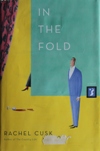
21: In the Fold

In the Fold by Rachel Cusk

First new-to-me author in a while. I’d seen Rachel Cusk mentioned/quoted a few places this year and she sounded like someone I might like to read, so when I saw a couple of her books at the library sale I picked them up.  And I still think that might be the case, but I wasn’t particularly enthused by In the Fold.

In the Fold is about Michael, who is invited to his university roommate Adam’s sister’s 18th birthday party. He goes to the party, at the family home (estate? farm?), and develops an impression of the Hanburys that he carries with him throughout his life (eccentric, bohemian, etc.). He starts a career, marries, has a son, and falls out of touch with Adam, though he keeps thinking about him and his family. As his marriage goes south, he contacts Adam and is invited to visit. Michael becomes reacquainted with the family and realizes they’re not so much charmingly eccentric as boorish and self-centered.

At first I thought, maybe it’s just too British (i.e. maybe I’m just not getting it). I do think there’s a whole class thing going on here, the nuances of which I, in my provincial North-American-ness cannot fully understand. But I don’t know, it was more that all the characters were unpleasant to be around. Yes, even 3-year-old Hamish. It a very tiring read. I don’t think characters need to be likable (in the sense you want your friends and family to be likable) but they need to have some kind of appeal. (Tom Ripley isn’t likable—he’s a psychopath!—but he is fascinating.)  Or else there needs to be some kind of urgency that propels the reader forward. But there was no urgency. And the only emotion these characters generated was a halfhearted impulse to slap them upside the head.

Actually, my mention of Tom Ripley has helped me pin down the issue: I think it was that it was that there was no doubt that the reader was supposed to find these characters unpleasant. In a character study, I want to be more conflicted about the characters, to be drawn to—despite his/her faults—the despicable character or to be repulsed by—despite his/her attributes—the virtuous character. Here everyone was unrelentingly mean and selfish and vapid. Which I suppose is a statement on modern society, but… meh.

At any rate, Cusk’s writing was very good, so I will try again with the second book I picked up (Arlington Park).

Silver Lining

It seems to me that if you’re going to spring for an actual book instead of an electronic edition, you might as well buy the most beautifully designed one you can find. (Perhaps that’s the silver lining in this publishing revolution — actual, physical books are going to have to get even more beautiful in order to survive.)

Stephany Aulenback

A specific copy

One reads a certain edition, a specific copy, recognizable by the roughness or smoothness of its paper, by its scent, by a slight tear on page 72 and a coffee ring on the right-hand corner of the back cover.

—Alberto Manguel,
in A History of Reading
(via)