Tag Archives: CanLit

10: Cockroach

CockroachCockroach by Rawi Hage

My rating: 4 of 5 stars

From the fall 2012 VPL book sale.

Read in March 2013.

View all my reviews

The protagonist is an immigrant living in Quebec. He had a job at a restaurant as a dishwasher, then was promoted to busboy, but he quit when the maitre’d told him he was “too brown” to be a waiter. He’s now on welfare.

He tried to commit suicide by hanging himself from a tree, but the branch broke. He’s currently in court-ordered therapy with a psychiatrist, Genevieve. In his sessions with Genevieve, he talks about his past and his regrets, and these scenes foreshadow the book’s climax.

All of his friends/acquaintances are also immigrants, but they don’t share his background. Most of them, like his frenemy Reza and Shohreh, who he sort of has a relationship with, are Persian/Iranian, but he isn’t. His name and home country are never revealed. (‘Lira’ is mentioned, but this is a generic term, like ‘dollar.’) However, it’s possible he’s Lebanese, since Hage immigrated to Canada from Lebanon.

He imagines himself as a cockroach. This is partly a metaphor for how he sees himself (a low-life, a pest, but resilient), but also being a cockroach allows him to explore places he couldn’t as a human. One question for the reader to decide is how much of what he does as a cockroach is real and how much is imaginary.

He’s kind of an anti-hero. He’s not a ‘good’ person (yes, the dreaded unlikable character!), but I still empathized with him.

Cockroach is funny, in a dark humor / black comedy kind of way. In what comes as no surprise (at least to me!), there are drug-induced hallucinations. Note to self: if you have the urge to write an “I’m on drugs!” scene, just say no.

Also, it’s quite scatological. You’ve been warned!

VPL Fall Book Sale

8: Heave

HeaveHeave by Christy Ann Conlin

My rating: 3 of 5 stars

From the Fall 2012 VPL book sale.

Read in February/March 2013.

View all my reviews

Heave opens with Seraphina “Serrie” Sullivan running away from her wedding. This scene frames the story; the rest is told in flashback, starting from Serrie’s childhood.

I found the voice kind of hard to get into at the beginning. More drug-addled musings. Yep, it’s a theme.

At age 20, Serrie is in 3rd year university. She’s homesick (even though she’s only in Halifax, a short distance from home). Her bffs are Dearie and Elizabeth. Serrie is an alcoholic, like her dad, and has been since she was 14. She has a professor who’s kind to her, who notices she’s missing class, and tells her she should be thinking about grad school. Her brother Percy is doing an MA in Toronto (i.e. he’s perfect).

Serrie overdoses and ends up in the psychiatric hospital. She isn’t depressed; she’s young for her age. She doesn’t want to be an adult because it seems life gets worse the older you get.

Martha, Serrie’s mom, is depressed. She’s lamenting giving up her dreams and makes Serrie feel bad for being young / still having dreams. Cyril, Serrie’s dad, is oblivious. He’s too busy collecting outhouses. Yes, you read that right.

Anyway, when she gets out of the psych hospital, she gets a job in a pie factory (really!), where she meets Hans, this rich German dude.

You know how terrible things are always befalling certain people? And at first you’re like, “omg! that’s so awful!” but after the eleventy-billionth dramatic thing in a week/month/year, you’re like, “wtf dude, what’s with the constant drama? I haven’t had this much drama in my entire life!” Except you don’t actually say that because everyone would give you the side-eye and call you out for being mean and ostracize you even though they’re thinking the exact same thing. Well, that’s kind of what this book felt like. There was some good stuff here, but omg. Drama overload.

Well into the book there’s a big reveal, but it’s foreshadowed throughout. Watch for it!

I will say, with the framing device, most of the book in flashback, girl going crazy because she doesn’t want to grow up, this reminded me of The Language of the Goldfish. The difference being TLotG is a skinny novella, and Heave is a 300+ page epic.

VPL Fall Book Sale

6: Mean Boy

Mean BoyMean Boy by Lynn Coady

My rating: 4 of 5 stars

From the fall 2010 VPL book sale.

Read in January/February 2013.

View all my reviews

The protagonist of Mean Boy is Lawrence (formerly Larry) Campbell, age 19. He’s from Prince Edward Island and is attending Westcock University in New Brunswick. It’s 1975.

The title is ironic. On page 35, he says, “I am trying to be meaner these days…” The highlight of Lawrence’s university experience is the poetry class he’s taking with his hero, poet Jim Arsenault.

Lawrence uptalks, which distresses him. Jim calls him “Larry” which annoys him.

Jim has been denied tenure, much to Lawrence’s consternation (he would have gone to the University of Toronto if Jim hadn’t been at Westcock). He and some of the other students (Todd and Sherrie) in the poetry class decide to write a letter to the admin and get all the students to sign it. The petition feels like a transgressive act to Lawrence and Sherrie.

Meanwhile, there are student/prof drinking-parties at Jim’s house and a poetry reading by Dermot Schofield, Jim’s frenemy + fellow poet, which turns into a comedy of errors. Oh, an awesome subplot featuring Lawrence’s cousin Janet that turns out to be not what you think. Instead, Lawrence learns a lesson about distancing yourself from your family in order to be able to write about them.

In the end, everyone’s flaws are revealed.

I guessed that “Westcock” was actually Mount Allison and a quick search confirmed that supposition to be correct. And it turns out that the character of Jim Arsenault is based on real-life poet/Mount Allison prof John Thompson, which apparently cheesed off some people who knew him. Interesting.

I’ve read all of Lynn Coady’s books prior to this one (Strange Heaven, Play the Monster Blind, Saints of Big Harbour; her latest, The Antagonist, is on my shelf). I read Strange Heaven because it was lauded at the time, and while I thought it was good, I didn’t really get the upop. I had the same feeling with PtMB and SoBH. Good, but missing… something. imo. Obviously others thought they were perfect. But Mean Boy, Mean Boy I loved. The ending gets a little crazy (I can’t seem to escape drug-induced hazes in fiction of late) but I will forgive this because endings are hard.

More 55-cent Books

1: Turtle Valley

Turtle ValleyTurtle Valley by Gail Anderson-Dargatz

My rating: 3 of 5 stars

So, way back in the day when she was just Anderson without the -Dargatz, I knew Gail. Not well, it was more a friend-of-a-friend situation, but there you go.

Previously I read A Rhinestone Button (in 2003) and A Cure for Death by Lightning (in 1999, which I weirdly remember because I read it on a trip). Which predates me keeping track of my reading, so no links. I can’t say I have any strong memories of either book, but then, it’s been a while! This is why it’s good to write things down.

Anyhoo. Turtle Valley. Purchased at the VPL Book Sale, October 2010:

More 55-cent Books

Turtle Valley is set just outside Salmon Arm during the August 1998 wildfire.  Some of the hyper-local place names are fictional (Turtle Valley, Promise), but the general geography is authentic. The fire was to the west of Salmon Arm and this is where protagonist Kat’s parents live.

She has returned home (accompanied by her husband, Ezra, and son) to help her parents move the possessions they want to keep safe from the fire to her sister Val’s garage (in Canoe, east of SA). They do this at what feels like a rather leisurely pace, intermingled with reminiscences, reconnections, and revelations.

Kat + Val’s father, Gus, is dying. Val thinks their mother, Beth, has the beginnings of dementia. Beth + Gus’s neighbor, Jude, is Kat’s ex. Kat married Ezra on the rebound. Ezra has had a stroke and Kat feels more like his caregiver than his wife.

There’s a parallel between Ezra and Beth’s long-deceased father, who suffered from PTSD as well as a brain injury (cause: WWI). There’s another parallel between Kat/Jude’s relationship and the one between Beth’s also-deceased mother, Maud, and Gus’s deceased uncle, Valentine. There’s a third parallel between war and the wildfire (smoke fills the air, ash and sparks rain down, army trucks race past the house, helicopters and water bombers fly overhead). There’s a fourth parallel between the wildfire and Jude’s kiln (he makes raku).

And… there are ghosts.

To be clear, these are magical realism style ghosts. But there is plenty going on in this story. Did it need ghosts? I think no. I think the ghosts were superfluous. The story would have been just fine without ghosts. But it’s true I’m not a vwzg* person. I know other readers love the ghosts.

This story feels very personal. I try to avoid conflating author/narrator, but… Kat is a writer. She’s the same age as the author. They both worked as reporters for the Salmon Arm Observer. They both had husbands who had strokes. etcetera. Obviously a lot of this story is culled from real life. It made me wonder how the real-life counterparts felt about this story. How do you pull from real life so transparently and survive the backlash? That’s something I still struggle with, will maybe always struggle with, though I tell myself I need to get over my hang ups and just write.

View all my reviews

*vampires, werewolves, zombies, ghosts

17: I’m Bored

I'm BoredI’m Bored by Michael Ian Black

illustrated by Debbie Ridpath Ohi

My rating: 5 of 5 stars

View all my reviews

Purchased at Chapters on Robson. I didn’t see it on the shelf at first, but I checked the computer and it said there was one (one? eep!) left. I headed back to the shelf and a-ha! The reason I’d missed it was because the spine is yellow. I’d been looking for blue. I grabbed it and vamoosed before anyone else could lay claim 😉

Ok, so I didn’t buy this for me. I got it for my younger niece for her birthday. I read it before I wrapped it up. And now you know my picture book secret.

Anyhow, she’s turning six and she learned to read this year, so I’m glad this came out this year as I couldn’t get away with a picture book next year (which makes me sad! no more picture books 😦 maybe I’ll have to buy them for myself ;)). She’ll breeze through the text, but I got it for the illustrations.

Full disclosure: I’ve been following Debbie’s various blogs since forever and she’s good friends with Erin.

The truth is, I buy most picture books based on the illustrations. I love picture book art. And it’s the illustrations that make I’m Bored special. There’s one image in the mid-story montage of a sofa-ship that totally reminded me of the couch forts my brother and I used to make. The bored little girl is perfect for the story and the potato is so expressive. How did she do that? It’s a blob and a couple lines!

That said, the story seems simple, but it’s got some great elements. I love the flamingo twist (how could I not?) and I think the book really gets that “I’m so bored” tone/mood just right.

I wonder how many people remember that feeling. It’s hard to be truly bored as an adult. (Nearly impossible if you’re a writer because everything’s material. Maybe if you were stuck in a cave or something. It’s still material, but after a while, enough already.) Sure people will say they’re bored, but as an adult, you’re in control, you can always do something.

As a kid, you’re limited in your options. If you’ve run out of books to read, you can’t just head out to buy/borrow more books—you have to get permission, wait for your parents to have time in their schedules, etc. So you have to work within your constraints. You could re-read something or you could use your imagination and make up your own story…!

I waffled a bit over whether to give this four or five stars (I reserve five stars for books that changed my life). I think if I’d just picked it up off the shelf, I would’ve given it four. But because I can’t detach it from the backstory and all I’ve learned watching I’m Bored go from story to finished product, not to mention all the extras associated with it, I couldn’t not give it five. Debbie has gone above and beyond in creating bonus material. I mean, seriously, just go and look. Plus, she’ll write back to kids who write to her. She is awesome.

11: Vij’s: Elegant and Inspired Indian Cuisine

Vij's: Elegant and Inspired Indian CuisineVij’s: Elegant and Inspired Indian Cuisine by Meeru Dhalwala

My rating: 4 of 5 stars

View all my reviews

Purchased at The Book Warehouse, when I thought it was going out of business (but then it didn’t).

Books

I think Vij’s is probably the most-talked-about Vancouver restaurant. So basically I bought this because of their reputation and because I love Indian food. nomnomnom.

Vikram Vij and Meeru Dhalwala are the husband-and-wife owners of Vij’s. The preface (written by Vij) and the introduction to the recipes (by Dhalwala) shares the background of the restaurant and their relationship.

The book is a nice large format, with lots of colorful photographs. The large macros of the food are mouthwatering and the smaller photos interspersed throughout give a good feel for the restaurant. The first section discusses ingredients (I always appreciate when cookbook authors do this), followed by “basics” such as garam masala, ghee, masala, paneer.  I happen to have some black cardamom, which is a key ingredient in their garam masala (p. 26) so guess what I’m going to be making?

The recipe section starts off with appetizers. There’s a mix of vegetarian and meat dishes. The mains are divided into meat (beef, lamb, goat, pork), poultry, fish and seafood, and vegetables (these are vegetarian mains, not side dishes). I want to try the original chicken curry (p. 92) — with homemade garam masala, of course.

There’s plenty of eggplant (the Warm Eggplant, Onion and Tomato Salad appetizer on p. 43; Eggplant, Tomato and Green Onion Curry on p. 131 — definitely will be making this; Oven-roasted Eggplant and Butternut Squash Curry on p. 136 and more!) to keep eggplant lovers like me happy.

After the mains, there’s a section of sides (including cucumber raita, various chutneys,  potatoes, rice, chapattis) and finally desserts and drinks, including the all-important chai recipe. I’m addicted to chai.

The introductions to each section and the recipe head notes are well-written and informative. Don’t be intimidated by the length of the ingredients lists—it’s mostly spices. With respect to the actual food elements, there are few obscure ingredients; it’s mostly basics like chicken, tomatoes, onions, yogurt. Overall, the recipes are inspiring and don’t look difficult to make.

One possible lie: They claim that even people who don’t like Brussels sprouts like theirs. I don’t know about that… 😉

One drawback: it’s a paperback, so if you’re referring to it while cooking, you’ll need to put something heavy on top so it won’t flip closed.

8: A Little Stranger

A Little StrangerA Little Stranger by Kate Pullinger

My rating: 4 of 5 stars

View all my reviews

This one’s from The Book Shop in Penticton, July 2010.

Books from The Book Shop

I discovered Kate Pullinger when I was researching a paper. She has this digital novel, Inanimate Alice, which is super-cool and when you have some time, you should check it out (especially if you’re a teacher—it’s turned into a teaching resource for digital literacy/humanities). It’s in episodes, so you don’t need to “read” it all at once. There are four episodes complete now, but eventually there will be 10.

It turns out that Kate Pullinger also writes traditional novels. And, though she’s lived in the UK since her 20s, she’s actually from BC. Which brings me to A Little Stranger.

Fran and Nick live in London. Fran is Canadian; she met Nick at school when her family moved to England temporarily and when the rest of the family went back to Canada, she stayed. The stranger of the title is Louis, Fran and Nick’s baby son. After Louis is born, “they” (mostly Nick) decide Fran can’t work because they can’t afford childcare. Eventually she can’t take being stuck at home with the baby anymore and she snaps. She gets on a plane and flies to Las Vegas.

In Vegas, she meets Leslie, a real estate agent from Vancouver. Leslie is a high-roller who spends her vacations in Vegas gambling to numb her own pain. Leslie lets Fran, who has no money on her, stay in her room, which yes, is an unlikely real-life scenario, but this is fiction. Roll with it. When Leslie goes home, Fran goes with her. Vancouver is—or was—Fran’s home, too. It’s where her family is. Her sister, her dad, and her mom (Ireni). Each of them living in their own world, Ireni especially.

An important part of the story is Ireni’s backstory, her childhood growing up Doukhobor in the Kootenays. This is the area where Pullinger grew up, so she brings her familiarity with the region to the story. Once you learn more about Ireni, Fran’s conflictedness about motherhood becomes understandable. And I promise you Leslie’s story fits into the overall narrative as well.

I loved this book. I expect it might be a bit controversial because of the subject matter—“bad” mothers—but that’s what fiction is for, right? to explore the ‘what if’s, the things we think about, but don’t actually do.

1: The Line Painter

The Line Painter by Claire Cameron

This one came from the VPL Book Sale this spring. Here’s proof:

VPL Spring Book Sale

I picked it up because I remembered Cameron’s name from Bookninja (moment of silence), where she was a contributor. Ok, weirdly, as I go to Bookninja to get the link, I see that the last thing posted before its demise was this:

Do you think that might have influenced my purchase? I think it did! Anyhow, here’s the book’s page on Cameron’s website, with description, excerpt, video interview, and links to reviews. (Yeesh, she’s making this too easy ;))

I’d describe The Line Painter as being very movie-like. It’s focused: there are just a few key characters, a few settings. Minimalist, in a good way (you’re focused on what’s happening, not keeping track of who’s who). It’s suspenseful, but not overly plotty. The main story plays out over a few days, but with flashbacks to fill in the backstory.

I read it while visiting my family in the Okanagan in July. It actually turned out to the be the perfect read. I read it over several nights of before-bed reading and finished it within the week (just in time to go back to comps reading—gah, let’s not dredge that up ;)). That The Line Painter was able to grab and hold my attention at a time when my brain was being pulled in multiple directions gets it two thumbs up (or 4 stars at Goodreads).  Definitely look forward to her next novel.

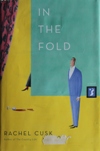
21: In the Fold

In the Fold by Rachel Cusk

First new-to-me author in a while. I’d seen Rachel Cusk mentioned/quoted a few places this year and she sounded like someone I might like to read, so when I saw a couple of her books at the library sale I picked them up.  And I still think that might be the case, but I wasn’t particularly enthused by In the Fold.

In the Fold is about Michael, who is invited to his university roommate Adam’s sister’s 18th birthday party. He goes to the party, at the family home (estate? farm?), and develops an impression of the Hanburys that he carries with him throughout his life (eccentric, bohemian, etc.). He starts a career, marries, has a son, and falls out of touch with Adam, though he keeps thinking about him and his family. As his marriage goes south, he contacts Adam and is invited to visit. Michael becomes reacquainted with the family and realizes they’re not so much charmingly eccentric as boorish and self-centered.

At first I thought, maybe it’s just too British (i.e. maybe I’m just not getting it). I do think there’s a whole class thing going on here, the nuances of which I, in my provincial North-American-ness cannot fully understand. But I don’t know, it was more that all the characters were unpleasant to be around. Yes, even 3-year-old Hamish. It a very tiring read. I don’t think characters need to be likable (in the sense you want your friends and family to be likable) but they need to have some kind of appeal. (Tom Ripley isn’t likable—he’s a psychopath!—but he is fascinating.)  Or else there needs to be some kind of urgency that propels the reader forward. But there was no urgency. And the only emotion these characters generated was a halfhearted impulse to slap them upside the head.

Actually, my mention of Tom Ripley has helped me pin down the issue: I think it was that it was that there was no doubt that the reader was supposed to find these characters unpleasant. In a character study, I want to be more conflicted about the characters, to be drawn to—despite his/her faults—the despicable character or to be repulsed by—despite his/her attributes—the virtuous character. Here everyone was unrelentingly mean and selfish and vapid. Which I suppose is a statement on modern society, but… meh.

At any rate, Cusk’s writing was very good, so I will try again with the second book I picked up (Arlington Park).

10: The End of East

The End of East by Jen Sookfong Lee

Another hardcover picked up at the book sale (I’m starting to feel repetitive…). This one was actually a library book—gently-used, as they say. The dust jacket was in good condition.

I was pretty excited to read this book because it’s not only set in Vancouver, it’s set on the east side.

If you’re not familiar, the east side of the City of Vancouver is generally referred to as “East Van.” The west side, otoh, is just referred to as the west side. This is because there’s already West Vancouver—a different city, to the north(west) of Vancouver. There is also the West End, which is the neighborhood near Stanley Park. (If you think that’s confusing, to the east of West Vancouver are not one, but two, North Vancouvers.)

Bonus Fun Fact: most people think of the east and west sides being divided by Main Street. But this is incorrect! The east/west divide is actually Ontario Street. This leaves a two-block strip of east-side addresses for Realtors to tout as “west of Main!” This has cachet because the west is the more affluent side of the city.

And my blathering is less of a digression than you might think when you consider the title…

Anyhow, I could very much visualize the areas she described, but I did start to wonder how much of that was my own pre-existing knowledge. Was there too much of a reliance on street names as a shorthand? I’m not sure. If you’re not from Vancouver and you read it, let me know what you think.

The End of East is Jen Sookfong Lee’s first novel. It’s about three generations of the Chan family, but more broadly about the difficulties Chinese immigrants to Canada faced due to racist immigration laws.

Seid Quan immigrates to Vancouver in the early 1900s, at a time when Chinese immigrants were subject to the head tax. He settles in the Downtown Eastside, in Chinatown, and ends up taking over ownership of a barbershop. His village finances his immigration and his purchase of the shop and he works for many years to repay them. He is only able to return home a few times (for both financial and immigration law reasons). After many years alone in Canada, he is able to bring his son and his wife over. Eventually, his son marries and has five daughters, the first generation to be born in Canada. The story is narrated by the youngest, Samantha (Sammy).

Sammy’s parents and grandparents are nuanced characters, and her telling of their stories is unsentimental yet moving. I really liked the non-linear structure of the story. Instead of moving steadily forward in time we jump forward and back, learning different pieces of the story, until they all fit together in the end like a puzzle. Loved that. (And I think Lee’s ability to do this well in a first novel bodes well for her future books.)

The weak part of the book for me was Sammy. She’s just sort of… there. First you think, well, maybe she’s just there to tell her family’s story, a Scheherazade, if you will. Ok, I could get behind that. Except, not exactly. Because there is this sketchy backstory that doesn’t really go anywhere. And also this weird side-plot that doesn’t really go anywhere. And even these things would have been ok if they had been developed to that level but  associated with another character, e.g. one of her sisters. The problem for me was that she’s a first-person narrator.

But this is a quibble. I liked this book very much, and I look forward to reading Lee’s second novel when it comes out.