Tag Archives: CanLit

4: More Watery Still & 5: What I Remember from My Time on Earth

More Watery Still and What I Remember from My Time on Earth
by Patricia Young

For poetry month, I decided to read all the poetry books on my to-read shelf.

The first two are by Patricia Young, and are used finds from The Bookshop in Penticton. Both are signed by the author. More Watery Still (1993) says: “For Sharon / with best / wishes / patricia young” and What I Remember… (1997) says: “For Pati / with best wishes / patricia young.” I wonder if Sharon and/or Pati bought the books or if they were gifts?

PY is from Victoria. She was my creative writing 100 seminar instructor way back in my 1st year at UVic when I was a creative writing major!

The weird thing about her poetry is how familiar it seems, even though I’ve never read a book of hers before, and I’m not even sure if I’ve read any individual poems (it’s possible I have seen some in a lit journal or anthology—I’d have to look). But I think it’s more her sensibility that’s triggering that feeling of recognition. I was struck, reading MWS and WIRFMTOE, how much she influenced my own poetry (back when I was writing poetry). I mean stylistically, not content-wise. It’s weird because after the CW fiasco there was quite a long gap before I started writing again (so you’d think any influence would have been mitigated). But I guess if there was going to be a lasting influence coming out of that class, it makes sense that it would be with respect to poetry (we also did fiction and drama).

Last week The Literary Type posted a recording of her recent reading at the University of Waterloo (um, coincidence?!). Even her voice sounded so familiar—like I’d heard it days or weeks ago instead of years. Strange what sticks with you…

My relationship with that class was fraught. The lecture, taught by three men, remains the biggest disappointment of my undergrad. The seminar I loved—but it was love tinged with melancholy and angst because I knew PY didn’t like my writing. Not that I blame her; it was typical 18yo crap.

One of my most vivid memories of the class is PY gushing over a poem that one of my classmates wrote. It was about tomato soup and grilled cheese.

At the end of year, she had us all over to her house for a party. It was a Craftsman in Fairfield that I was terribly covetous of (and let’s face it, still would be). I think she still lives there.

The poems in MWS seem centered around the theme of family, while those in WIRFMTOE seem more focused on a sort of fantastical history (though there are still lots of family mentions). I think I preferred MWS. It was hard to read many of the poems without seeing parts of Victoria. For example, when I read this part of “The Adulters” (MWS):

Someone knocked

on my office door; startled,
I played dead. In the courtyard—
talk and laughter, students gathered round
the fountain, textbooks open
on their laps.

I couldn’t help picturing the fountain in front of the library at UVic:

UVic Fountain Prank
Photo credit: Rick Scott (philosophergeek)

Autumn Leaves at UVic
Photo credit: Lawrence Wong (el dubb)

This bit from “Geese and Girls” (MWS) made me laugh, for reasons some TCers will understand (butter knife!):

And if I said,
ok, but carry this bread knife,
for protection take this small axe?

Also liked this bit from “Beginning of a Terrible Career” (MWS):

Families

are like that, they don’t notice what you’re doing
unless they think you’re going to burn
the house down.

Oh, and this! From “Skipping Song” (MWS):

and is that me
beneath the dogwood, kitchen
scissors shoved inside my cardigan?

Every kid knows—

one cut and the whole  tree dies.
I snip off a twig because
it’s forbidden, because it’s against
the law, because it will serve them all right
if I go
to jail.

Reminded me of my first day of school in Campbell River (also on Vancouver Island) and being lectured by the kids about the illegality of picking dogwoods (it’s the provincial flower). I didn’t know whether to believe them or not, but it was too late! because I’d already picked one (which I promptly hid in my pocket).

In WIRFMTOE, there’s a scotch broom (the invasive pest counterpoint to the indigenous dogwood) poem, “Walk in the Broom Stand”:

Or would you take her hand, walk into the stand
of late summer broom—every wildflower
choked out, nothing alive
but the orchard grass beneath you?
Would you accept as your own
each of her small, selfish acts,
ask her to accept each of yours,
dried pods bursting open like coiled springs?

Oh, and I liked this from “The Dress”:

My daughter is too much like me.
She does not give her love to what lies ahead.

If I saved things
I wold have saved her the dress.

But then I didn’t know, I just didn’t know.

And this, from “In the Museum the Hominid Speaks to Her Lover”:

The experts have determined many things—
that we lived in moss-laden hagenia trees
but when the earth cooled and the forests thinned,
we travelled upright, in small bands, onto the savannah.

What they cannot know: our dreams by firelight,
digging nuts together in the shadow of Rusinga Island.
Memories like the slow vanishing of seeds and berries.
What they cannot know is that you and I
walked onto those sun-drenched plains hand in hand.
2: A Map of Glass

A Map of Glass by Jane Urquhart

I finished this a few days ago on March 26 and I’ve been trying to figure out what I want to say about it [nb: it was “a few days ago” when I started the post!]. I feel like my remarks are likely to make it sound like I feel more negatively about this book than I actually do. In a nutshell: A Map of Glass was a pleasant (perhaps I should say pleasurable), but unsatisfying, read. It was pleasant/pleasurable while I was reading because Jane Urquhart is a lovely writer at the sentence level. The story just sort of washes over you. It’s cozy and delicious. Like curling up with a blanket and hot tea—and a book, of course—on the sofa.

It’s so pleasant that the fact it’s also unsatisfying doesn’t really hit you until you’re done. Or it could be that you were just waiting till the end, expecting the story to pay off eventually, and then it didn’t happen. Instead, you had the only firm ground in the story pulled away at the last minute, leaving you wondering if the entire thing was an illusion, a fabrication, and if so, what was the point?

Before we continue, you need to know this: A Map of Glass is structured in three parts. The first and third parts are set in the present. The second part is set in the past (and is supposed to be the reading of a set of journals):

“Eventually [Sylvia] gives Jerome Andrew’s journals, which contain a fictionalised account of his family, going back four generations to the genesis of his great-great-grandfather’s timber empire.” –The Guardian

The main characters are Andrew, who dies in the opening scene and is the alleged author of the journals read in part two; Sylvia, Andrew’s alleged lover, wife of Malcolm (a doctor with a messiah complex), and sufferer of unnamed “condition” (seems like autism/Asperger’s but treated as if it’s more Mysterious than that); and Jerome, the artist who (I think I can leave out the allegedly here…) found Andrew’s body.

There are also a bunch of characters in part 2, the section read from the journals, but that’s not the part that concerns me. That part (the filling in the sandwich, if you will) seems to be a fairly straightforward story about Andrew’s ancestors, which a lot of reviewers/readers seem to have enjoyed as a “novella” in the middle of the novel:

“In fact, a problem with Glass is that the present feels less urgent than the past.” –Powell’s

But I’m more interested in what’s wrapped around it…

Part of the problem is this:

“A year later, the dead man’s lover arrives on the artist’s doorstep, aiming not to find out how he died but to explain who he was, how he had lived, how they had loved. … When we first meet Andrew, he has Alzheimer’s and his failure to remember who or what he loved, while pathetic (in the kinder sense of the word), makes it hard to warm to him. Sylvia talks about him, but he fails to come to life, remaining unknown, distant. He’s more of an idea.” –The Telegraph

I think I was waiting the whole book for Andrew to turn into a person, but he never does. He’s just a name. Which is frustrating, because he’s the core of the book: he is what brings Sylvia & Jerome together; it is his journals we are supposedly reading. Oddly, it is the opening scene where his mind is absent that he is most present. We never do find out what he saw in Sylvia or she in him. In the present day sections, this could, I suppose, be chalked up to Sylvia’s “condition,” but in the journals we also never do get the part of the Woodman family story that links Andrew to his father and the rest of the clan, or Andrew to Sylvia for that matter.

So this is where the story feels rather hollow to me. Still, up till the end, I was taking the core elements of the story as they were presented, i.e.: Sylvia did have an affair with Andrew, and Andrew did write the journals. And that this relationship and Andrew’s death, has pushed Sylvia out of her comfort zone—as posited in this review:

“Sylvia and Andrew’s hidden love, which prompts her to redefine her relationship with the world, suggests that her grief is the wellspring for a more deeply examined life.” –The Independent

And then… near the very end of the book, Malcolm says that Sylvia imagined the affair. Screech. Rewind. If true, what does this mean? Jerome found Andrew’s body. Sylvia read about it in the newspaper. Sylvia not only imagined an affair with Andrew, but wrote an entire family history for him. Is this plausible? An imagined affair would perhaps explain the sketchiness of the details regarding their relationship, but what about the family history? Is that something Sylvia would do? It’s hard to imagine her thinking so much about Andrew’s ancestors when she has such a tenuous relationship with people (and even herself). But then you remember she’s not only steeped in her own family history, but also she volunteers at the local museum and that was where she learned about the hotel buried in sand. Hrm. Then again, Malcolm is not exactly a reliable source. Dude clearly has an agenda (though it’s unclear what that is—having Sylvia’s condition named after him, perhaps).

Ultimately, I decided that I have to believe in Sylvia’s version of the events, if only because not to would negate what I think is the best line of the entire book, and that is when Sylvia explains to Jerome her realization that after calling off their relationship years prior, Andrew re-instigated it not for any romantic reason, because he had forgotten that it ever stopped.

In the end, though, it does not matter, just as it does not matter that although I believed that he had returned  because—miraculously—he wanted to begin again, he had really returned because he had forgotten that we had ever stopped.

O.M.G.

In retrospect, I think the parts dealing with Andrew losing his memory are the strength of A Map of Glass—and by extension, the linking of this personal/total loss of memory to the loss of knowledge/memories of one’s history/past—but I wonder about the choice of Sylvia as a filter, as well as the choice to call into question her reliability as a narrator.

More:

[ETA: I forgot to say where I got this book! I actually was at a loss at first; I couldn’t remember where I picked it up. But then I flipped back to the first page and saw the price marked in pencil. So, as it turns out, it was another used find from The Bookshop.]

8 & 9: Jack & Reading In

Jack: A Life with Writers by James King

Jack: A Life with Writers

Jack is a biography of Jack McClelland, who ran McClelland & Stewart (Canadian publisher that his father founded) for many years (1950s – 80s). McClelland championed Canadian literature and started the New Canadian Library series. As biographies go, this is a pretty entertaining one. You learn (if you didn’t already know!) how close to bankruptcy publishing firms have always operated as well as all sorts of gossip about famous Canadian writers. Be prepared for the usual sexism of the era.

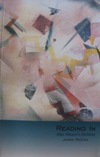
Reading In: Alice Munro’s Archives by JoAnn McCaig

Reading In: Alice Munro's Archives

Reading In is an exploration of Alice Munro’s archives, that is, the papers (primarily business letters) she has donated to the University of Calgary. It’s based on McCaig’s PhD dissertation. Here’s the fascinating part: Prior to publishing the book, McCaig published an article based on her research. Munro (& others) gave their permission for letters to be quoted in the article, however Munro was displeased with the article and subsequently denied McCaig permission to further quote or paraphrase her letters. This means that the book is a truncated version of what McCaig originally intended it to be.

Bizarre, right? Why would a university pay an author for her papers but not make her sign a standard agreement giving researchers permission to quote from the materials as necessary? Don’t universities do this? If they don’t, what’s the purpose of buying this stuff then? In any case, copyright issues with quoting aside, I really don’t see how legally Munro could deny McCaig permission to paraphrase the letters she donated to a university library. It’s like how there is no expectation of privacy with respect to stuff you put in the garbage. She can’t have an expectation of privacy with respect to stuff the public can access.

Reading In had an interesting premise, but I had difficulty with some of the conclusions that McCaig came to. As noted above, Munro only donated her business correspondence. Because the collection is an incomplete record, I think it’s difficult to draw any overarching conclusions about a correspondence or the relationship it documents. Munro obviously kept her personal correspondence (which may include some letters from people she also exchanged business letters with) and there’s also evidence that she likely retained letters that contained editorial suggestions. And of course there’s no record of conversations that took place on the phone or in person (which would seem pertinent when you’re talking about the nature of a relationship). So, ultimately, I’m thinking that perhaps the more valuable discoveries to be made in such an archive will be smaller—more contained—findings that rely less on assumptions.

6 & 7: Anne of Green Gables & The Selected Journals of L.M. Montgomery

Anne of Green Gables by L.M. Montgomery

Anne of Green Gables

Hey! A children’s—and Canadian—classic I actually read as a child. Quel shock!

[Note: If you want to read Anne for pleasure, I don’t recommend this (the Norton) version. It’s great if you’re analyzing the text for an English class (there are lots of assorted extras—essays and such—included), but the footnotes were really weird and distracting. There were all these definitions of common words (e.g. “dinner-time” and “bewitched” !!!) and expressions. I couldn’t figure out who they were targeted at. Surely the target audience of the Norton version (university students) of a book written for 10-year-olds has the sophistication to figure out the gist of words/expressions they’re not familiar with from the context. The only thing I could think of that made sense was perhaps it was aimed at an ESL audience who wouldn’t be familiar with English idioms. But that didn’t really explain including the definitions of words that could be looked up in a dictionary.]

Re-reading a book is often as much about the memories of past readings it’s tied up with as the contents of the book itself. My first encounter with L.M. Montgomery was via a boxed set of the first three Anne books that I received as a 10th birthday gift. Because I actually owned them, I re-read those three books over and over, but my most distinct memory of reading them is the first time: in August heat on the upper bunk of our camper as we made our way home from Ontario where I’d spent the summer.

One odd thing I remember is that whenever I re-read AoGG, I always started with chapter 4. Re-reading the book now I’m not sure why I did that. Maybe I found them too slow-paced or perhaps too focused on the grown-ups (chapter 1 starts with Rachel Lynde!). Another uber-geeky memory: the public library didn’t have the other books in the Anne series so I ordered them through inter-library loan. Don’t ask me how I knew to do this. I must’ve asked about them and the librarian suggested it.

Because they were all library books, I never re-read any of the other Montgomery books until one summer in undergrad when I decided to work my way through her entire oeuvre (holy geek summer project, batman!). So the remainder of the Montgomery books I have date from that summer.

Another weird thing: though once I read the Emily books, I preferred her to Anne (because Emily was the real writer), I don’t have a distinct memory of reading Emily of New Moon for the first time, the way I do with Anne of Green Gables. Probably because I just read it in the usual places (you know: in bed when I was supposed to be asleep, under my desk when I was supposed to be doing schoolwork, on the way home from school when I was supposed to be paying attention to where I was walking…) I do know when it was, though, because I wrote it down in my journal. In the same entry I wrote that was going to be a writer when I grew up. I was 12.

Which leads me to…

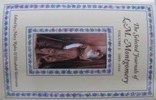
The Selected Journals of LM Montgomery, Volume I: 1889 – 1910, edited by Mary Rubio & Elizabeth Waterston

The Selected Journals of L.M. Montgomery

I was enthusiastic about reading this, the first volume of Montgomery’s journals. I like reading artists’ and writers’ journals/memoirs/biographies just in general, but having read most of Montgomery’s fiction, I was curious to see “behind the scenes” in her writing process and in particular, how her self-representation matched her fictional representation, particularly in the Emily books.

To be clear: Emily writes about writing: her process, her failures, her successes. So, I guess I went into this expecting a real-life version of Emily’s journal (not the same events/people, obviously, but the same style). What I got was cognitive dissonance, because Maud hardly writes about writing at all. Mostly she writes about her friends and relatives, school and work—the everyday stuff that anyone who’s kept a journal has written about. She doesn’t even mention AoGG until she announces that it is going to be published!

While it’s fun to guess at who she modeled various characters after and to recognize stories and anecdotes that she recycled into her fiction, the fact that she doesn’t write more about writing is perplexing. From the beginning, she intended for the journals to be published after her death (because she anticipated that she would by then be a famous writer), and clearly, as the Emily books demonstrate, she knew people are interested in a writer’s writing process. So why isn’t it there?

My theory is this: a few years before she wrote the Emily books, Maud apparently took all her old journals and transcribed them into new notebooks, ostensibly so all her journals would be in books of a uniform size. There is speculation, however, that she didn’t just copy her old journals word for word (as she claimed), but that in fact, she edited them at this time (she was famous by then and knew for sure that her journals would be published). Thus, my (completely unprovable!) theory is that when she did this she excised all the writing-about-writing parts and then used those in the Emily books. I think that she did this because then she could use those experiences as Emily’s without having to deal with Emily = Maud speculation. Of course, that happened anyway ;-).

Links:

5: Legends of Vancouver

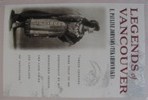
Legends of Vancouver by E. Pauline Johnson (Tekahionwake)

Legends of Vancouver

Pauline Johnson was from Six Nations in Ontario (her father was a Mohawk chief). After a career performing her poetry on stage, she ended up in Vancouver. The legends (with one exception) are Squamish and were told to Johnson by Chief Joe Capilano (also with a few exceptions). Most of the stories consist of a present-day (her time, of course; about 100 years ago now) framework where Johnson sets herself up as a listener, followed by the legend. At the end of legend, she brings the reader back to the present with a closing thought.

Johnson was clearly a gifted storyteller, and I think a good part of the reason people continue to find the stories so compelling is the way she tells them. However, I think the way the stories came about and are credited brings up some interesting questions/issues with respect to written vs. oral storytelling, as well as the weight we place on the importance of the book. None of the oral storytellers are given co-author credit, and while Joe Capilano is at least mentioned by name, some of the stories are told to Johnson by a woman (or women? it’s unclear whether it’s the same woman or different ones) who isn’t identified. Of note:

  • The legends included in the book are actually just a few of the ones Johnson wrote up; many more were published in newspapers/magazines. One early version of the book includes three additional legends.
  • In some cases, the person who Johnson attributes the story to changes from the original periodical version to the one published in the book.
  • The book was compiled by a group of Vancouverites in order to raise money to provide for Johnson when she was dying. It’s unclear who chose the stories or what order they would appear in.

Johnson is always respectful of the oral storytellers, and, of course, legends are meant to be shaped and adapted with each re-telling, but it does make you think about what responsibilities a person has when they put someone else’s story into print. Print solidifies things, especially when it’s in book form. We like books in part because they’re finite and it’s possible to get a grasp on the whole thing. Thus, book versions end up being thought of as definitive, which may or may not be true, and may or may not be a good thing.

(I think this can be related to the blog to book trend. It’s hard/impossible to to feel like you’ve finished reading a blog in its entirety; even if you’re an avid long-term reader, it’s unlikely you read every comment or follow every link.  Hence, the book. The book cuts out all the tangents and turns the blog into a comfortable narrative that allows the reader the satisfaction of reaching the last page and closing the book.)

Links:

4: Roughing It in the Bush

Roughing It in the Bush by Susanna Moodie

Roughing It in the Bush

Roughing It in the Bush is often cited as an early Canadian classic. At the same time, its Canadian-ness has also been questioned. For one thing, Moodie started writing about Upper Canada (now Ontario) in the 1830s, thirty-plus years before confederation (so maybe it’s not an early Canadian book, but a late British North American colonial book). As well, Susanna Moodie was an immigrant who wrote about her experiences from that perspective (so maybe she should be thought of as an English ex-pat writer, not a Canadian writer). Of course, “what does it mean to be Canadian?” is the quintessential Canadian-dilemma, so I think she qualifies on that count 😉 Really, I think she can be thought of as either—or both. Just depends on what you’re looking for.

Roughing It is an account of the middle-class Moodies’ first years in North America. Susanna and her husband John were woefully unprepared for life in the “bush,” which made for lots of good material for Susanna to write about. Although it’s supposed to be non-fiction, it seems pretty clear that the character “Susanna Moodie” is a lot ditzier than the writer Susanna Moodie was, i.e. that the stories were embellished to make them more funny and entertaining. While the writer Susanna Moodie was writing by candlelight and sending her stories and poems to magazines and newspapers (when she could afford stamps), the character “Susanna Moodie” was busy acting clueless and getting into scrapes to provide fresh material.

Which… you know… sounds a lot like a present-day memoir! Actually, my immediate reaction after I finished reading the book was that if Moodie were around today she’d be a blogger. Think about it: the book is a collection of anecdotes and poems and other ephemera, with the occasional chapter contributed by her husband or brother (guest posts!). Throw in a fish-out-of-water scenario, add a dash of hyperbole and a pinch of drama,  and voila! Recipe for a successful personal blog. And of course, she was a mother, so you might even call her the first Canadian mommyblogger 😉

Links:

3: Swann

Swann by Carol Shields

Swann

A few years back I read Shields’s short story compilation Dressing Up for the Carnival (I guess before I started these book posts). It was definitely a remainder table book; I remember picking it up because I kept hearing about Shields, but had never read anything of hers. Maybe I wasn’t sure if I’d like her writing or not?

Here’s the title story in Dressing Up for the Carnival and some reviews (January Magazine and The New York Times).

Anyhow, it turned out I liked Dressing Up for the Carnival more than I expected, so I picked up The Stone Diaries, her Governor General’s Award and Pulitzer Prize-winning novel, on a used-bookstore excursion. It’s still on my to-be-read shelf, but…

I took an English course this summer and the first thing we read was Swann (sometimes titled Swann: A Mystery). Swann is about farmwife Mary Swann and how she is “discovered” and turned into a minor poet worthy of academic analysis. Despite the sometimes-subtitle, Swann is more wry and cutting than mysterious. (There is a mystery, but it’s a rather transparent one.) Although it’s a novel, it’s really a critique of the literary and academic publishing worlds. The book is also kind of experimental—each section is told in a different way. The first section is most novelistic; the final section is written like it’s a screenplay. I think the execution may turn people off (as in this reader review), but I think the choices Shields made were very deliberate and it’s interesting to consider why she made them. Anyhow, I thought Swann was funny (and true), but I’m not sure I would have appreciated it as much if I wasn’t an insider, so to speak. Here’s an excerpt.

More links:

20: The Last Good Day

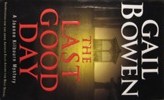
Gail Bowen, The Last Good Day

The Last Good Day

I was looking for a fun weekend afternoon read and grabbed this off the to-read shelf. I think I got it from a pile of books my mom was discarding. (Free!)

I really wanted to like this book. The narrator sounded cool (55yo female university professor/amateur sleuth). It’s set in Saskatchewan! I don’t think I’ve ever read a book set in Saskatchewan that wasn’t CanLit. And the reviews on the back cover are glowing: “a treat from first page to final paragraph” (Globe & Mail), “Bowen is a national treasure” (Ottawa Citizen), etc. Apparently it was also shortlisted for the Arthur Ellis Award for best novel.

Really?! Did we read the same book? Because I actually thought it was really bad. I love Canadianisms as much as the next Canadian, but some of the CanCon here seemed soooo deliberate. Like, “Hey, I think I’ll stick in a priest with a West Indies accent (even though said character doesn’t actually have a speaking role—or a name, for that matter) because, aykb, Canada’s a multicultural society!” Or the completely random mention of a character carrying a Zeller’s bag. (Groan.)

[digression] Been thinking about this, because I think this is an important thing to remember when writing fiction. Random mentions feel like you’re working off a checklist (or namedropping). Stuff should have a reason for being there. If you’re going to mention a priest with a West Indies accent (interesting detail), then he should play a role in the story (he doesn’t). If you’re going to mention a Zeller’s bag (rather than a plain old plastic bag), then the fact it’s a Zeller’s bag should be significant (it isn’t). OTOH, the references to the RCMP felt perfectly natural, because there was a legitimate reason for them to be there. Good lesson here I think. I know I’ve been guilty of no-reason namedropping. But I think it’s important to note that it’s not just brand names—any detail can come across as awkward if it stands out and doesn’t serve a purpose. [/digression]

It was also excessively telly. Early in the book, a character dies. The narrator has been acquainted with this person for less than 24 hours, and has had exactly one 10-minute conversation with him (in which he confides his deepest, darkest secret — and… can I just say, unrealistic much? — yes, I always go around confiding my intimate secrets to complete strangers). Anyhow, after he dies, narrator goes on and on and on about how shattered she was by his death. Now granted, she witnessed his car driving into a lake and attempted a rescue (hint: it’s easier to break a window in a sinking car than to try to open a door!), so that would be somewhat disturbing. But she didn’t know the guy. The significance that the narrator kept saying this had on her seemed all out of proportion with what we had been shown of these characters.

The telliness also meant the characters were flat and uninteresting. There were a lot of characters, but none of them were fleshed out. Nobody felt real. The “Winners’ Circle” was annoying (I mean, honestly. On principle, who wouldn’t hate a group of law school students who named themselves the Winners’ Circle and still referred to themselves by that name 25 years later? How irritating must they be?). I couldn’t work up an iota of sympathy for these people.

The inciting incident basically made no sense. A work-related transgression (by guy who dies early in book) was blown out of proportion by a character who we don’t actually get to know first-hand (making the reasoning behind what she did in response to her discovery even less understandable). And then his reaction (driving his car into a lake, amongst other things) to that is also way beyond realistic.

But here’s the thing that drove me absolutely batty: this book was published in 2004. In the book, the characters are happily using email and have GPS in their cars. So, it is set in present day. However, when they are told that a character has moved to Vancouver to work at a law firm there, but are suspicious as to whether this is true or not, not one person thinks to use Google to check out the story. Isn’t that the first thing you would do? I mean, all medium-to-large law firms have websites! Generally with all the lawyers listed. Now, granted, some small ones don’t. But then there’s also the Law Society website, which lists all practicing and non-practicing lawyers in the province! Seriously, this story would take like two minutes to check out. I just could not get past this.

Maybe the characters couldn’t either, as they seemed inclined to take themselves out. Yes, the number of suicides (3*) in this novel outnumber the murders (1). So not only was it a frustrating read (Gooooooogle!), it was also depressing. Not exactly what I look for in a mystery. (ymmv, of course. I could not find one negative review of this book, so I am definitely in the minority.)

*Technically, that includes a murder-suicide, but as it was a pact between the two individuals, it was essentially a double-suicide.

17: Skin Divers

Skin Divers by Anne Michaels

Skin Divers

Anne Michaels’s The Weight of Oranges / Miner’s Pond is probably my favorite poetry collection (really two collections in one volume) of all time. Maybe because so many of the poems are about rain.

From “Rain Makes Its Own Night” (The Weight of Oranges):

Rain makes its own night, long mornings with the lamps left on.
Lean beach grass sticks to the floor near your shoes,
last summer’s pollen rises from damp metal screens.

This is order, this clutter that fills clearings between us,
clothes clinging to chairs, your shoes in a muddy grip.

Mmm. Anyhow, Skin Divers is her third volume of poetry. This was another used bookstore find. A few weeks ago, feeling the need for a poetry fix, I plucked it off the To Read shelf and read it all in one sitting. It’s a slim volume, as they say—only 68 pages including the acknowledgments—so this was not a great feat. But… I always feel a little guilty reading a book so fast when I know how long it probably took to write it. (And that feeling is not helped by the quote on the back cover of the dust jacket which closes: “This is a book to be grateful for, to read, and be read by, slowly.”) !!! Way to pour on the guilt, Don McKay 😉 I’ll try to make up for speed with re-readings.

When I’m evaluating poetry, the most important thing for me is that it sound right. It should have rhythm. It should flow. If it sounds right, it doesn’t have to be logical. It’s poetry. So much of the “poetry” we receive at TC is clunky and prosaic. Inserting random line breaks does not turn prose into poetry. (This is what happens when people write poetry, but don’t read it, methinks. But that’s a rant for another day.)

Michaels’s poetry sounds right. It’s… deceptively simple. Some lines you might think: I (or anyone) could have written that. And then you read it again and think: wow, that’s amazing.

From “Skin Divers”:

Like the moon, I want to touch places
just by looking. To tell
new things at three in the morning, when we’re
awake with rain or any sadness, or slendering through
reeds of sleep, surfacing to skin. In this room
where so much has happened, where love
is the clink of buttons as your shirt slides
to the floor, the rolling sound of loose change;
a book half open, clothes
half open. Again we feel
how transparent the envelope
of the body, pushed through the door
of the world.

Oh, hey. Rain again 🙂

2006 Books Read – #14

Claire’s Head by Catherine Bush

Claire's Head

I bought this because I really enjoyed Rules of Engagement.

Like RoE, Claire’s Head deals (in part) with the dynamic between sisters. I don’t have a sister, so reading about sister relationships is kind of like exploring a foreign country for me. Which is to say, strange, but at the same time, interesting.

The story is primarily an exploration of pain and how we live with it. Claire and her oldest sister Rachel suffer from migraines. Middle sister Allison does not. (Is it a cliche that the middle kid is the prosaic one? Is it meant to be?) The sisters lost their parents in a freak accident some years earlier, so there is also an element of grief involved.

Essentially the plot is as follows: Rachel disappears. Claire travels the world looking for her. Allison does not join her. Claire’s personal and work relationships suffer the more time she spends away. She also suffers from increasingly devastating migraines.

The descriptions of Claire’s pain can be hard to read and I was relieved to get through the book without triggering any psychosomatic headaches.

I didn’t find CH quite as compelling a story as RoE. The mystery is pretty straightforward. But of course, a twisty plot is not the point here, and as an exploration of what it’s like living with chronic pain, particularly pain in one’s head—which is different from other pain, because you can’t distance yourself from it—it’s superb.