Tag Archives: Fiction

The smoothed fabric of unmentionableness

Funny running across this on the heels of my Reality Hunger post. Coincidence or serendipity?

Prosaic examples illustrate the familiarity of [obstacles to communication]: some people speak more loudly than others; some are never in the conversation to start with; some topics are difficult to raise, or fall out of conversation quickly. Such examples may be encountered much more explicitly in fiction than they are noticed in everyday life, especially if we are ourselves invested, however unconsciously, in keeping something relatively unmentioned. In fiction … we can witness the discomfort that ripples out from rifts in the smoothed fabric of unmentionableness, while in our own conversations, we are often too much of the cultures of discourse, axiomatic beliefs, and de facto assumptions to attend to the parameters of what cannot be said that hedge our choices of explicit verbal exploration.

We are comfortable enough with the elephant in the room, that which will remain unsaid, or is better left unsaid, or a decision to let us never speak of this again that it becomes an interesting challenge to mention the unmentionable.

Kirsten Valentine Cadieux

Always fiction

What actually interests me now, as I get older, is just narrative writing, telling a story. In a way that is always fiction, even when it’s memoir, or autobiography, or biography, or history; there is what actually happened, which is a total enigma, and then there is the story that people make out of it. It’s never really true. It’s always “made up.”

That having been said, there is a different kind of freedom to just totally making something up, out of nothing, with no reference to what supposedly happened. No other kind of writing is as interesting as writing a novel.

David Guy

23: Turning Life into Fiction

Turning Life into Fiction by Robin Hemley

One last book for 2010. This was another library book sale find.

I have to admit I was disappointed when I started reading it. I plucked it off the to-read shelf because I was looking for some creative inspiration (a la Natalie Goldberg) but it’s not that kind of book. Rather it’s a book of very practical advice for beginning writers. So while it didn’t give me what I was looking for, I found myself agreeing with his advice. For example, he advises against surprise! endings and “as you know, Bob” dialogue (though shockingly he doesn’t know the term aykb!), encourages writers to think about their audience, and avoid “so what?” stories (ones with no point). There’s really nothing to disagree with here. I think he tends to get a little wordy/repetitive at times, but it’s all good advice. There are also writing exercises at the end of each chapter.

I’d recommend Turning Life into Fiction to many people who submit to Toasted Cheese. This edition was published in 1994 (noticeable due to the complete lack of references to the internet!), but there was a new edition published in 2006, which I assume rectifies that issue 🙂

Ok, and now for the good (coincidental/serendipitious/amusing—take your pick of adjectives) part. Robin Hemley did his MFA at Iowa and, at the time TLiF was published, was teaching at Western Washington University. David Shields did his MFA at Iowa and teaches at the University of Washington. I think they’re buds! I offer, as proof, this:

A lot of writers, including myself and most of my friends, occassionally use the names of their friends  in their novels or stories. These cameo appearances are designed for the mutual amusement of the writer and her friend. … David Shields often includes me in his novels as some off-stage editor or other pesky character. (p. 179)

LOL. Ok, so I started reading TLiF, and was progressing slowly through it, when I ran across this reference to David Shields (and keep in mind, folks, this was written in 1994—this the passage that made me check the date). This is from “Finding Your Form,” a chapter about deciding between memoir and novel:

According to writer David Shields, novels in general tend to be more concerned with story, while memoirs tend to focus more on an exploration of identity. That’s not to say that novels are always more concerned with story, while memoirs are always more concerned with an exploration of identity, just that those are the tendencies.

In Shields’ case, he’s noticed his work steadily creeping away from fiction into the realm of nonfiction. His first novel, Heroes (Viking), about a midwestern basketball player and the reporter obsessed with him, is, more or less, a story he imagined whole cloth. His next novel, Dead Languages (Knopf), a widely praised novel about a boy who stutters, contains many elements of autobiography. As a child, Shields had a serious stuttering problem, but the story is almost entirely fiction. A Handbook for Drowning (Knopf), a story collection, is a step closer to autobiography—a few of the pieces feel, to Shields, almost like essays even if most of the details are imagined. His latest work, Remote, which at this writing he has not submitted to a publisher, is a series of fifty-two interconnected prose meditations. It is unquestionably a work of nonfiction. To Shields, the prose pieces coalesce into a kind of oblique autobiography. In this book, the author “reads his own life as though it were an allegory, an allegory about remoteness.” Despite the autobiographical nature of the book, Shields still thinks the persona that emerges on the page is essentially a fictional character. “The identity I’ve evoked,” he explains, “the voice I’ve used, the tone I’ve maintained, the details I’ve chosen, are highly selective, and in many instances, frankly fictionalized. To me, these definitions get pretty murky. Memory is a dream machine. The moment you put words on paper, the fiction-making begins.”

But the question remains, How do you decide on a novel or a memoir? To a large degree, that’s an individual decision, based on who you are and what your material is. Shields tells his students to ask themselves, “What is it you’re trying to get to? Are you essentially trying to tell a story, and if so, are you interested in setting that story in some kind of place? Then you are probably working on a novel. But if the real impulse is a kind of excavation of a self, a kind of meditation on the self, are you really working on a memoir or autobiography of some kind?” When Shields began working on Remote, he thought it was going to be a novel. “After a while, though, I realized I wasn’t interested in character conflict per se. And I wasn’t interested in a physical place, though I made gestures in those directions. What I was interested in was more autobiographical: the revelation of a psyche’s theme via a sequence of tightly interlocking prose riffs, which became the book.” (p. 40-41)

And then I read Reality Hunger and went back to TLiF and finished it. Which was kind of weird! I mean, Hemley’s sort of exploring a similar theme—the thin line between nonfiction and fiction—but of course Hemley’s book is coming at it in a more practical way than Shields, and at the end of TLiF he gets to the stuff about wanting to avoid hurting people’s feelings (or getting yourself in legal hot water), and yes.

First, life may be chaotic and without plot, but that doesn’t mean people don’t need stories. Maybe they don’t need novels, but they need stories (maybe their stories come in the form of movies or songs or video games). But beyond that, people are human; they’re not robots. Blathering on about a quest for the real without considering that a blind allegiance to nonfiction might embarrass or wound or alienate other people is being deliberately obtuse.

The number one reason to choose fiction, in my opinion, is that it allows one to write with complete honesty about things that would otherwise be difficult/impossible to write about. Which I know sounds contradictory, but it’s not if you consider truth and fact to be different things. You change the facts to get to the truth. If you don’t—if you decide it must be nonfiction, that you must stick to the facts—you’re not going to write completely honestly, because you’re going to worry too much about how the people in the story are going to receive it. Your story may be factual, but it won’t be truthful. And that’s why I think fiction is necessary.

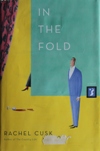
21: In the Fold

In the Fold by Rachel Cusk

First new-to-me author in a while. I’d seen Rachel Cusk mentioned/quoted a few places this year and she sounded like someone I might like to read, so when I saw a couple of her books at the library sale I picked them up.  And I still think that might be the case, but I wasn’t particularly enthused by In the Fold.

In the Fold is about Michael, who is invited to his university roommate Adam’s sister’s 18th birthday party. He goes to the party, at the family home (estate? farm?), and develops an impression of the Hanburys that he carries with him throughout his life (eccentric, bohemian, etc.). He starts a career, marries, has a son, and falls out of touch with Adam, though he keeps thinking about him and his family. As his marriage goes south, he contacts Adam and is invited to visit. Michael becomes reacquainted with the family and realizes they’re not so much charmingly eccentric as boorish and self-centered.

At first I thought, maybe it’s just too British (i.e. maybe I’m just not getting it). I do think there’s a whole class thing going on here, the nuances of which I, in my provincial North-American-ness cannot fully understand. But I don’t know, it was more that all the characters were unpleasant to be around. Yes, even 3-year-old Hamish. It a very tiring read. I don’t think characters need to be likable (in the sense you want your friends and family to be likable) but they need to have some kind of appeal. (Tom Ripley isn’t likable—he’s a psychopath!—but he is fascinating.)  Or else there needs to be some kind of urgency that propels the reader forward. But there was no urgency. And the only emotion these characters generated was a halfhearted impulse to slap them upside the head.

Actually, my mention of Tom Ripley has helped me pin down the issue: I think it was that it was that there was no doubt that the reader was supposed to find these characters unpleasant. In a character study, I want to be more conflicted about the characters, to be drawn to—despite his/her faults—the despicable character or to be repulsed by—despite his/her attributes—the virtuous character. Here everyone was unrelentingly mean and selfish and vapid. Which I suppose is a statement on modern society, but… meh.

At any rate, Cusk’s writing was very good, so I will try again with the second book I picked up (Arlington Park).

When reality is insufficiently real

Let’s call the world we actually have now Reality A and the world that we might have had if 9/11 had never happened Reality B. Then we can’t help but notice that the world of Reality B appears to be realer and more rational than the world of Reality A. To put it in different terms, we are living a world that has an even lower level of reality than the unreal world. What can we possibly call this if not “chaos”?

What kind of meaning can fiction have in an age like this? What kind of purpose can it serve? In an age when reality is insufficiently real, how much reality can a fictional story possess?

Haruki Murakami

Fiction betrays life

Real life flows without pause, lacks order, is chaotic, each story merging with all stories and hence never having a beginning or ending. Life in a work of fiction is a simulation in which that dizzying disorder achieves order, organization, cause and effect, beginning and end. The scope of a novel isn’t determined merely by the language in which it’s written but also by its temporal scheme, the manner in which existence transpires within it – its pauses and accelerations and the chronological perspective employed by the narrator to describe that narrated time.

Though there is a distance between words and events, there is always an abyss between real time and fictional time. … Novels have a beginning and an end and, even in the loosest and most disjointed ones, life takes on a discernible meaning, for we are presented with a perspective never provided by the real life in which we’re immersed. This order is an invention, an addition of the novelist, that dissembler who appears to recreate life when, in fact, he is rectifying it. Fiction betrays life, sometimes subtly, sometimes brutally, encapsulating it in a weft of words that reduce it in scale and place it within the reader’s reach. Thus the reader can judge it, understand it and, above all, live it with an impunity not granted him in real life.

Mario Varga Llosa

Architecture

So I have all these notes—actually, two sorts of notes that I take. The first happens during the writing, often in first year of writing a book, when I’m trying to figure out how the stories will dovetail and connect. I almost think of it as sort of architecture or woodwork, the way you lay pieces together and how the joints will kind of fit. Those notes are arrows with the character’s name. … These endless kind of pictorial descriptions of how these abstract ideas will relate.

The second form of note is a kind of mathematical calculation that happens later in the book, which is chronology. Because if you want two people meet on the boat, one of them can’t get on the boat in 1946 while the other one gets on the boat in 1947. But it doesn’t always work out that way when you first write it. So there are endless mathematical calculations—you know, 22 minus 13—and just desperately hoping that I didn’t make some massive plot mistake in all of my free association.

I really take great pleasure in that kind of architecture. I guess in life I have a very strong spatial sense. There’s something about how my mind works that has patience for the delicate complexity of how parts can fit together—and the great discovery of the whole, which you can only see as you walk away and look back on the whole thing. I don’t get a sense for the whole until very, very far into the writing.

Nicole Krauss

20: The Lighthouse

The Lighthouse by P.D. James

Another library book sale find. Wasn’t a library book, though. Looked brand-new, still with remainder price tag on. Zing!

So it’s a police procedural in PD James’s Adam Dalgliesh series, with the three detective characters (who presumably, regular readers would be familiar with from previous books) sent to a private island to investigate a murder. The book starts out by introducing each of them in turn, and providing quite a bit of detail about each of their back stories. Which I was fine with in the beginning, but later on I wondered what the point of all that was since it was barely returned to at all in the main story.

The murder mystery itself is decent, but the pacing was bogged down by the amount of description. omg, so much description! Did I really need to know about the minutiae of the furnishings and refrigerators (!) of each cottage and apartment? I do not think so. I seriously felt like this book could have been half as long. With so much wandering detail, The Lighthouse didn’t have the urgency it might have had if it had been trimmed down.

Despite the endless detail, there was curious lack of emotional connection to the characters. Maybe if some of that detail had been cut, James could have expanded on the detectives’ stories that were rather left hanging. As it was, I didn’t find any of the characters particularly compelling. I guess I was supposed to care about Dalgleish mooning over Emma, but I really didn’t, and the other two, Kate and Benton, were like robot-people.

I did kind of wonder why Francis Benton-Smith was called just “Benton.” Mayhap it was explained in a previous book.