Monthly Archives: April 2010

A Basic Life Skill

This.

I feel strongly that kids should learn how to cook, it’s a basic life skill. I had friends in college who arrived on campus as freshmen not knowing how to boil water to make pasta (or how to do their own laundry). This seems downright dangerous. People should be empowered to take care of themselves, to be self-sufficient. What is more important?

Tea

Found this via 101 Cookbooks on Twitter… how funny that someone else blogged about 101 Cookbooks & Jamie Oliver in the same post!

ETA: I knew I’d seen her book mentioned somewhere else recently! It was at Chookooloonks!

As Best You Can

We want to say to musicians and parents, ‘Even though your child has chosen a path that you might not have wanted him to or know will be a hard one for them, if they need that in their life, then let them follow their passion and encourage them and support them as best you can.[‘] Devon was really satisfied with his music. It was all about him, his band and their fans.

Edna Clifford

You Say Party! We Say Die! “Laura Palmer’s Prom

6: Dogs and Goddesses

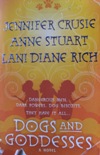
Dogs and Goddesses by Jennifer Crusie, Anne Stuart & Lani Diane Rich

I picked up a passel of books at the VPL’s Spring Book Sale. Check it out. This was Thursday’s stack:

VPL Spring Book Sale

And this was Saturday’s stack:

VPL Spring Book Sale

Yes, I went twice! Why not? Novels were 55 cents! 55 cents, people! At that price, you can’t lose. Or can you…?

(insert ominous movie music here)

My first read was Dogs and Goddesses, a mass market pb that I picked up because Lani was one of the authors. Back in the day, Lani was also a member at the writing site where the original TCers met. Her first novel originated as a NaNo. I want to like her books!

But I’m not going to lie. This book was bad. I never thought I’d say this, but I paid too much for this book. I want my 55 cents back! j/k 😉

Lest you think that I just didn’t like it because this genre of book is just not my thing, do check out the Amazon One Star reviews. They’re like the nicest One Star reviews ever. Unlike the usual vitriol-filled one-star reviews, it’s pretty clear that these reviewers are fans of at least one of the three authors and the one star was given reluctantly.

Most of the reviewers seem to be more familiar with the other two authors (Jennifer Crusie & Anne Stuart). I haven’t read either of them. I have read Lani’s first book (the one that began as a NaNo): Time Off For Good Behavior. I didn’t really like it, but I attributed it to “not my thing.”

Dogs and Goddesses, otoh? Ahhhhh! I only finished it because I think it’s good to read something bad occasionally.You know, as a refresher course on what not to do. Bullet points of commentary:

  • Too many characters. Way, way too many characters! Names would pop up and I’d have no idea who they were. There were three protagonists (each one written by one of the 3 authors; reviewers who were more familiar with the authors said they could tell who wrote what, but the styles seemed indistinguishable to me), plus three love interests, plus the antagonist, plus the antagonist’s minion, plus three other secondary characters, plus several named tertiary characters, plus approximately 10 talking dogs.
  • Why is everyone yelling? I felt like the opening of the book was written in ALL-CAPS. It wasn’t. It just felt that way.
  • Similarly, what’s with the excessively irritable responses to fairly innocuous situations? I think it was supposed to be ramping up the tension. It didn’t work. (Damn it!)
  • Absolutely no getting to know the characters before they are tossed into the plot. I have no idea why I should care about these people. And I don’t.
  • I can’t tell the protagonists apart. I can’t tell the love interests apart. I can’t tell the secondary characters apart. These characters aren’t cardboard; they’re paper. Paper dolls with interchangeable outfits.
  • One character is named “Bun.” There’s no shortage of smart remarks in this book, but no one comments on this. Bun. Seriously.
  • I think this book is supposed to be funny. It’s not. The most amusing thing is the talking dogs.
  • We’re supposed to believe that these three sets of characters are in love. We know this because they keep saying “I love you/him/her!”
  • Their love is instigated by eating magic cookies. They eat so many cookies in this book that I start to feel like I’ve eaten an entire batch by myself: over-full and about to crash down from a sugar high. Blech.
  • There’s a scene where one of the characters paints a wall with a paintbrush (nooooo!). Also she dips the same brush into two different colors without rinsing in between (nooooo!). That is just so, so wrong.
  • WTF was up with those sex scenes? You’ve this silly, silly plot where people are running around scarfing cookies and listening to talking dogs and then all of a sudden we’re being told who’s sticking what body part where. Total discord.
  • What genre is this book supposed to be anyway? Is it Chick Lit (funny)? Romance (sexy)? Paranormal (scary)? I can’t figure it out.

What stands between us and joy

Perhaps the quotidian is tedious to others only if tedious to oneself, only if it fails to enrich, deepen, and broaden the experience. It is a rare person and a rare book that can make us understand that nothing is tedious in itself no matter how quotidian, and that what stands between us and joy in everyday experience is our own mindless self.

Maja Djikic

4: More Watery Still & 5: What I Remember from My Time on Earth

More Watery Still and What I Remember from My Time on Earth
by Patricia Young

For poetry month, I decided to read all the poetry books on my to-read shelf.

The first two are by Patricia Young, and are used finds from The Bookshop in Penticton. Both are signed by the author. More Watery Still (1993) says: “For Sharon / with best / wishes / patricia young” and What I Remember… (1997) says: “For Pati / with best wishes / patricia young.” I wonder if Sharon and/or Pati bought the books or if they were gifts?

PY is from Victoria. She was my creative writing 100 seminar instructor way back in my 1st year at UVic when I was a creative writing major!

The weird thing about her poetry is how familiar it seems, even though I’ve never read a book of hers before, and I’m not even sure if I’ve read any individual poems (it’s possible I have seen some in a lit journal or anthology—I’d have to look). But I think it’s more her sensibility that’s triggering that feeling of recognition. I was struck, reading MWS and WIRFMTOE, how much she influenced my own poetry (back when I was writing poetry). I mean stylistically, not content-wise. It’s weird because after the CW fiasco there was quite a long gap before I started writing again (so you’d think any influence would have been mitigated). But I guess if there was going to be a lasting influence coming out of that class, it makes sense that it would be with respect to poetry (we also did fiction and drama).

Last week The Literary Type posted a recording of her recent reading at the University of Waterloo (um, coincidence?!). Even her voice sounded so familiar—like I’d heard it days or weeks ago instead of years. Strange what sticks with you…

My relationship with that class was fraught. The lecture, taught by three men, remains the biggest disappointment of my undergrad. The seminar I loved—but it was love tinged with melancholy and angst because I knew PY didn’t like my writing. Not that I blame her; it was typical 18yo crap.

One of my most vivid memories of the class is PY gushing over a poem that one of my classmates wrote. It was about tomato soup and grilled cheese.

At the end of year, she had us all over to her house for a party. It was a Craftsman in Fairfield that I was terribly covetous of (and let’s face it, still would be). I think she still lives there.

The poems in MWS seem centered around the theme of family, while those in WIRFMTOE seem more focused on a sort of fantastical history (though there are still lots of family mentions). I think I preferred MWS. It was hard to read many of the poems without seeing parts of Victoria. For example, when I read this part of “The Adulters” (MWS):

Someone knocked

on my office door; startled,
I played dead. In the courtyard—
talk and laughter, students gathered round
the fountain, textbooks open
on their laps.

I couldn’t help picturing the fountain in front of the library at UVic:

UVic Fountain Prank
Photo credit: Rick Scott (philosophergeek)

Autumn Leaves at UVic
Photo credit: Lawrence Wong (el dubb)

This bit from “Geese and Girls” (MWS) made me laugh, for reasons some TCers will understand (butter knife!):

And if I said,
ok, but carry this bread knife,
for protection take this small axe?

Also liked this bit from “Beginning of a Terrible Career” (MWS):

Families

are like that, they don’t notice what you’re doing
unless they think you’re going to burn
the house down.

Oh, and this! From “Skipping Song” (MWS):

and is that me
beneath the dogwood, kitchen
scissors shoved inside my cardigan?

Every kid knows—

one cut and the whole  tree dies.
I snip off a twig because
it’s forbidden, because it’s against
the law, because it will serve them all right
if I go
to jail.

Reminded me of my first day of school in Campbell River (also on Vancouver Island) and being lectured by the kids about the illegality of picking dogwoods (it’s the provincial flower). I didn’t know whether to believe them or not, but it was too late! because I’d already picked one (which I promptly hid in my pocket).

In WIRFMTOE, there’s a scotch broom (the invasive pest counterpoint to the indigenous dogwood) poem, “Walk in the Broom Stand”:

Or would you take her hand, walk into the stand
of late summer broom—every wildflower
choked out, nothing alive
but the orchard grass beneath you?
Would you accept as your own
each of her small, selfish acts,
ask her to accept each of yours,
dried pods bursting open like coiled springs?

Oh, and I liked this from “The Dress”:

My daughter is too much like me.
She does not give her love to what lies ahead.

If I saved things
I wold have saved her the dress.

But then I didn’t know, I just didn’t know.

And this, from “In the Museum the Hominid Speaks to Her Lover”:

The experts have determined many things—
that we lived in moss-laden hagenia trees
but when the earth cooled and the forests thinned,
we travelled upright, in small bands, onto the savannah.

What they cannot know: our dreams by firelight,
digging nuts together in the shadow of Rusinga Island.
Memories like the slow vanishing of seeds and berries.
What they cannot know is that you and I
walked onto those sun-drenched plains hand in hand.

3: Super Natural Cooking

Super Natural Cooking by Heidi Swanson

I’ve been reading Heidi’s blog, 101 Cookbooks, for a few years now. I must be particular when it comes to food blogs, because I’ve got a pretty short list of ones that I love and that I’ve stuck with for any length of time (in addition to 101 Cookbooks, there’s Rasa Malaysia, Simply Recipes, Smitten Kitchen, and Steamy Kitchen).

101 Cookbooks appeals because of Heidi’s photography, the way she puts each recipe in context (what inspired it or how it came about or who it was made for), as well as her recipes, which are frequented by salads, soups, bowls of grains and veggies—and baked goods, esp. cookies! (sounds familiar…)

She’s more granola than I am (not really going for the whole canola oil = evil thing), but in general, I’m on board with the fresh/unprocessed/whole foods approach. And why not? I grew up eating fruit and vegetables grown in our yard (my parents always had a garden), so this is all SOP for me. It’s why I can’t help but be amused that growing one’s own food is now trendy. It’s green! It’s organic! It’s zen! Uh, okay. Y’all know people used to grow their own food because it was cheap, right? A few packets of seeds (+ a lot of labor) and your freezer and cold room were full for a year.

We’ve been watching Jamie Oliver’s Food Revolution the past few weeks, and it’s got me thinking a lot about the current tendency to frame people who grow their own food (or buy from farmer’s markets, etc.) as yupsters while framing people who eat fast and/or processed food as poor/rural, when not so long ago, it was reversed: people with money got to indulge in modern convenience foods, while people without had to grow & cook their own food.

The “revolution” in Food Revolution is essentially the attempt to get people cooking from scratch instead of relying on packaged convenience foods for every. single. meal. Not exactly radical—and yet, many people are upset/offended by the program. It’s gobsmacking imo, the lengths people will go to defend egregious food choices. My “favorite” was the commenter who posited that maybe the woman featured in episode 1 was deep-frying donuts and dipping them in chocolate and serving them to her kids for breakfast because that was the most budget-friendly choice available to her. Are you kidding me, person-who-actually-said-this? Ever heard of oatmeal? Neither do I buy that the woman was making donuts because it was “convenient,” as she claimed on the show. Let’s be serious. No one is deep-frying breakfast because it’s more convenient than eating cereal or toast. They’re doing it because Yum! Donuts!

It doesn’t matter how obvious or simple the suggested change is, someone always has an excuse why the bad choice has to be chosen. A good example is plain milk vs. flavored milk in the Food Revolution schools. None of the standard defenses of unhealthy eating make sense. No one can argue that flavored milk is cheaper than plain. Or easier to access. Or more convenient. But wait! They have to serve flavored milk because (drum roll) kids will drink more sugary milk than plain! As Jamie said, duh. And also: not if you don’t give them the sugary option.

It’s a bit ironic, because I think the target audience for Super Natural Cooking would be people who are already cooking, but who want to incorporate a wider variety of ingredients into their repertoire. But maybe the lesson is that you need to learn the basics of healthy eating before you can go on adventures.

It seems appropriate, given that 101 Cookbooks is built on the idea of recipes inspired by other recipes, that rather than making one of Heidi’s recipes, I share an inspired-by-Super Natural Cooking recipe. First, my basic muffin recipe (from ye olde flour cookbook):

  • 2 cups flour
  • 1/4 – 1/2 cup sugar
  • 3 1/2 tsp baking powder
  • 1/2 tsp salt
  • 1 cup milk
  • 1/4 cup oil
  • 1 egg

I always use this basic recipe, but every time I make it I add different stuff (spices, fruit, etc.), so it’s never the same muffin twice. With that in mind, I give you:

Blueberry Muffins inspired by Super Natural Cooking / 101 Cookbooks:
Blueberry Muffin

  • 2 cups whole wheat pastry flour
  • 6 tbsp dry demerara sugar
  • 3 1/2 tsp baking powder
  • 1/2 tsp salt
  • 1 tsp cinnamon
  • 1 1/2 cups blueberries (frozen, bought at farmer’s market last summer)
  • 1 cup skim milk
  • 1/4 cup walnut oil
  • 1 free-run egg
  • 1 tsp organic vanilla

To make: mix dry ingredients together. Add in berries. Mix wet ingredients together. Add wet ingredients to dry ingredients. Stir just till everything is mixed. Spoon into muffin tin. Bake at 400°F for 18-20 min. Makes 6 big muffins.

Notes: The things that were different than usual were the types of flour, sugar, and oil used.  Our regular grocery store has started to carry more variety in such staples (nice side effect of the whole green/organic trend). I decided to try whole wheat pastry flour because Heidi said it was less-heavy than regular whole wheat (it was). The walnut oil I had, but I’d mostly been using it for salad dressing.

Typically I’d use: unbleached all-purpose flour, white sugar, and canola in muffins (I know, gasp, right? ;-)). Since I was trying out the new flour/sugar, I decided to use a different oil as well. The other ingredients are all what I normally  use.

The extra half-cup of berries I threw in because it didn’t seem worth it to stick them back in the freezer made them very-berry. I think next time I’ll try 1 c. whole wheat pastry + 1 c. unbleached all-purpose to experiment with texture.

Tip 1: Freezing berries is easy. (And also cheap, if you buy in season.) Wash berries. Place in single layer on cookie sheet. Freeze. Once berries are frozen, scoop them into a plastic container, and stick them back in the freezer. Done.

Tip 2: The Himalayan blackberry may be an invasive pest, but it’s also an excellent source of free fruit—as long as you’re willing to get a few scratches.

Great Silent Majority

I’ve been reading your blog since last fall. … It seems to me that it’s cathartic for you and maybe even necessary for you to process events in your life. (by the way: hi! hello! I’m Jennifer and I read you avidly but don’t comment much! I prefer the term ‘great silent majority’ to ‘lurker’ though because I don’t think of myself as creepy. You may disagree.) … I hate to see you take the trolls so seriously, especially the toxic ones.

—Jennifer
in comments to “Golden Rule Smashed

Never Intended

I learned that the subject of one of my posts from last week wasn’t too happy I wrote about her.

I never intended for her to read it.  I neglect this blog so badly that my readership has slipped from 5000 thousand readers a day to maybe 1000.  In the grand scheme, 1000 is nothing.  But one of you 1000 knew who I was talking about felt compelled to send her a note to tell her about that entry, to stir the pot I’d put on the stove.

I took it down.  I probably shouldn’t have written it…

Kristin Darguzas

Alter the Habits

Some online commentators raised the question of whether the library’s Twitter archive could threaten the privacy of users. [Matt] Raymond [the Library of Congress’s director of communications] said that the archive would be available only for scholarly and research purposes. Besides, he added, the vast majority of Twitter messages that would be archived are publicly published on the Web.

“It’s not as if we’re after anything that’s not out there already,” Mr. Raymond said. “People who sign up for Twitter agree to the terms of service.”

Knowing that the Library of Congress will be preserving Twitter messages for posterity could subtly alter the habits of some users, said Paul Saffo, a visiting scholar at Stanford who specializes in technology’s effect on society.

“After all,” Mr. Saffo said, “your indiscretions will be able to be seen by generations and generations of graduate students.”

Steve Lohr

Aside: Doesn’t it seem kind of odd that the issue foremost in people’s minds would be privacy (on Twitter?!) rather than copyright? As in, does Twitter have the right to fork over your tweets en masse to the Library of Congress? Seems pretty clear from their TOS that they do (but do keep in mind that the copyright is still yours; what they have is a non-exclusive license to use your tweets); I’m just surprised that more people didn’t ask that question.

Follow-up

Further to my IWD post, I ran across this article at Salon last night (“What’s in a woman’s last name?“). Based on the article/abstract, the study seems kind of flawed (I’m with the commenter who asked “How [in a job interview] can people tell [what name you are using]?“), but some of the comments were really great:

It’s not your father’s name, it’s YOURS

Men see the name they’re born with as their own, something they’ll have for life. Women are encouraged to see the name acquire in exactly the same circumstances as belonging to someone else and “not important”.

If you choose your sexist choice, forgive me for not applauding

I’m still waiting for an argument for taking your husband’s name that actually makes one damned bit of sense.

@CitizenRob

I have been married over 25 years (so far) to my first/only husband & I kept my name. The principal at our high school is on her 3rd last name in the 5 years I have had a child in attendance. So I don’t see much empirical evidence that a willingness to change a name equals commitment.

If it were no big deal

Then men would be willing to take their wife’s last name. Were it nothing, it’d be easy – sometimes the wife would change, sometimes the husband would change, and sometimes they’d hyphen or keep their own. But nope – the wife almost always changes, the husband pretty well never does.

And this nice reminder that there are other naming conventions out there and somehow the world hasn’t come to an end yet:

Last Names Don’t Define A Family Unit…

My family of origin is Icelandic. So despite a happy marriage with no divorces, my father grew up with a different last name than his sisters who had different last names from their mother who had a different last name from their father who had a different last name than their grand father.