Author Archives: Theryn

Peeve

This week I read an article in which the writer spelled McDonald’s (yes, that McDonald’s) “MacDonald’s”. I mean, come on. Is there any excuse for that?

Garden-variety spelling mistakes are annoying, but typos happen. I can deal. When a well-known brand or celebrity name is misspelled, it boggles. How can this happen?

a) The “mistake” is deliberate. In other words, the author is saying: “you can see by my misspelling of Brittany (Spears) that I don’t really pay attention to this plebian phenomenon.” My impression is that some writers think this makes them look superior. I think it makes them look like nitwits.

b) The writer/editor/everyone else involved in the publishing process is so unfamiliar with the brand/celebrity being referenced that they really don’t know the correct spelling. But if this is the case, then why is the writer referencing it in the first place?!

c) Everyone who read the piece prior to publication thought the spelling was correct, but no one bothered to check. Inexcusable, given that it would take Google (not Googol) approximately one nanosecond to confirm the correct spelling.

Fruits & Vegetables

This is what happens when I decide to clean out the fridge.

Mango-Orange-Pear Crumble

Mango-Orange-Pear Crumble, served with milk.

Crumble is a staple for using up leftover fruit. Bonus: it’s equally good for dessert or breakfast. (Think about it: oatmeal, brown sugar, milk, fruit… it’s cereal.)

*

Carrot Cake

Carrot Cake (but really Carrot-Pineapple-Apple Spice Cake).

I don’t think I’ve made carrot cake before, but I had a bunch of carrots to use up, so I thought I’d try it. Result: yum. I used vegetable oil & applesauce rather than the butter the recipe called for, and crushed pineapple rather than raisins/nuts. The frosting is light cream cheese/icing sugar/lemon juice.

Now there’s just the matter of eating it… Anyone want a piece?

Everything’s Unoriginal

Mediocre writers borrow; great writers steal. –T.S. Eliot

*

Back in the day, I didn’t worry about getting accused of “plagiarism” because my paraphrase of some source (which I’d cited) was insufficiently original. Just how “original” do we expect undergrads to be, anyhow? And more importantly, isn’t the real test of originality whether the writer has synthesized pre-existing works in a new way (or at least tried to)? Or, to put it another way, shouldn’t we also be looking at the big picture—what is the writer trying to do here—not simply dissecting the individual bits and pieces?

*

Do we really believe that a novelist who paraphrased 50 words from a technical source is a plagiarist? Because I think we may have lost sight of what a novel is if that’s the case.

*

Read this: The Ecstasy of Influence: A plagiarism by Jonathan Lethem (via Maud Newton).

*

While I was writing this post, I saw this on the university’s plagiarism page:

In academic culture new ideas ‘belong’ to their creator. Proper and complete citations assist individual creators to retain ownership rights to their work. When sources are not properly acknowledged, a creator’s right of ownership is threatened.

Let me first say that I believe what the university is really trying to say is that creators own expressions of ideas (ideas set down in a fixed form, i.e. writing), as indicated by the references to citations and sources. However, immediately after they assert that ideas “belong” to their creators, they use the phrase “ownership rights.” Therefore, the implication of this paragraph is that “ideas can be owned.” Which they can’t.

At least, not yet.

*

It has long been acknowledged that when you put an idea out into the world, it is no longer solely yours:

If nature has made any one thing less susceptible than all others of exclusive property, it is the action of the thinking power called an idea, which an individual may exclusively possess as long as he keeps it to himself; but the moment it is divulged, it forces itself into the possession of every one, and the receiver cannot dispossess himself of it. Its peculiar character, too, is that no one possesses the less, because every other possesses the whole of it. He who receives an idea from me, receives instruction himself without lessening mine; as he who lights his taper at mine, receives light without darkening me. —Thomas Jefferson

6: Star Gazing

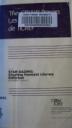
Star Gazing: Charting Feminist Literary Criticism by Andrea Lebowitz
06_img_2146.JPG

This was mentioned in my Methods class. At only 69 pages, it’s closer to a booklet than a book, but as far as the yearly book tally goes, it counts!

I got a few good ideas for my thesis from it.

On collaborative work:

[A]nother constant of feminist literary criticism is the success of collaborative work. Feminist literary criticism has put to rest the cliche that good writing must be the work of one person. (p. 6)

And the Other:

[F]eminists have questioned the binary opposites of our culture which see so many things as opposed and mutually exclusive … This type of thinking sees one thing as ‘other’ and inferior to its binary opposite. (p. 7)

Oh, and interestingly: Lebowitz writes that “the two most important precursors” to feminist literary criticism are Virginia Woolf and Simone de Beauvoir. A Room of One’s Own and The Second Sex “have formed the basis of feminist literary critics’ thinking about gender and writing.” (p. 11) I guess this is not particularly surprising, but what’s interesting about it is that I went through that whole de Beauvoir / Woolf phase and I’ve read AROOO and parts of TSS (it’s long!). I mean, it’s sort of vindicating that some of the stuff I read during that time fits with what I’m doing now. Now that everything is starting to tie together, it feels like there really is a point to it all.

Once I wrote up a list of “books that changed my life.” Meet the Austins (the book that hooked me on Madeleine L’Engle) was on it, as was Writing Down the Bones (the book that got me started writing again). Also on the list: de Beauvoir’s Memoirs of a Dutiful Daughter.

But I digress. On alternative/indie press:

[Feminists] have created alternative publishing and distribution networks and have founded many presses, journals and magazines. Some of these address an academic audience, while others speak for and from alternative cultural spaces. (p. 15)

On the novel:

[A]re there limits to what stories the novel can tell? … Does its structure, plot, narrative and closure keep women from writing stories other than the old familiar plots? (p. 19)

vs. “sub-literary” forms:

[L]etters, diaries, journals, sketches … have been widely used by women … studies into secondary forms have raised another fundamental question about evaluation. Why are some forms seen as superior? Conversely what makes a form inferior? (p. 20)

[I]dentity is not determined and fixed once and for all, but is rather in process. More fluid and fragmentary forms may offer ways of expressing this condition. … In autobiography and life writing more generally, the author is often not expressing a life already shaped and complete as she is using the writing as a way to express and make a life. (p. 21)

[I]t is not sufficient to use the old forms for new knowledge. We cannot simply reverse male stories, literary forms or critical criteria. Rather, language and form have become places for revision and experimentation. Most notably the private, fragmentary and intimate forms of expression have found a place alongside the public, completed and logical modes of expression. (p. 41)

Ooh. Well, that gives me something to chew on for a while.

5: Reasons for Moving

Reasons for Moving (manuscript) by Stephanie Eden Lenz

Reasons for Moving

This is the second novel my close personal friend* and co-editor Eden has completed.

She finished her first novel, Whited Sepulchers, in July 2000 (that date makes me =-O). She started RFM shortly thereafter and she was also shopping WS around for a while, but then she had two kids and the books went on the backburner.

Lately she’s been re-editing WS in preparation for sending it out again. In January, she picked up RFM and finished the first draft in 16 days. 60+k in just over two weeks. Bravo! It’s so good to see her writing fiction again. She’s going to write an editorial about the experience for the March issue of TC.

I need to re-read WS (it’s on my List), but from what I recall, RFM is very different in content and style.

RFM is set in the early ’90s in a college town in Pennsylvania. The narrator, Seth, who is 20 at the time of the story, was an abused child who left home after a traumatic event some three years earlier. Since then, he’s been hitchhiking around the country and doing what he has to to get by. He winds up on this college campus and, finding he blends in with the students, starts following them to classes. It’s winter and basically he’s looking for a warm place to hang out. He ends up following a girl to a small poetry writing seminar where the instructor spots him before he can escape. Soon he’s writing poetry, rooming with the classmate he followed that first day, and perhaps most surprisingly, setting down some roots. Through both the poetry and the personal connections he makes, he finally starts to work through his traumatic past, stop the destructive cycle he’s been on since he left home, and begins to look toward the future for the first time in his life.

*Is that phrase trademarked yet? 😉

4: The Orchid Thief

The Orchid Thief: A True Story of Beauty and Obsession by Susan Orlean

The Orchid Thief

I picked this up at the VPL Book Sale (for $1, I think). It’s the book that the movie Adaptation was based on. Adaptation is a weird and wonderful movie, so I was curious about the book.

As the sub-title indicates, this is a true story, an expansion of an earlier New Yorker article. Of course, the book has none of the meta-ness of the movie (which is all about the difficulty in adapting the book to a screenplay). The story starts out being about John Laroche—the orchid thief—who is on trial for taking endangered orchids from a state preserve, but grows into a story about Florida orchid enthusiasts in general and their passion for the plants. Passion is the overarching theme.

I have to say this is a rare instance where I liked the movie better than the book.

Orlean’s a really good writer—her descriptions are vivid—and this is the type of New Yorker article that I’d really enjoy, but the book gets a bit wandery. It’s like she wanted to include every orchid and every character she met and I started to suffer from sensory overload about midway through the book.

The movie has more of a cohesive narrative—but, heh, now I can see where the difficulty in adapting it to a screenplay came from. So, haha, ironically, reading the book will probably make my next watching of the movie even more entertaining! So I guess it was pretty awesome on that level.