
My tears [as I started to read Swallows and Amazons] could perhaps have been nostalgia (defined as memories of things that never happened) but I think they were a matter of attachment, as when one is reunited with an attachment person after a period of separation and danger. In the first paragraph of Swallows and Amazons, I was suddenly reunited with an object of attachment. I have read all of Ransome’s children’s books, I think when I was between eight and eleven. I used to own the whole set. I remember them on a bookshelf. They must have been given to me, one by one, by my parents. … My attachment to these books was made at a time when neither my parents nor I knew anything about. sailing. It must have been Ransome’s books that implanted in me the desire to sail.
Author Archives: Theryn
Trophy
The creative possibilities that physical books offer is invigorating and rewarding. Featuring a book on your bookshelf is akin to displaying a trophy. You’ve accomplished something in reading a book; it feels like a victory. The opportunity to display your literary conquests in unique or unexpected ways is something I will greatly miss with e-readers.
A necessary part of life
[People’s] differences give rise to disagreements, and the combination of these disagreements can give rise to even greater misunderstandings. As a result, sometimes people are unfairly criticized. This goes without saying. It’s not much fun to be misunderstood or criticized, but rather a painful experience that hurts people deeply. As I’ve gotten older, though, I’ve gradually come to the realization that this kind of pain and hurt is a necessary part of life. If you think about it, it’s precisely because people are different from others that they’re able to create their own independent selves. … Emotional hurt is the price a person has to pay in order to be independent.
—Haruki Murakami,
What I Talk About When I Talk About Writing (p. 19)
Where I needed to be
In some sense, what I was doing was perverse, for I was drawn to photograph in places where I didn’t particularly like to be. I would say ‘I love these places,’ and I didn’t really, at least not in the sense my audience probably thought. I was secretly afraid that the discrepancy indicated some irremediable bad faith at the heart of my enterprise, but I didn’t know what I could do about it since I didn’t want to do anything else. It took some time for me to understand that my discomfort was a sign that I was where I needed to be.
Liminal
What is writing? It seems to exist in a liminal universe, where words slowly turn into worlds.
Empowering the writing self
Writing itself, if not misunderstood and abused, becomes a way of empowering the writing self. It converts anger and disappointment into deliberate and durable aggression, the writer’s main source of energy. It converts sorrow and self-pity into empathy, the writer’s main means of relating to otherness. Similarly, his wounded innocence turns into irony, his silliness into wit, his guilt into judgment, his oddness into originality, his perverseness into his stinger.
14: Peril Over the Airport
Peril Over the Airport by Helen Wells
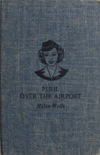
Peril Over the Airport is part of the Vicki Barr, Flight Stewardess series. I saw it at the library book sale (not a library book) and picked it because I read a lot of these juvenile series as a kid, but I don’t think I ever read any Vicki Barrs. I did like Cherry Ames, though, which was a very similar series (same authors) except Cherry was a nurse.
So, anyway, when you think about it, these books are a little odd, because they’re obviously aimed at a pretty young audience but the main characters are in their 20s (at least) and they have jobs. I mean, can you imagine trying to pitch something like that today? “I have this story about a 23-year-old Starbucks barista. The target audience is 7-9 year-olds.” Somehow, I don’t think that would fly.
Anyhow, in POtA, the setup is that Vicki wants to learn to fly. A pilot she works with recommends she learn to fly from this nice WWII vet who has just happened to set up a small airport in her hometown. So she cuts back on her work schedule and goes home for the summer to take flying lessons. She does work some during the story, but those bits are skipped over, except for one incident where she runs into a character pertinent to the plot. I assume there’s more coverage of her stewardessing in other books in the series.
POtA was published in 1953, and at first I just assumed that was when it was set. Although, it was a little odd that everyone kept referring to Bill Avery as a “boy,” when he had to be closer to 30 than 20 (if it was 1953, and he was a veteran, the youngest he could be was 26, and given his war backstory, probably older). But, his sister appears later in the story, as a war widow with a 5-year-old son, so I think it was actually supposed to be set earlier (I do not think they were implying that she got pregnant after becoming a widow). It was kind of weird, because Wells makes obvious references to WWII, yet when it comes to dates, she very deliberately leaves them out. I mean, that’s typical for this sort of book, but it seems a little silly when you have a major historical event playing a large role in the story.
Wells frequently refers to planes as “ships.” I guess this is an abbreviation of “airship”? Either that, or it was considered cool to call planes ships at the time; maybe military slang?
Given the intended audience, the plot and the mystery to be solved are very basic. Vicki takes most of the book to solve a “code note” the solution of which is obvious on first glance. And the resolution of the mystery is exactly what you’d expect. But in addition to the ostensible plot and mystery, there is lots of information on flying, both as a hobby (here’s how it works! you can do it too!) and as a career for women (no, women can’t be commercial airline pilots—yet! and yes, it does indeed say that—but they can do almost any other kind of flying! and you can too!). Despite the overtly feminist message, or rather, probably because of it, Vicki is otherwise depicted as being a very traditional female, e.g. she wants to wear high heels even when they are impractical, she’s obsessed with tidying up disorganized Bill’s office, she’s squicked out by dirt.
She’s also described as being tiny, and although it could be though of as just another way of feminizing the character, I liked it here because Wells got it right. Vicki complains of not being taken seriously, of people assuming she’s younger than she is, of the practical difficulties of being little—like not being able to able to reach the pedals, having to sit on a cushion, stuff like that. That was perfect. As a kid who was always stymied by height requirements, I would’ve loved to read about a short adult female who was doing cool stuff like flying in spite of being little.
Closer
I would not recommend writing a family memoir if you want to get closer to your family members.
13: Cinnamon Kiss
Cinnamon Kiss by Walter Mosley

Previously on The Remainder Table: I Heart You, Walter Mosley.
And… that is why you blog, folks. Well, at least one of the reasons.
So anyway, since then I’ve wanting/meaning to read some Walter Mosley. Hoping his writing of fiction would live up to his writing about the writing of fiction. Because, as you know, sometimes it doesn’t. But this time… it did.
Cinnamon Kiss is the 10th Easy Rawlins mystery, so I jumped into the series in medias res. It was ok, though. Even though the book did not have a huge “as you know, Bob” info-dump on the first few pages (thank you), enough info was sprinkled throughout to sort out the supporting characters and pick up the gist of the existing relationships. I do imagine knowing the full background of the characters would add further dimensions to the story, however.
So anyway, I really enjoyed Cinnamon Kiss. Sometimes I almost forget how much I like mystery fic (so much mediocrity out there…). And then something like this reminds me. Oh, yeah… But the best part about it may be that fans of the series think CK isn’t Mosley’s best work. So yay! If the rest of the series is even better, awesome. I have something (or 10 more somethings) to look forward to.
In CK, Easy’s daughter is sick and he needs to raise some money quick to pay for her treatment. He’s so desperate he considers pulling off a heist with his friend Mouse, but reconsiders when he gets a call from another friend, Saul, about a job for a mysterious detective in San Francisco.
The mystery was solid, although the final resolution was a little less than satisfying. And oh, sure, Easy’s a little too popular with the ladies. But it’s detective fic, so it’s already a bit o’ a fantasy to begin with, so I think that’s ok. The story’s setting and atmosphere were vivid and the characters intriguing, but I think Mosley’s real strength is dialogue. The dialect switches (depending on whom a character was speaking to) seemed absolutely effortless. I wonder if he teaches. He could totally give a lesson on dialogue how-to.
Also I do love that Easy is short for Ezekiel. Of course I do.
Some Reviews:
Every Word I Write
And so this morning, I went for a ride, trying to find that freedom, trying to think of nothing, and I passed Barney, standing miserably at the end of his driveway, the best part of his life over, nothing but suffering and sadness ahead, the crows circling overhead waiting for him to die—and I thought of my mother. I thought of the way she used suffering as a form of control, of how guilty I feel even today for wanting nothing more than to simply express myself, of how much I have been made to worry, still, that every word I write and every thing I say will only cause her pain.
And I thought, Fuck you, Barney.
I pedaled away, my lungs filling with breath, the tires humming beneath me, and for the next two hours, thought of nothing.
 The Remainder Table