
One of the few things I know about writing is this: spend it all, shoot it, play it, lose it, all, right away, every time. Do not hoard what seems good for a later place in the book, or for another book; give it, give it all, give it now. The impulse to save something good for a better place later is the signal to spend it now. Something more will arise for later, something better. These things fill from behind, from beneath, like well water. Similarly, the impulse to keep to yourself what you have learned is not only shameful, it is destructive. Anything you do not give freely and abundantly becomes lost to you. You open your safe and find ashes.
Author Archives: Theryn
Free-writing Pleasure
I used to journal from the time I was in my early teens until I was about twenty-nine, but then I stopped. Why? Because I started publishing. … I think that my journal was a casualty of the “Published Author” mentality that every word I put down must be for public consumption. Who had time to scribble privately in a spiral notebook when there were novel to work on, essays to outline, blog entries to compose, etc.? I had forgotten the free-writing pleasure of working my random thoughts out of the page. Journaling, for me, went out the window along with pointless travel and reading just for the hell of it.
1: Secret Son
Secret Son by Laila Lalami
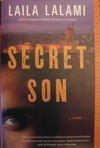
I have a basic policy of trying to read books written by bloggers with whom I have interacted. I don’t really know these people, and perhaps it is a form of wanting a connection with the famous (used loosely), but I find it interesting to see how their writing works in long from as opposed to blogging. —From review of Secret Son at Collected Miscellany
For several years now, I’ve taken to scanning the shelves each time I hit a bookstore, looking for books by people I’m familiar with via their blogs (or forums). Partly it is wanting to see how book-form writing compares to blogging. And partly it’s my way of supporting fellow writers whose writing I have enjoyed for x years. Should I ever complete and publish a novel, I would hope my fan (I do have one!) would do the same.
Anyhow, it’s often easier said than done.* Want Dan Brown? No worries. Want Laila Lalami or Tayari Jones? Er… So let me tell you, I was shocked when I saw Secret Son on the shelf in the Chapters on Robson in December. One copy. Hardcover. Y’all know I never buy hardcovers unless they’re on the remainder table. But then, in continuing to browse, more shock! I also found Jaden Hair’s Steamy Kitchen Cookbook and Heidi Swanson’s Super Natural Cooking. So then I decided it must be my day and bought all three. Solstice prezzie to self! Hurrah!
Cookbook reviews to follow. For now, Secret Son.
I’ve read Laila Lalami’s blog for a long time. Since back when it was called Moorish Girl. Since before she published her first book (Hope and Other Dangerous Pursuits, which I have yet to find), when she was just another book blogger. One of the the things she’s written about is her decision to write in English (her third language). Part of it is that English is not fraught with the connotations that Arabic and French have for her. But as well, she’s writing for a predominantly English-speaking audience. I think translations can sometimes have the effect of erasing the language difference, i.e. you forget that you’re reading a translation and impose your own language-view on the text.
Here are excerpts from a couple reviews:
“Secret Son” gives us an insider’s view of the underlying turmoil of Morocco, access we probably wouldn’t have if she had written in another language. But something has been lost in her attempt to bypass translation: perhaps it’s the cadences of the inner courtyards of her upbringing. Her English prose, although clean and closely observed, lacks music, and her similes can be predictable, as when Youssef’s half sister, returning from California to Casablanca, feels “like a fish that had been taken out of water and put back.” —New York Times
Lalami’s portrayal of indecision, abetted by her characters’ plainly outlined conflicts, lacks tension. When she does successfully transcend her own stylistic shortcomings, which happens in two scenes that revisit key events from different characters’ perspectives à la Rashomon, such structural cunning is deadened by the same rhythmless style, where rage is always “blinding” and a character’s regret is expressed by the narrator’s asking, “What had he done with his life?” —Quarterly Conversation
What these criticisms of her writing style seem to be missing is that she’s made a deliberate choice to write that way, and I think it’s an important one. The way it’s written, to me, is designed to not let the reader slip into the mistake of thinking that the characters are native English speakers. It’s written the way a non-native English speaker, who is fluent in English, but for whom writing in English is still not the main way they communicate, writes in English. It’s one of the first things I noticed. Of course, the story is being told about the characters, but still, I think taking this approach of writing like the characters would in English makes sense because you don’t lose the sense of them being Moroccan.
The other thing is that its written in close third person. Multiple povs, yes, but close third. It’s not omniscient. Which means the writer is limited to what the characters know. She can’t break into a soliloquy on the Moroccan condition. So true, it’s not a “big” novel; it’s an intimate one. It’s looking at the world from the perspective of the characters, not looking at the characters from the perspective of The World. I actually loved the scenes that were seen from the perspectives of two characters, seeing the subtle differences between their remembrances. Really important for a novel so focused on truths and lies. I liked the ideas explored here: identity/family, dual loyalties, the old “education will set you free” trope ;-), choices (or lack thereof). I like that while the characters’ secrets are revealed, their problems aren’t solved.
It did seem like the pacing really sped up in the last quarter or so of the book, and I was wishing it would slow down a bit. But I’m going to have to think about whether or not that is a flaw or not. Although it felt like there was a rush to the ending, I can see how that might be intentional, designed to mimic how the MC, Youssef, was feeling.
Other Links:
- First Chapter
- Book Notes “In the Book Notes series, authors create and discuss a music playlist that relates in some way to their recently published books.“
- Interview with Laila Lalami about Secret Son.
*Yes, I’m fully aware I could just order from Amazon. However, one of my great pleasures dating from pre-internet life is haunting bookstores new and used, looking for somewhat obscure titles. Nothing beats the heart-skip you get when you see a long sought-after book sitting on the shelf in front of you. Buying online does not provide the same thrill.
A profound connection to more than one place
I think we need a better way of thinking about citizenship and what it means. I see no reason why a person must be limited to either being Canadian or Haitian – an individual is capable of having a profound connection to more than one place. Perhaps the world would be a more tolerant and peaceful place if all people were connected to many different communities rather than feeling one nation had to be prioritized over all others.
(in comments on Globe & Mail story)
A circle that returns on itself
In the non-Aboriginal tradition, at least until recently, the purpose of historical study has often been the analysis of particular events in an effort to establish what ‘really’ happened as a matter of objective historical truth or, more modestly, to marshal facts in support of a particular interpretation of past events.
While interpretations may vary with the historian, the goal has been to come up with an account that best describes all the events under study. Moreover, underlying the western humanist intellectual tradition in the writing of history is a focus on human beings as the centrepiece of history, including the notion of the march of progress and the inevitability of societal evolution. This historical tradition is also secular and distinguishes what is scientific from what is religious or spiritual, on the assumption that these are two different and separable aspects of the human experience.
The Aboriginal tradition in the recording of history is neither linear nor steeped in the same notions of social progress and evolution. Nor is it usually human-centred in the same way as the western scientific tradition, for it does not assume that human beings are anything more than one — and not necessarily the most important — element of the natural order of the universe. Moreover, the Aboriginal historical tradition is an oral one, involving legends, stories and accounts handed down through the generations in oral form. It is less focused on establishing objective truth and assumes that the teller of the story is so much a part of the event being described that it would be arrogant to presume to classify or categorize the event exactly or for all time.
In the Aboriginal tradition the purpose of repeating oral accounts from the past is broader than the role of written history in western societies. It may be to educate the listener, to communicate aspects of culture, to socialize people into a cultural tradition, or to validate the claims of a particular family to authority and prestige. Those who hear the oral accounts draw their own conclusions from what they have heard, and they do so in the particular context (time, place and situation) of the telling. Thus the meaning to be drawn from an oral account depends on who is telling it, the circumstances in which the account is told, and the interpretation the listener gives to what has been heard.
Oral accounts of the past include a good deal of subjective experience. They are not simply a detached recounting of factual events but, rather, are “facts enmeshed in the stories of a lifetime”. They are also likely to be rooted in particular locations, making reference to particular families and communities. This contributes to a sense that there are many histories, each characterized in part by how a people see themselves, how they define their identity in relation to their environment, and how they express their uniqueness as a people.
Unlike the western scientific tradition, which creates a sense of distance in time between the listener or reader and the events being described, the tendency of Aboriginal perspectives is to create a sense of immediacy by encouraging listeners to imagine that they are participating in the past event being recounted. Ideas about how the universe was created offer a particularly compelling example of differences in approach to interpreting the past. In the western intellectual tradition, the origin of the world, whether in an act of creation or a cosmic big bang, is something that occurred once and for all in a far distant past remote from the present except in a religious or scientific sense. In Aboriginal historical traditions, the
particular creation story of each people, although it finds its origins in the past, also, and more importantly, speaks to the present. It invites listeners to participate in the cycle of creation through their understanding that, as parts of a world that is born, dies and is reborn in the observable cycle of days and seasons, they too are part of a natural order, members of a distinct people who share in that order.As the example of creation stories has begun to suggest, conceptions of history or visions of the future can be expressed in different ways, which in turn involve different ways of representing time. The first portrays time as an arrow moving from the past into the unknown future; this is a linear perspective. The second portrays time as a circle that returns on itself and repeats fundamental aspects of experience. This is a cyclic point of view.
Report of the Royal Commission on Aboriginal Peoples (1996)
via Delgamuukw v. British Columbia (SCC 1997)
Thinking, Drafting and Re-drafting
The coming into existence of the paper-and-print book has many accomplishments, two of which, it seems to me, were scarcely foreseeable in 1455. They are entirely remarkable. One was to enable the emergence and wide appreciation of novels and short-stories: forms in which authors spend months and years on a work, thinking, drafting and re-drafting, so that they can reach all the way down into the subjects they treat. The other has been the possibilities for readers to enter into relationships—quite intimate relationships—with books, with authors, with fictional characters.
Fundamental Democracy
The great power of the written word – why the word “book” continues to mean so much to us – is its fundamental democracy: that anyone literate can set pen to paper and write something. Technology, the truism goes, is politically neutral; but I wonder if this can be true in a practical sense when the tools of expression are so expensive.
The Good Ones Last
The third way [to write for children], which is the only one I could ever use myself, consists in writing a children’s story because a children’s story is the best art-form for something you have to say: just as a composer might write a Dead March not because there was a public funeral in view but because certain musical ideas that had occurred to him went best into that form.
…
E. Nesbit’s trilogy about the Bastable family is a very good specimen of another kind. It is a ‘children’s story’ in the sense that children can and do read it: but it is also the only form in which E. Nesbit could have given us so much of the humours of childhood. … Sentimentality is so apt to creep in if we write at length about children as seen by their elders. And the reality of childhood, as we all experienced it, creeps out. For we all remember that our childhood, as lived, was immeasurably different from what our elders saw.
…
In this short glance at the Bastable trilogy I think we have stumbled on a principle. Where the children’s story is simply the right form for what the author has to say, then of course readers who want to hear that, will read the story or re-read it, at any age…. I am almost inclined to set it up as a canon that a children’s story which is enjoyed only by children is a bad children’s story. The good ones last. A waltz which you can like only when you are waltzing is a bad waltz.
Poetic Drunkenness
The writer who cares more about words than about story (characters, action, setting, atmosphere) is unlikely to create a vivid and continuous dream; he gets in his own way too much; in his poetic drunkenness, he can’t tell the cart—and its cargo—from the horse.
—John Gardner, On Becoming a Novelist, p. 6
The noise that rattles between their ears
Writing ought to be a way of challenging oneself. The words ought to poke back at you, cause you to sit up straight and ask yourself — is this really what I mean? Does this sentence really makes sense following that one? Does that word really signify what I’m trying to get across? But it appears that many people think they just have to transcribe the noise that rattles between their ears. And noise is most of what comes across.
 The Remainder Table