Author Archives: Theryn

By Request: Lemon Bread

Lemon BreadSift together 1½ cups flour, 1 tsp baking powder, ½ tsp salt, and the grated rind of 1 large lemon.

Cream ½ cup margarine with 1 cup sugar. Blend in 2 eggs, and beat until light and fluffy.

Combine juice of ½ lemon with enough milk to make ½ cup of liquid.

Add dry ingredients to creamed mixture alternately with milk & lemon juice (3 dry additions, 2 liquid additions).

Bake in greased loaf pan for 60-70 minutes at 350°F. Cool 5 minutes. Drizzle with ¼ cup sugar combined with juice of ½ lemon. Cool completely, then remove from pan.

(Recipe adapted from the Purity All Purpose Flour Cook Book, the Quick Breads section of which is disintegrating. The rest of the book, not so much. Quick Frank Supper, anyone? 😉 )

Rustic Cabbage Soup

Cabbage Soup

One of my new favorite blogs is 101 Cookbooks. I had a leftover half a cabbage in my fridge that I was wondering what to do with when I saw this recipe for rustic cabbage soup. And lo and behold! I had all the ingredients on hand. It was like fate or something. 😉 The only change I made was using Asiago (instead of Parmesan), because I had a wedge of that I’ve been trying to use up as well. Oh, and I ground some pepper on top. Perfecto! It was delicious—pan-frying the potatoes to start was a most excellent touch—and I shall have more for lunch.

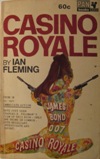
1: Casino Royale

Casino Royale by Ian Fleming

Casino Royale

So in December, one of the movie channels had a Bondathon—all the Bond movies except for the Pierce Brosnan ones and the latest one with Daniel Craig. They were all blurring together by the end, especially since various actors appeared as different characters in different movies. But watching them all like that got me curious about the books. So I headed on out to Pulpfiction Books to see if they had any. And hey, they did! So I grabbed Casino Royale—the very first book—and On Her Majesty’s Secret Service.

I figured CR would be typical, well, pulp fiction. As it turns out, Ian Fleming (no relation 😉 ) was a better writer than I expected, though his style is quite dry and analytical. Everything is described in excruciating detail. This does work, though, because of who/what Bond is supposed to be. However, I could see readers finding it boring. What especially stood out for me was that the book had none of the humor of the movies. Instead, Bond’s kind of a morose character. He’s described as looking like Hoagy Carmichael. He drives a Bentley.

Another thing that was different from the movies was that Bond doesn’t believe in mixing women and business (women are for after business is complete): “…he wanted to sleep with her but only when the job had been done.” (p.40) And there was only one female interest in CR (Vesper Lynd). Bond sees Lynd as somewhat of a nitwit to begin with, but at the end it is revealed that she was in fact not. Also, in addition to being sexist (which I expected, obviously), Bond is somewhat racist (has a tendency to stereotype people).

There is one scene late in the book that is most definitely in the latest movie.

He does actually use the Bond, James Bond line (p. 50):

“My name’s Felix Leiter,” said the American. “Glad to meet you.”
“Mine’s Bond — James Bond.”

Bond’s drink: “Three measures of Gordon’s, one of vodka, half a measure of Kina Lillet. Shake it very well until it’s ice-cold, then add a large thin slice of lemon-peel” (p.51). Later, after Bond learns Vesper Lynd’s given name, he asks if he can name his drink after her.

I think I understand Baccarat now. Banco!

22: Man Walks into a Room

Man Walks into a Room by Nicole Krauss

Man Walks into a Room

Sneaking in one last book for 2007. Appropriately, it is actually a remainder table find 🙂

Man Walks into a Room is Nicole Krauss’s first (or debut, as the literati like to say) novel. Krauss is married Jonathan Safran Foer. Foer is, aykb, a literary darling. I haven’t read any of his work (though I might have to now) because having read MWiaR, I have to wonder why he gets all the attention.

Loved this book.

One of the dust jacket blurbs says, “Man Walks into a Room is that rare thing: an evocative, finely written first novel that is a true work of fiction.” —A.M. Homes. (In that respect, it reminded me of Eden and her first novel, which she really needs to find a publisher for!)

Samson Greene is a 36-year-old literature professor with a wife and a life in New York city until the removal of a benign brain tumor causes him to lose the last 24 years of his memory. MWiaR is about his reaction to that loss, but it is also an exploration of mind and memory, loneliness and intimacy:

…then and there it occurred to him that maybe the emptiness he’d been living with all this time hadn’t really been emptiness at all, but loneliness gone unrecognized. How can a mind know how alone it is until brushes up against some other mind? A single mark had been made, another person’s memory imposed onto his mind, and now the magnitude of his own loss was impossible for Samson to ignore. (pp. 192-193)

Near the end of the book, there was a riff on WASPy nicknames like Pip and Chip and Kick. Would’ve been a throwaway bit, except one of the names was Apple. Had to check the dates to see if she was poking fun at Gwyneth Paltrow, but no, Gwyneth’s daughter wasn’t born until 2004. I guess she was just prescient 😉

Some links:

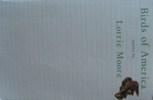
21: Birds of America

Birds of America by Lorrie Moore

Birds of America

Lorrie Moore was one of those names I kept hearing around the book blogosphere, so when I saw this in fave used bookstore (I know, getting a little repetitive in the “where I got this book” department…) I picked it up.

Birds of America is a collection of short stories. What is there to say? Moore’s writing is really, really good. And the stories are really, really sad. So, you might think that this wouldn’t be the best choice for late-night-when-you-can’t-sleep reading (which is what I found myself doing a few times), and yet… somehow it was okay, because they are funny (witty, clever, biting, sarcastic) as well as sad.

Not having read any of Moore’s work before, I kept waiting for her to veer into slit-your-wrists territory, but she always pulled back before she got there (now that’s talent). The negative reviews at Amazon (I do so love reading those after I finish a book! hee!) call the book depressing, but I disagree. It’s sad, but not depressing.

Since BoA was published in 1998, I couldn’t resist a trip back to the early days of the interwebs:

One of the best things I’ve read this year!

20: The Last Good Day

Gail Bowen, The Last Good Day
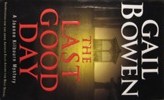
The Last Good Day

I was looking for a fun weekend afternoon read and grabbed this off the to-read shelf. I think I got it from a pile of books my mom was discarding. (Free!)

I really wanted to like this book. The narrator sounded cool (55yo female university professor/amateur sleuth). It’s set in Saskatchewan! I don’t think I’ve ever read a book set in Saskatchewan that wasn’t CanLit. And the reviews on the back cover are glowing: “a treat from first page to final paragraph” (Globe & Mail), “Bowen is a national treasure” (Ottawa Citizen), etc. Apparently it was also shortlisted for the Arthur Ellis Award for best novel.

Really?! Did we read the same book? Because I actually thought it was really bad. I love Canadianisms as much as the next Canadian, but some of the CanCon here seemed soooo deliberate. Like, “Hey, I think I’ll stick in a priest with a West Indies accent (even though said character doesn’t actually have a speaking role—or a name, for that matter) because, aykb, Canada’s a multicultural society!” Or the completely random mention of a character carrying a Zeller’s bag. (Groan.)

[digression] Been thinking about this, because I think this is an important thing to remember when writing fiction. Random mentions feel like you’re working off a checklist (or namedropping). Stuff should have a reason for being there. If you’re going to mention a priest with a West Indies accent (interesting detail), then he should play a role in the story (he doesn’t). If you’re going to mention a Zeller’s bag (rather than a plain old plastic bag), then the fact it’s a Zeller’s bag should be significant (it isn’t). OTOH, the references to the RCMP felt perfectly natural, because there was a legitimate reason for them to be there. Good lesson here I think. I know I’ve been guilty of no-reason namedropping. But I think it’s important to note that it’s not just brand names—any detail can come across as awkward if it stands out and doesn’t serve a purpose. [/digression]

It was also excessively telly. Early in the book, a character dies. The narrator has been acquainted with this person for less than 24 hours, and has had exactly one 10-minute conversation with him (in which he confides his deepest, darkest secret — and… can I just say, unrealistic much? — yes, I always go around confiding my intimate secrets to complete strangers). Anyhow, after he dies, narrator goes on and on and on about how shattered she was by his death. Now granted, she witnessed his car driving into a lake and attempted a rescue (hint: it’s easier to break a window in a sinking car than to try to open a door!), so that would be somewhat disturbing. But she didn’t know the guy. The significance that the narrator kept saying this had on her seemed all out of proportion with what we had been shown of these characters.

The telliness also meant the characters were flat and uninteresting. There were a lot of characters, but none of them were fleshed out. Nobody felt real. The “Winners’ Circle” was annoying (I mean, honestly. On principle, who wouldn’t hate a group of law school students who named themselves the Winners’ Circle and still referred to themselves by that name 25 years later? How irritating must they be?). I couldn’t work up an iota of sympathy for these people.

The inciting incident basically made no sense. A work-related transgression (by guy who dies early in book) was blown out of proportion by a character who we don’t actually get to know first-hand (making the reasoning behind what she did in response to her discovery even less understandable). And then his reaction (driving his car into a lake, amongst other things) to that is also way beyond realistic.

But here’s the thing that drove me absolutely batty: this book was published in 2004. In the book, the characters are happily using email and have GPS in their cars. So, it is set in present day. However, when they are told that a character has moved to Vancouver to work at a law firm there, but are suspicious as to whether this is true or not, not one person thinks to use Google to check out the story. Isn’t that the first thing you would do? I mean, all medium-to-large law firms have websites! Generally with all the lawyers listed. Now, granted, some small ones don’t. But then there’s also the Law Society website, which lists all practicing and non-practicing lawyers in the province! Seriously, this story would take like two minutes to check out. I just could not get past this.

Maybe the characters couldn’t either, as they seemed inclined to take themselves out. Yes, the number of suicides (3*) in this novel outnumber the murders (1). So not only was it a frustrating read (Gooooooogle!), it was also depressing. Not exactly what I look for in a mystery. (ymmv, of course. I could not find one negative review of this book, so I am definitely in the minority.)

*Technically, that includes a murder-suicide, but as it was a pact between the two individuals, it was essentially a double-suicide.

FYI

Toasted Cheese’s webhost is down, which means TC is too. We hope we’ll be back up soon.

ETA (Nov 5): And we’re back. Apparently the cause was scheduled maintenance that went awry. Unfortunately weren’t informed of said maintenance ahead of time or we could have let people know we might be down over the weekend.