Which literature classic are you?

So I’ve actually read this! It’s even on my bookshelf. Which I suppose means the result is somewhat accurate…

orlando
Virginia Woolf: Orlando. You are a challenge, for
outer events, the outside world, the time
etc. play no importance to you. Your focus is
in writing, in gender issues, and inside your
own head. Self-analysis and exploration of
yourself as well as the outer world hold
great importance to you.

Which literature classic are you?
brought to you by Quizilla

Finishing a Novel

I ran across this article at HollyLisle.com a few days ago: How to Finish A Novel. Just quoting the headers here. I’ve bolded the ones I think are pertinent to finishing, i.e. getting to “The End,” as opposed to just writing a novel in general.

  • First, know how it ends.
  • Write your ending, and then write to it.
  • Create five or six “candy-bar” scenes, and use them to keep you moving forward.
  • Write about people you enjoy spending time with.
  • Use an outline.
  • Allow yourself to be surprised.
  • Write because you want to, not because you should.
  • Write what you love, not “what sells.”

I think knowing how it ends and using an outline are the most important. I’ve given up thinking you can write your way to the end of a novel (a short story, sure) without at least a semblance of an outline. You can start without knowing how it ends, but you can’t finish. At least I can’t. I’ve realized that I need to be writing to something. If I can visualize where the story needs to go, what the next big scene is, then all is fine. Since I usually have most of the story worked out, all goes well for a time. But the closer I get to the end, the harder things get, because I’ve always been vague about how things end. I think this is my downfall. Time to figure out how things end.

*

Almost forgot: You know how I always joke that there should be a National Novel Finishing Month—well, there is! NaNoFiMo.

NaNoFiMo is a challenge to write at least 30,000 words on your unfinished novel draft and to reach a conclusion to the novel, between Dec. 1 and Dec. 31.

Also, more about outlines:

First of all, it helps you know where the story is going, so you don’t run into dead ends or run out of steam. It can help you find the slow spots in your narrative, it’s much easier to add scenes and characters to an outline than a novel-in-progress, and it helps you focus on the craft of the story, as opposed to the art of writing.

An outline is also extremely helpful when it comes to motivation. Once the story is down on paper (in outline form) all you need to do is add the bells and whistles; the action, dscription, and dialog. You don’t need to worry about what happens next because you already know. That frees up your mind to create characters and settings and scenes without having to wonder if the book is working, or if there’s enough conflict.

To paraphrase Kanye West, South Dakota doesn’t care about female people.

But fortunately Canada does.

Today is International Women’s Day.

Anyone questioning why we still need a special day to highlight women’s rights need look no further than South Dakota.

Honestly, WTF?

Why men think they should have any say in whether a woman has an abortion is beyond me. If a woman chooses to involve the potential father in the decision, fine. But random politicians need to butt out. It’s so not their business.

For such obvious reasons, most discussion of abortion is focused on threats to Roe v. Wade by right-wing Americans. But I think people sometimes forget that Canadian women didn’t have unfettered access to abortion until 1988. Yes, you read right. 1988.

The decriminalization of abortion in Canada was a consequence of the Charter of Rights and Freedoms coming into effect. Section 7 of the Charter reads:

7. Everyone has the right to life, liberty and security of the person and the right not to be deprived thereof except in accordance with the principles of fundamental justice.

In R. v. Morgentaler, the Supreme Court of Canada decriminalized abortion by striking down s.251 of the Criminal Code:

Section 251 clearly interferes with a woman’s physical and bodily integrity. Forcing a woman, by threat of criminal sanction, to carry a foetus to term unless she meets certain criteria unrelated to her own priorities and aspirations, is a profound interference with a woman’s body and thus an infringement of security of the person. A second breach of the right to security of the person occurs independently as a result of the delay in obtaining therapeutic abortions caused by the mandatory procedures of s. 251 which results in a higher probability of complications and greater risk. The harm to the psychological integrity of women seeking abortions was also clearly established.

Shortly thereafter, in Tremblay v. Daigle (a case where a woman’s ex-boyfriend was trying to prevent her from obtaining an abortion), the SCC ruled that:

A foetus is not included within the term “human being” in the Quebec Charter and, therefore, does not enjoy the right to life conferred by s. 1. … In Anglo-Canadian law, a foetus must be born alive to enjoy rights. In light of the treatment of foetal rights in civil law and, in addition, the consistency to be found in the common law jurisdictions, it would be wrong to interpret the vague provisions of the Quebec Charter as conferring legal personhood upon the foetus.

and:

[T]here is nothing in the Quebec legislation or case law, to support the argument that the father’s interest in a foetus he helped create gives him the right to veto a woman’s decisions in respect of the foetus she is carrying. The lack of legal basis is fatal to this argument.

So, to sum up:

  1. A fetus is not a person.
  2. Men have no say in whether a woman has an abortion or not.
  3. Restrictions on obtaining an abortion are a violation of woman’s right to security of the person.


Happy International Women’s Day!

2006 Books Read – #4

Contentment: wisdom from around the world by Gillian Stokes

Contentment

This book was given to me as a gift a while ago and it’s been sitting on my shelf since then. I read it this morning while waiting for the Vancouver part of the Olympics closing ceremony. I wanted to read something fast to up my book count for this year 😉 It took me about an hour to read with one eye on the TV. Which is funny, because a good part of the book is about concentrating on whatever you’re doing, not multi-tasking or having the TV on in the background. Haha!

So, the book itself is like a coffeetable book, except smaller. Thick paper, some nice art prints, attractive layout. The content consists of quotes mixed with the author’s musings. What makes her an expert, I don’t know. There’s no bio or anything. But the advice seems sound (if mostly common sense) and the quotes are pretty good.

There’s a Thomas Jefferson quote that made me laugh because Lawrence Lessig uses it in The Future of Ideas to bolster the Creative Commons concept. (Yes, I am a nerd.)

It did disturb me somewhat that someone gave me this book now when I’m probably more content than I’ve ever been (I think sometimes people read snarky/cynical as unhappy?). But no doubt I’m reading too much into what is, after all, just a gifty-book. What I thought about most while reading this: Hmm, how many words is this? How do you pitch a piece o’ fluff like this? Wonder what the profit on something like this is… 😉

Should a writer be invisible?

As an actor, [Philip Seymour] Hoffman says that his job is to be invisible. The idea is that when you are watching in Capote, you are to believe that you are watching Truman Capote himself. He believes that he has “done his job” as an actor when you forget that he is actor.

Well, I think that, as a writer of fiction, I want the reader to forget about me all together. As you are reading The Untelling, I want you to think that Aria is a real person. I have to wonder that knowing too much about the author can detract from that possibility.

Hmm. I don’t need to know anything about a writer; I enjoy reading plenty of writers whom I know little to nothing about. For example, I adore Pat Barker but know zip about her beyond the bio blurb that appears on her books. And that’s fine. At the same time, if a writer I like chooses to share more of his/herself, I’m interested. In particular, I’m interested in process (the same goes for artists, actors, etc.). If you’ve read a lot of a particular writer’s fiction, it can be really fun / interesting / instructive to read a memoir/autobiography and see where the ideas came from. Conversely, what’s happening now is that I’m finding writers I might otherwise never have heard of via their blogs—and subsequently adding their books to my “to read” list. I figure if I enjoy their blog-writing, then I’ll probably enjoy their novels.

I may be unique (though I somehow doubt it) but reading a writer’s personal writing doesn’t make his/her characters less real for me. I always view fiction as an alternate reality. It’s kind of like keeping up with friends/relatives that live away. They’re there and you’re here and sometimes you visit. Maybe it’s because I do write that I can separate writer and character and allow for them both to be real. I know my characters aren’t me. They have their own lives. They do and say things I’ve never done. Yet, it’s not like I’m telling them what to do and say. It’s more like I know. Not all at once, but as I write, the story unfolds, as if I were watching it. Which makes them feel real to me. So if my own characters—who I know are creations of my imagination—can on some level be real, then there’s no reason why someone else’s characters can’t also.

I think the concern here stems from the same root as the memoir craze: the general public’s apparent need for stories to be factual. Writers start to worry that if readers realize their stories are (gasp) made up, then they (the readers) won’t find them believable. What is that about? I do not know. Mayhap we need to start a movement to make fiction cool again. Fiction: not that there’s anything wrong with that.

Another thing I’ve said in the past: if a book is well written, you’ll forget that you’re reading. You’ll forget about the words on the page. You’ll forget that someone typed those words. You’ll forget who that person is. Not forever, but for the duration. If you are hyper-aware that you. are. reading. a. book… then the writing is crap. In other words: write well and nothing else (including what you do or don’t know about the writer) should matter. If it does, then it’s the reader who has a problem, not the writer.

Reading Submissions

So I’m reading subs for TC’s March issue. I’m at the point where I’m just wrestling with the borderline decisions. While it always seems like a daunting amount of reading, in reality, when you get down to it, most of the decisions are quite easy. If we get 100 subs, say, 60 of those will be culled during the short-listing process. Those don’t require much thought; they’re either not good enough or not appropriate for TC (or both).

Of the remaining 40, I can easily cut half of those on my first thorough read. We’re pretty generous on the first-round cuts; if we waffle at all on a piece, it stays in for reading by the full editorial board. But a lot of times those are things I know from the beginning that I’m not going to say yes to (although other editors might). So those go. And then there are always pieces that show potential, but when I actually sit down and give them my full attention, they don’t work.

So that leaves about 20. A few of those (generally less than 5 and usually closer to 1) I’ll have given definite yesses. Some things you read once and you just know. The rest will be split between maybes-leaning-to-yesses and maybes-leaning-to-nos. With the number of subs we get now, I aim for 8-10 yesses. When we combine votes that usually works out to ~10 regular acceptances, plus a few editor’s picks, depending on how divided we are.

On second read, I send a few more to the no pile and a few more to the yes pile. This is usually where any fluctuations due to the order of reading are smoothed out. For example, if the first 10 stories I read are nos, and the 11th is okay, I’ll probably give it a maybe for the time being, knowing in the back of my mind that it’ll probably end up a no. Similarly, I often give maybes to pieces I read early on, but on second read, I’ll give them firm yesses. Partly that’s a matter of comparison—waiting to see how a piece measures up to the other subs—but also, it’s a matter of confirming that it holds up to further scrutiny; as any reader knows, you pick up stuff on subsequent readings that you don’t on first read.

But inevitably, I’m left with 3-5 pieces that I consider borderline. Usually they’re stories (we get more fiction subs than anything else—usually the number of regular fiction subs is equivalent to the poetry, flash, and cnf subs combined). Generally I’m torn because the writing is strong, but the story leaves me flat. Often they’re things that I start out really enjoying, thinking “nice writing,” wondering where the writer is taking me, and then…

…the story just stops. As if the writer got tired of writing.
…the story doesn’t go anywhere. Good writing, no point. Note that this is different than having no plot. I’m fine with plotless stories, but there has to be a point.
…the story goes off the rails. Starts out well, but suddenly veers in a direction that doesn’t make sense.
…the story has a final paragraph/sentence that is so horrendous that it makes me question the rest of the story.

I read them again (am I missing anything? generally: no). If a story grows on me the more times I read it, it gets pushed into the yes pile. If it remains as murky as ever, it ends up in my no pile. I try to avoid leaving anything as a maybe. Maybes work given our format, but I guess it seems like a bit of a cop-out—it’s a better exercise for me as an editor and a writer to make a firm decision. Ultimately, I end up spending more time on these than any of the other subs, but writing-wise I probably learn the most from them.

2006 Books Read – #3

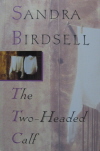
The Two-Headed Calf by Sandra Birdsell

The Two-Headed Calf

This was a collection of short stories. Some were loosely connected (same town, characters from one story mentioned in another, that sort of thing) while others weren’t connected except via geography (they were all set in the prairies, mostly Manitoba). I don’t know if I liked that. I think maybe I like it better when the stories in a collection are either all separate or all connected. I never really thought about that before, but it occurred to me here. I guess the mixture makes it seem kind of “well, this is what I had on hand…”

These stories were very readable, but they didn’t wow me. I’m not sure why (the back cover had kudos from writers who do wow me–Alice Munro and Michael Ondaatje and Jane Urquhart, which is probably why I picked it up in the first place). Maybe I’m just prairied out. Perhaps I shouldn’t have read two Manitoba-based books in a row. I thought it was a good segue. On second thought, I don’t think that’s it. I think I just didn’t connect with the characters. I’m sure others would find them appealing, I just wasn’t having those “yes!” moments that you do when writing really resonates.

I know (most) politicians are asshats, but this takes the cake.

I guess I have to post about the asshat who is David Emerson.

Okay, so here’s the scoop: two weeks ago we had a federal election. Emerson ran for the Liberals and won his seat. The Conservatives, however, won the election (albeit a minority government).

So apparently Asshat Emerson gets a call from Asshat Harper, our new PM, the gist being that he’ll get a cabinet post if he defects. Asshat Emerson thinks “What a great idea! More $$$$$ for me!” and does it. (Oh, come on, of course that’s what he was thinking. Well, mayhap power/prestige came into it a little.)

The former Liberal industry minister said … he’s been unjustly accused of rank opportunism for switching sides just days after an election campaign where he led the Liberal charge against the Tories in British Columbia.

(Unjustly accused. *boggle* I’ve never seen a more obvious case of rank opportunism.)

So on Monday, when the new cabinet is announced this all comes out and people–especially those who voted for him, worked on his campaign, etc.–are outraged. Well, duh. Except Asshat Emerson is all “Why are people mad? I didn’t expect this.”

Emerson said he was unprepared for the reaction in his home town to what seemed to him a logical move aimed at helping his province.

Dude, I’ll explain it to you. For TWO MONTHS you campaigned as a member of the Liberal party. TWO WEEKS AGO you won your seat based on the fact that you were a LIBERAL. You would not have won if you were not running as a Liberal. Yes, it’s true that certain people have a personal popularity that transcends partisanship. I don’t think you are one of them.

To say something like this shows that you don’t understand our political system at all. In Canada we get ONE VOTE. When we vote for our local representative, we are endorsing the party they represent and by extension the leader of that party, who will become the Prime Minister should the party win. Thus, the PARTY you represent is integral to voters’ decisions whether to vote for you.

80% of the people in your riding voted either Liberal or NDP. The Conservatives were a distant third with 18% of the vote. Do you not understand what this means? PEOPLE IN YOUR RIDING DO NOT ENDORSE THE CONSERVATIVE AGENDA.

I don’t think I’ve ever been so gobsmacked by a politician’s actions. How anyone could think this was okay is beyond me. This is not a case of a person sitting for a while (years perhaps) and then coming into conflict with their party’s agenda and either becoming an independent or switching to another party on a matter of principle. Oh no. In fact, Asshat Emerson says he would still be a Liberal had they won. WTF?!

I’ve never been a fan of recall, but damn, I hope they recall your ass.

(And let’s not forget the fact that Asshat Harper made this offer in the first place makes him a first class idiot. Don’t forget that come next election.)

2006 Books Read – #2

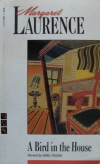
A Bird in the House by Margaret Laurence

A Bird in the House

This is the 4th book in a five-book series that Margaret Laurence wrote about the fictional Manitoba town of Manawaka (based on her hometown of Neepawa). It’s not a “series” in the sense that one normally thinks of a series; the books are only loosely connected–each one has a different main character–and so they really stand alone. There’s no need to read them in order or together.

The 5th book, The Diviners, was given to me as a gift when I was 14. I’d hung onto it and re-read it a few times over the years, and somewhere along the line, I decided I’d like to read the others, so I started picking them up when I saw them in used bookstores (this adds an element of chance to it that I find exciting. YMMV). A Bird in the House was the last of the five that I had yet to read. I found it a few weeks ago.

This is a book that I think I could re-read over and over again. It’s actually not a novel, but eight interconnected short stories. Which is interesting to me, because I’m working on a book like that. The stories center on the childhoood of a girl who grows up to be a writer, essentially depicting the process of how a child becomes a writer. I smirked to (at?) myself in amusement numerous times.

The other books in the series are: The Stone Angel, A Jest of God, and The Fire-Dwellers.