
Rebecca Scherm: What might we be surprised to see in your first drafts?
A.M. Homes: The enormous number of pieces of paper, the incredible fragmentation of things. Fragments and half-sentences that I don’t put together for a long time. Hundreds of pages of notes, and then I build the story from that, like knitting or sewing. Increasingly, I work by hand, with pencil and paper. I get better connectivity that way, but then I have to type it up really quickly because I can’t read my handwriting.
Some things I read this month
- Ann Bauer, “When I sold out to advertising” (Salon)
- David Bezmozgis, “The Novel in Real Time” (The New Yorker)
- Edan Lepucki, “Life is Too Short to Read a Bad Book: A Conversation with My Editor” (The Millions)
- Ben Montgomery, “Writing the book: Ben Montgomery on Grandma Gatewood’s Walk” (Nieman Storyboard)
- Nick Ripatrazone, “No Right Path: Arriving at Writing from Outside the Humanities” (The Millions)
- Hanna Rosin, “The Overprotected Kid” (The Atlantic)
- Eva Saulitis, “Wild Darkness” (Orion Magazine)
- Gerda Saunders, “My Dementia: Telling Who I Am Before I Forget” (Slate)
- Sadie Stein, “Small Wonder” (Paris Review)
- Ivor Tossell, “The Story behind the Rob Ford Story” (The Walrus)
4: Annabel
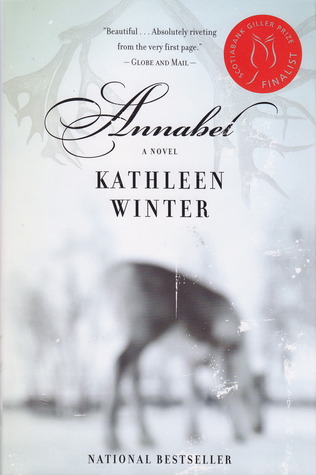
My rating: 3 of 5 stars
From the Fall 2013 VPL Book Sale.
Read in March 2014.
I decided to read this after I listened to Canada Reads 2014 because a) it sounded like a compelling story and b) it was already on my shelf thanks to the library book sale. Here’s the trailer:
I was pulled into the story right from the beginning, and thought the first part of the book (about up the point where Wayne starts school and Thomasina leaves town) was very good. And then, gradually it lost its hold on me. In retrospect, thinking about it, it had the feel of a book where the first chapters had been polished and reworked for a long time, so that every detail was perfect, while the rest had been finished much more quickly and not given the same level of attention. Writers, you know what I mean. Which is not to say that the latter half of the book wasn’t good, it just wasn’t quite as compelling as the beginning.
In 1968 Labrador, Jacinta and Treadway have an intersex baby (in this case, the baby has both male and female parts: one testicle and one ovary, a penis and a vagina). Treadway decides they will raise the baby as a boy, and name him Wayne. (Note: I’m using male pronouns because that’s what the book uses.)
Their neighbor, Thomasina, who helped deliver baby Wayne at home, is the only other person (at first; later there are doctors/nurses) who knows their secret. Shortly after Wayne’s birth, Thomasina’s husband and daughter (Annabel) drown in a canoeing accident. Thomasina starts calling the baby Annabel. Wayne likes the secret nickname but doesn’t understand it until much later.
As Wayne grows up, steps are taken (surgery, hormones) to ensure his masculine characteristics develop and his feminine ones are suppressed. But the Annabel side of Wayne refuses to disappear. She likes synchronized swimming and sparkly stereotypically-girly stuff. Which, sigh. Just once I’d like to see someone write about gender without mentioning clothing/activity preferences. Those are social norms, not biological imperatives. Anyway. Jacinta supports Wayne’s “feminine” interests but hides them from Treadway, who wants Wayne to grow up to be a manly man.
 After a promising beginning, the story drifts. Thomasina leaves Labrador to go traveling. Treadway goes out on his trapline. Jacinta retreats into herself. I got interested in these characters and then their development just stopped. Which leaves us with Wayne. And here I run into the same problem as the last book I read. There’s not enough thinking—insight into Wayne’s mind. There is some—it’s definitely not the extreme blankness of Mary in The Outlander—but Wayne’s mind (especially after the dramatic incident spoiled in the Canada Reads debates) should have been buzzing and we just didn’t see enough of that.
Also, there are strange gaps. For example, Jacinta is originally from St. John’s and it’s made clear that she misses it very much. However, she never goes back there for a visit and there’s no insight into why. This needs an explanation! It’s not like she’s on the other side of the world. It’s a ferry trip. (According to their website, it’s 1 hour, 45 min. So it would be like living on Vancouver Island and never going to visit your family in Vancouver.)
At times it felt like Winter was aiming for magical realism but didn’t quite get there. The improbable injury that robs Wayne’s friend Wally of her singing voice, the impossible [SPOILER ALERT] self-pregnancy. The thing is, neither of these things were necessary. Wally’s voice could have been lost in some other more plausible fashion. Wayne’s pregnancy didn’t lead to anything plot-wise, so was it even necessary? Especially since there was an incident later in the book that could have led to a plausible pregnancy, with plenty of dramatic fallout. (I think that would have been a much better choice story-wise. Terrible for Wayne, obviously, but good for the story.)
The pop culture references—music, TV—felt off to me, like they were maybe 5-10 years older than they should be. And at first I thought, well, maybe it’s supposed to be indicative of the fact they live in the boonies and didn’t have access to new music, but then I remembered that the radio station I liked best at the end of high school, because it played the newest music, was from St. John’s (we got some radio stations along with our cable service)—and surely they can pick up St. John’s radio stations in Labrador. So.
I was really thrown off by the fact Wayne was born 1968, but his class graduates in 1985. There’s no mention of his entire class skipping a grade. Does Labrador not have grade 12? I actually went and looked this up. And I found that in fact Newfoundland/Labrador didn’t have grade 12… until 1983. Kathleen Winter was born in 1960 so she would have graduated after grade 11, which is probably why she wrote it like that. But still, it doesn’t fit with the timeline of the story—Wayne’s class would have graduated in 1986—and an editor should have caught it. (I don’t blame the author—honest mistake—but how did everyone who read the manuscript before it was published miss it? Well, at least I learned something new 😉 )
What Writing Is Really Like
I was kind of burned out after the Great Lit Journal Move of 2014 so for this month’s Absolute Blank article I decided to try something different: What Writing Is Really Like.
3: The Outlander

My rating: 2 of 5 stars
From the Fall 2013 VPL Book Sale.
Read in Jan/Feb/March 2014.
It feels like it took me forever to read this book, and honestly it kind of did. Not quite as long it as the start/end dates indicate since I set it aside for the two weeks when I watched the Olympics in the morning instead of reading, but still.
The setting: 1903, in western Canada. Mary Boulton aka “the Widow” is 19 years old. She had a baby, which died, and then she killed her husband (not a spoiler). She fled, pursued by her husband’s twin brothers, who are giant redheads. You might think the giant redhead thing will have some significance later on, but no.
Mary can’t read, although she seems to have had a relatively privileged upbringing (i.e. one where she would have been taught to read). You might think the fact she can’t read and uses an elaborate system of symbols to hide the fact would play a significant role in the story, but no, not really.
Her backstory is that she lived with her widowed father who basically ignored her after her mother died because he was wrapped up in his grief, and her grandmother, who was more the cold-prickly than warm-fuzzy kind. They had servants, and when Mary got married at 18, she had no practical skills. Oh, except she can sew. I admit I’m baffled at what she was doing for her first 18 years (didn’t she go to school? why did no one figure out she couldn’t read? the grandmother seemed like the kind who’d expect a girl to write thank you notes and that kind of thing, so you’d think she’d have clued in even if father was oblivious. if marriage was her grandmother’s goal for her, why wasn’t she taught how to cook and stuff? so many questions).
 Anyway, first she’s taken in by an elderly woman but spends her time plotting her escape. When the giant redheads catch up with her, she flees, stealing a horse and some other items. She ends up in the mountains, loses the horse and is near death because she has no survival skills (see above) when she is found by “the Ridgerunner,” a 30-something loner/outlaw/hermit-type who does have survival skills. They hook up but then he freaks out because people, man, they’re the worst! (even when they’re 19yo girls you’re hooking up with) and takes off, leaving her alone in the wilderness once again. She stumbles around some more (still needs to work on those skills). Eventually she’s found by another man—who happens to have the horse she stole and then lost—who takes her to safety.
She ends up in the town of Frank. (And here I have an “ohhh” moment. Now I know what’s going to happen.) She lives with the Reverend Bonnycastle aka Bonny, as his housekeeper, basically. Because she has so many skills in that department. He has this whole lengthy backstory, but like many other threads, this leads nowhere in particular.
The story makes it seem like she’s the only woman in the town, which is… weird. I know Frank was a mining town, so it’s logical for men to outnumber women, but no other women seems hyperbolic. Or Hollywood movie-ish. Take your pick. 😉
She begins vomiting. You know what that means!
One of the cover blurbs called this a “page turner!” I found it to be the opposite. As I crawled through the text, I tried to pinpoint what was missing. It wasn’t the writing. It wasn’t the plot. Finally, I realized what it was. There’s not enough thinking. Mary’s like a non-human animal. Her needs/wants are water, food, shelter, sleep, sex. She doesn’t know how to do anything (except sew, which is just sort of put out there, not really developed as a characteristic) and she doesn’t have any interests beyond taking care of basic physical desires. Ok, eventually she wants the Ridgerunner (in particular). I guess that was just too little, too late for me.
I had sympathy for Mary and her predicaments, but I also found her really boring. It felt like she was not very smart, which is an odd choice for a protagonist. I mean, I get wanting to eschew the “protagonist is the best at everything” trope, but… reading about her reminded me of having a conversation with someone who just isn’t very bright. I wished her well, but if I had to spend much more time with her I’d have stabbed myself in the eye.
showing up
This time, I never promised myself that would speak Spanish. I just promised myself that I would practice every day. … I feel like the path for my Spanish work had been set in a lot of ways by my yoga practice. For me yoga has never been about how flexible you are, or whether you can stand on your hands. It’s about showing up. In a way, almost anything that’s worth doing is just about showing up. Not worrying about the big goal but taking baby steps, every single day and trusting that you’ll get there.
let go
I caved and joined Pinterest, so I’ve been going through the OneNote notebook where I’ve been storing images of things for years and I came across this quote. Not sure what I like better: the quote or the reminder of the days when all Apartment Therapy posts were written in first-person plural (lol) and readers constantly griped about it. I’d forgotten about that!
Although we don’t have to carry all of our possessions with us, they still take up space in our lives. When we let go of the things we don’t particularly like or need around the house, it frees us up to experience the present moment, or life as it is now. We remember reading a quote once about clutter: that we let go of the unnecessary so that the necessary may speak.
We made things.
George [McWhirter] stressed that Creative Writing was not an academic subject. We did not study things. We made things. Before I’d met George, no one had ever told me that writing poetry was practical, but this approach demystified the creative process. I began to look at writing as a constructive, physical act. Writing became the artful arrangement of words. There was no teary-eyed emotional or mystical dimension to making better work. The words you used either worked or they didn’t. And if they did not work, there were steps that could be taken to fix them.
This.
If you wait to finish everything else on your to-do list first, it’ll never happen. You’ve got to make time to write. Put in on your calendar!
Speaking of which, TC’s spring writing contest is coming up. The spring Three Cheers and a Tiger Writing Contest is a 48-hour mystery contest and this year runs the weekend of March 21-23. Mark it on your calendars and get ready to write!
March issue of Toasted Cheese
The latest issue of Toasted Cheese, TC 14:1, is here! So, you know, go read 🙂
But that’s not all…! I spent most of my free time the past six weeks or so moving the entire journal to WordPress (whew). Since I can make anything about writing, naturally I wrote a Snark Zone about it.
I think this calls for an abundance of dancing bananas.

 The Remainder Table