
- Ann Bauer, “When I sold out to advertising” (Salon)
- David Bezmozgis, “The Novel in Real Time” (The New Yorker)
- Edan Lepucki, “Life is Too Short to Read a Bad Book: A Conversation with My Editor” (The Millions)
- Ben Montgomery, “Writing the book: Ben Montgomery on Grandma Gatewood’s Walk” (Nieman Storyboard)
- Nick Ripatrazone, “No Right Path: Arriving at Writing from Outside the Humanities” (The Millions)
- Hanna Rosin, “The Overprotected Kid” (The Atlantic)
- Eva Saulitis, “Wild Darkness” (Orion Magazine)
- Gerda Saunders, “My Dementia: Telling Who I Am Before I Forget” (Slate)
- Sadie Stein, “Small Wonder” (Paris Review)
- Ivor Tossell, “The Story behind the Rob Ford Story” (The Walrus)
Category Archives: Reading
4: Annabel
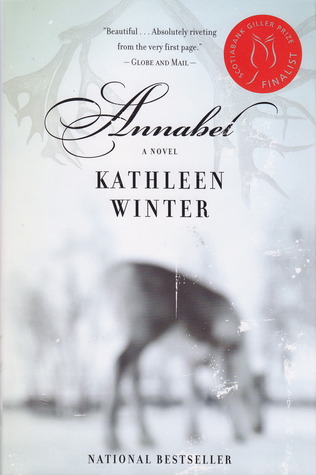
My rating: 3 of 5 stars
From the Fall 2013 VPL Book Sale.
Read in March 2014.
I decided to read this after I listened to Canada Reads 2014 because a) it sounded like a compelling story and b) it was already on my shelf thanks to the library book sale. Here’s the trailer:
I was pulled into the story right from the beginning, and thought the first part of the book (about up the point where Wayne starts school and Thomasina leaves town) was very good. And then, gradually it lost its hold on me. In retrospect, thinking about it, it had the feel of a book where the first chapters had been polished and reworked for a long time, so that every detail was perfect, while the rest had been finished much more quickly and not given the same level of attention. Writers, you know what I mean. Which is not to say that the latter half of the book wasn’t good, it just wasn’t quite as compelling as the beginning.
In 1968 Labrador, Jacinta and Treadway have an intersex baby (in this case, the baby has both male and female parts: one testicle and one ovary, a penis and a vagina). Treadway decides they will raise the baby as a boy, and name him Wayne. (Note: I’m using male pronouns because that’s what the book uses.)
Their neighbor, Thomasina, who helped deliver baby Wayne at home, is the only other person (at first; later there are doctors/nurses) who knows their secret. Shortly after Wayne’s birth, Thomasina’s husband and daughter (Annabel) drown in a canoeing accident. Thomasina starts calling the baby Annabel. Wayne likes the secret nickname but doesn’t understand it until much later.
As Wayne grows up, steps are taken (surgery, hormones) to ensure his masculine characteristics develop and his feminine ones are suppressed. But the Annabel side of Wayne refuses to disappear. She likes synchronized swimming and sparkly stereotypically-girly stuff. Which, sigh. Just once I’d like to see someone write about gender without mentioning clothing/activity preferences. Those are social norms, not biological imperatives. Anyway. Jacinta supports Wayne’s “feminine” interests but hides them from Treadway, who wants Wayne to grow up to be a manly man.
 After a promising beginning, the story drifts. Thomasina leaves Labrador to go traveling. Treadway goes out on his trapline. Jacinta retreats into herself. I got interested in these characters and then their development just stopped. Which leaves us with Wayne. And here I run into the same problem as the last book I read. There’s not enough thinking—insight into Wayne’s mind. There is some—it’s definitely not the extreme blankness of Mary in The Outlander—but Wayne’s mind (especially after the dramatic incident spoiled in the Canada Reads debates) should have been buzzing and we just didn’t see enough of that.
Also, there are strange gaps. For example, Jacinta is originally from St. John’s and it’s made clear that she misses it very much. However, she never goes back there for a visit and there’s no insight into why. This needs an explanation! It’s not like she’s on the other side of the world. It’s a ferry trip. (According to their website, it’s 1 hour, 45 min. So it would be like living on Vancouver Island and never going to visit your family in Vancouver.)
At times it felt like Winter was aiming for magical realism but didn’t quite get there. The improbable injury that robs Wayne’s friend Wally of her singing voice, the impossible [SPOILER ALERT] self-pregnancy. The thing is, neither of these things were necessary. Wally’s voice could have been lost in some other more plausible fashion. Wayne’s pregnancy didn’t lead to anything plot-wise, so was it even necessary? Especially since there was an incident later in the book that could have led to a plausible pregnancy, with plenty of dramatic fallout. (I think that would have been a much better choice story-wise. Terrible for Wayne, obviously, but good for the story.)
The pop culture references—music, TV—felt off to me, like they were maybe 5-10 years older than they should be. And at first I thought, well, maybe it’s supposed to be indicative of the fact they live in the boonies and didn’t have access to new music, but then I remembered that the radio station I liked best at the end of high school, because it played the newest music, was from St. John’s (we got some radio stations along with our cable service)—and surely they can pick up St. John’s radio stations in Labrador. So.
I was really thrown off by the fact Wayne was born 1968, but his class graduates in 1985. There’s no mention of his entire class skipping a grade. Does Labrador not have grade 12? I actually went and looked this up. And I found that in fact Newfoundland/Labrador didn’t have grade 12… until 1983. Kathleen Winter was born in 1960 so she would have graduated after grade 11, which is probably why she wrote it like that. But still, it doesn’t fit with the timeline of the story—Wayne’s class would have graduated in 1986—and an editor should have caught it. (I don’t blame the author—honest mistake—but how did everyone who read the manuscript before it was published miss it? Well, at least I learned something new 😉 )
3: The Outlander

My rating: 2 of 5 stars
From the Fall 2013 VPL Book Sale.
Read in Jan/Feb/March 2014.
It feels like it took me forever to read this book, and honestly it kind of did. Not quite as long it as the start/end dates indicate since I set it aside for the two weeks when I watched the Olympics in the morning instead of reading, but still.
The setting: 1903, in western Canada. Mary Boulton aka “the Widow” is 19 years old. She had a baby, which died, and then she killed her husband (not a spoiler). She fled, pursued by her husband’s twin brothers, who are giant redheads. You might think the giant redhead thing will have some significance later on, but no.
Mary can’t read, although she seems to have had a relatively privileged upbringing (i.e. one where she would have been taught to read). You might think the fact she can’t read and uses an elaborate system of symbols to hide the fact would play a significant role in the story, but no, not really.
Her backstory is that she lived with her widowed father who basically ignored her after her mother died because he was wrapped up in his grief, and her grandmother, who was more the cold-prickly than warm-fuzzy kind. They had servants, and when Mary got married at 18, she had no practical skills. Oh, except she can sew. I admit I’m baffled at what she was doing for her first 18 years (didn’t she go to school? why did no one figure out she couldn’t read? the grandmother seemed like the kind who’d expect a girl to write thank you notes and that kind of thing, so you’d think she’d have clued in even if father was oblivious. if marriage was her grandmother’s goal for her, why wasn’t she taught how to cook and stuff? so many questions).
 Anyway, first she’s taken in by an elderly woman but spends her time plotting her escape. When the giant redheads catch up with her, she flees, stealing a horse and some other items. She ends up in the mountains, loses the horse and is near death because she has no survival skills (see above) when she is found by “the Ridgerunner,” a 30-something loner/outlaw/hermit-type who does have survival skills. They hook up but then he freaks out because people, man, they’re the worst! (even when they’re 19yo girls you’re hooking up with) and takes off, leaving her alone in the wilderness once again. She stumbles around some more (still needs to work on those skills). Eventually she’s found by another man—who happens to have the horse she stole and then lost—who takes her to safety.
She ends up in the town of Frank. (And here I have an “ohhh” moment. Now I know what’s going to happen.) She lives with the Reverend Bonnycastle aka Bonny, as his housekeeper, basically. Because she has so many skills in that department. He has this whole lengthy backstory, but like many other threads, this leads nowhere in particular.
The story makes it seem like she’s the only woman in the town, which is… weird. I know Frank was a mining town, so it’s logical for men to outnumber women, but no other women seems hyperbolic. Or Hollywood movie-ish. Take your pick. 😉
She begins vomiting. You know what that means!
One of the cover blurbs called this a “page turner!” I found it to be the opposite. As I crawled through the text, I tried to pinpoint what was missing. It wasn’t the writing. It wasn’t the plot. Finally, I realized what it was. There’s not enough thinking. Mary’s like a non-human animal. Her needs/wants are water, food, shelter, sleep, sex. She doesn’t know how to do anything (except sew, which is just sort of put out there, not really developed as a characteristic) and she doesn’t have any interests beyond taking care of basic physical desires. Ok, eventually she wants the Ridgerunner (in particular). I guess that was just too little, too late for me.
I had sympathy for Mary and her predicaments, but I also found her really boring. It felt like she was not very smart, which is an odd choice for a protagonist. I mean, I get wanting to eschew the “protagonist is the best at everything” trope, but… reading about her reminded me of having a conversation with someone who just isn’t very bright. I wished her well, but if I had to spend much more time with her I’d have stabbed myself in the eye.
Some things I read this month
- Christie Aschwanden, “Why Blog?” (The Last Word on Nothing)
- Kerry Clare, “Solid” (Pickle Me This)
- Ta-Nehisi Coates, “The Champion Barack Obama” (The Atlantic)
- Jill Kronstadt, “You’ve Come a Long Way, Lady James” (Bloom / The Millions)
- Steven Kurutz, “Lee and Morty Kaufman: Cleaning Up in Their 90s” (The New York Times)
- Edan Lepucki, “Style Sheet: A Conversation with My Copyeditor” (The Millions)
- Megan McArdle, “Why Writers Are the Worst Procrastinators” (The Atlantic)
- Seth Mnookin, “Why Philip Seymour Hoffman’s Death Is So Scary” (Slate)
- Maureen Orth, “Mia’s Story” (Vanity Fair, from 1992)
- Jennifer Pastiloff, “Survival of the Fittest: On Losing My Hearing” (The Nervous Breakdown)
- Janet Potter, “28 Books You Should Read If You Want To” (The Millions)
- Arianne Wack, “Is She Writing About Me?: A Profile of Lorrie Moore” (The Millions)
Some things I read this month
- Christie Aschwanden, “How an internet quiz put me in my place” (The Last Word on Nothing)
- Anna Fitzpatrick, “Young Adult, Not So Virginal” (Hazlitt)
- Rebecca Mead, “Written Off” (The New Yorker)
- Michelle Nijhuis, “My Dirty Stream” (The Last Word on Nothing)
- Drew Philp, “Why I Bought a House in Detroit for $500” (Buzzfeed)
- Emily Rapp, “Proof of Loss” (The Rumpus)
- Scott Saalman, “Do Not Endure Verbal, Emotional, or Physical Abuse” (The Morning News)
2: The Sketchnote Handbook
 The Sketchnote Handbook:
the illustrated guide to visual note taking
by Mike Rohde
My rating: 4 of 5 stars
Bought at Chapters on Robson.
Read in January 2014.
I can’t remember where I saw this mentioned (maybe The Art of Nonconformity?), but it was one of those moments when you instantly identify with the book’s subject. Not an “aha!” moment exactly. More of a “yeah!” moment. So sketchnoting is a thing and someone wrote a book about it.
Doodles always filled the margins of my notes, circled the edges, squeezed the written notes into the center of the page. What I didn’t really do: integrate my doodling with my notes. I didn’t doodle with intention so much as I doodled to stay awake. (The minute I sat down in a classroom and a lecture started, I’d start nodding off. I blame Social Studies 11, which I slept through from start to finish. After that, just sitting in a desk was enough to make me sleepy. Pavlov’s response ftw 😛 )
What this is: a book about visual notetaking (handwriting + drawing). The entire book is handwritten / hand-drawn (no type). It’s filled with tips for taking visual notes—sketchnotes—along with example pages from the notebooks of many different people who take notes this way (showing different styles).
Messages: sketchnotes are fun, easy, personal. Rohde emphasizes that anyone can do this; you don’t have to be an artist. Sketchnotes are about “ideas not art.” He breaks down the various elements of a sketchnote (layout, typography, diagrams, etc.) and encourages you to build a visual library (items you can quickly sketch). There’s a practice section in the last chapter.
My main takeaways from this book: set your doodles free from the margins and incorporate them into your notes. Don’t try to write everything the speaker says down; focus on capturing big ideas. Make your notes pretty in real-time, not after-the-fact. Not only is it more efficient, but if you’re having fun, you won’t fall asleep 😉
Recommended for doodlers and visual-kinesthetic learners.
Some links:
- The Sketchnote Flickr group
- Download a sample chapter from the author’s website.
1: The Hitchhiker’s Guide to the Galaxy
 The Hitchhiker’s Guide to the Galaxy
by Douglas Adams
My rating: zzzzz
From the Spring 2011 VPL book sale.
Read in January 2014.
 I probably never would have read this except I ran across a copy at one of the library book sales and I decided I couldn’t pass it up because it’s everyone’s favorite. And then it sat and sat on my shelf because I was scared to read it because it’s everyone’s favorite. Until last week, that is, when I decided I would attack my to-read shelf one letter at a time. (We’ll see how long that lasts 😉 ) The first author in the As? Douglas Adams. Well, ok, then.
And… I didn’t enjoy it at all; I just wanted it to be over. Reading it was like bzzz bzzz bzzz line that’s supposed to be funny bzzz bzzz bzzz bizarro scifi name bzzz bzzz bzzz now-ubiquitous pop-cultural reference (yes, I knew the answer to Life, the Universe + Everything! before reading the book) bzzz bzzz bzzz bzzzzz zzzzz. Most memorable takeaway: babelfish, the fish that burrows into Arthur’s ear and translates for him.
I’m wimping out on rating this one. This is one of those things that falls under “not for me.”
ETA: So I added this to my young adult shelf at Goodreads and afterward I noticed this:
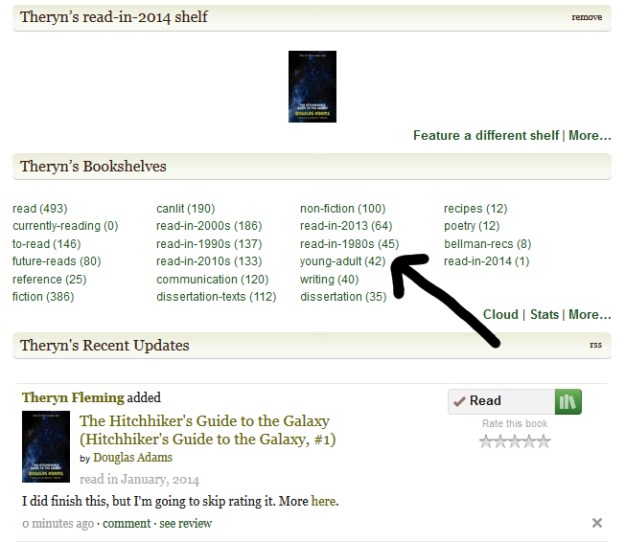
Now that’s actually funny.
My 2013 Bookshelf
So long 2013 bookshelf, it’s been nice knowing you. Welcome 2014, with all your emptiness and possibility 🙂

Favorite Books of 2013
None of which were actually published in 2013. Of course 🙂
Disclaimer: This is a subjective list of the books I enjoyed reading the most this year.
 #5
#5
The Singer’s Gun (Unbridled Books, 2010)
by Emily St. John Mandel
I’ve been reading Emily St. John Mandel’s essays at The Millions for a while now. I think this BC-to-Brooklyn transplant is ‘one to watch’ as they say. Her first novel was published in 2009 and she’s already on #4. We should all be so prolific. The Singer’s Gun is a fresh mix of literary and mystery/suspense.
 #4
#4
Mean Boy (Doubleday Canada, 2006)
by Lynn Coady
I’ve been reading Lynn Coady since her first book, Strange Heaven. I liked her books. I did not love them. I stuck with her because reasons. This year, I was rewarded. I loved Mean Boy. I’m now eager to read The Antagonist, which is already on my to-read shelf, and Hellgoing, which won this year’s Giller Prize.
 #3
#3
The Flying Troutmans (Knopf Canada, 2008)
by Miriam Toews
This was the first of Miriam Toews’s books I’ve read, and now I can’t wait to read through her backlist. I’m not sure what I expected when I opened The Flying Troutmans, but this road trip with a quirky cast of characters was an unexpectedly delightful find.
 #2
#2
The Sky is Falling (Thomas Allen & Son, 2010)
by Caroline Adderson
I’m not sure if I’d even heard of Caroline Adderson before I started working on my dissertation, so if nothing else good comes out of it, at least I have that. The Sky is Falling, which reminded me of those years in the early ’80s when we were all sure nuclear war was imminent, was pretty close to being my favorite book for the year.
 #1
#1
Certainty (McClelland & Stewart, 2006)
by Madeleine Thien
Topping my list of favorites is Certainty. All the things I loved about it—its themes of migration and grief and love, the questions it raises but doesn’t fully answer, its construction as a puzzle that the reader has to fit together—were the things readers who didn’t like it hated, but that just makes me love it more. It was a beautiful book both story- and writing-wise and I look forward to reading all of Madeleine Thien’s past and future work.
You’ll probably notice that all of the books on my list are Canadian. I just realized something else, though. Two were born in BC (Mandel and Thien), one used to live in BC (Coady), and one currently lives in BC (Adderson). Only Toews has no west-coast connection (that I know of, anyway). And #1 (partly) and #2 were actually set in BC. Hmm. Unintentional, but interesting!
30: Knitting Yarns
 Knitting Yarns: Writers on Knitting by Ann Hood
My rating: 3 of 5 stars*
Purchased new at Chapters on Robson
Read in December 2013
*So, the first thing I want to say is that while I gave the anthology as a whole 3 stars (like!), I loved some of the essays in this collection. Other pieces I was less excited about. That’s the trouble with anthologies, right? But overall, this was an enjoyable book and a nice way to close out the year. Recommended to writers who like to make things.
I heard about Knitting Yarns when I ran across Ann Hood’s essay “Ten Things I Learned From Knitting” on my Tumblr dashboard. This essay, about knitting through grief, resonated so much with me, I was prompted to write my own. It also spurred me to try again to figure out how to knit (success).
Prior to purchasing the book, I also came across Bernadette Murphy’s essay “Failing Better,” about learning resilience through making mistakes. That was the clincher, really. If the rest of the book was as good as these two essays, I wanted to read it.
The book was shelved in the knitting section at Chapters, despite being clearly labeled ‘memoir’ on the jacket. Well, it turns out it does include patterns, so I guess the shelving wasn’t completely off the mark. There are five or six essays, then a pattern, and so on. Each essay is introduced with a brief abstract.
The essays are arranged in alphabetical order (by author’s last name). I think I’d have arranged it by theme, as there are clear themes that recur throughout, and juxtaposing the essays thematically would strengthen them individually and collectively.
One popular theme is the knitting version of “I can’t boil water,” which as you know I’m not that into as I’ve never really understood the attraction of the “I’m a smart person who can’t do a simple thing” trope. Anyway, apparently a lot of writers like to knit even though they are terrible at it.
Another popular theme is that of family, and the passing down of knitting as a skill (or not). I related to the tales of families of crafters and makers, as that’s the kind of family I came from. More than one writer mentioned they grew up with a rule that you could only watch TV if you were making something at the same time, which I found interesting. We never had a rule about it; it wasn’t necessary. You always did something else while watching TV! Maybe this is why I don’t have the TV-angst that so many people seem to have. For me, watching TV has always been synonymous with making things.
And there’s the aforementioned theme of grief. Many of the essays were in whole or part about knitting getting them through a a difficult time in their lives, a death or other loss. Again and again, writers spoke of the zone, the flow, the trance that knitting puts them into, a space that calms anxiety and a chattering mind.
In addition to Ann Hood’s essay, I especially loved: Andre Dubus III’s “Blood, Root, Knit, Purl” (this reads like a story), Kaylie Jones’s “Judite” (ditto), and Joyce Maynard’s “Straw Into Gold” (her mother sounds like she was amazing).
A few quotes:
But you couldn’t crochet or knit and read at the same time, and reading was all I wanted to do. (Marianne Leone, 161)
Yep, that pretty much sums up why my younger self didn’t take to knitting and the like. Reading! *Homer Simpson drool*
In nineteenth century literature it seems sometimes to be true that good women knit and bad women crochet or do fancy work. (Alison Lurie, 179)
I’ll have to keep that in mind 😉
No one pushes back from her desk to knit a few rows and contemplate the sentence on the page… (Ann Patchett, 207)
Oh, no…? >cough< Pretty sure I’ve done something along those lines. >cough<
 The Remainder Table