
Personality is not who you think you are, it’s who you are. Some people think by definition that we are the experts on our personality because we get to write the story, but personality is not the story – it’s the reality. So, you do get to write your own story about how you think you are, and what you tell people about yourself, but there still is reality out there, and, guess what? Other people are going to see the reality, regardless of what story you believe.
Tag Archives: Blogging
1: Secret Son
Secret Son by Laila Lalami
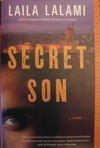
I have a basic policy of trying to read books written by bloggers with whom I have interacted. I don’t really know these people, and perhaps it is a form of wanting a connection with the famous (used loosely), but I find it interesting to see how their writing works in long from as opposed to blogging. —From review of Secret Son at Collected Miscellany
For several years now, I’ve taken to scanning the shelves each time I hit a bookstore, looking for books by people I’m familiar with via their blogs (or forums). Partly it is wanting to see how book-form writing compares to blogging. And partly it’s my way of supporting fellow writers whose writing I have enjoyed for x years. Should I ever complete and publish a novel, I would hope my fan (I do have one!) would do the same.
Anyhow, it’s often easier said than done.* Want Dan Brown? No worries. Want Laila Lalami or Tayari Jones? Er… So let me tell you, I was shocked when I saw Secret Son on the shelf in the Chapters on Robson in December. One copy. Hardcover. Y’all know I never buy hardcovers unless they’re on the remainder table. But then, in continuing to browse, more shock! I also found Jaden Hair’s Steamy Kitchen Cookbook and Heidi Swanson’s Super Natural Cooking. So then I decided it must be my day and bought all three. Solstice prezzie to self! Hurrah!
Cookbook reviews to follow. For now, Secret Son.
I’ve read Laila Lalami’s blog for a long time. Since back when it was called Moorish Girl. Since before she published her first book (Hope and Other Dangerous Pursuits, which I have yet to find), when she was just another book blogger. One of the the things she’s written about is her decision to write in English (her third language). Part of it is that English is not fraught with the connotations that Arabic and French have for her. But as well, she’s writing for a predominantly English-speaking audience. I think translations can sometimes have the effect of erasing the language difference, i.e. you forget that you’re reading a translation and impose your own language-view on the text.
Here are excerpts from a couple reviews:
“Secret Son” gives us an insider’s view of the underlying turmoil of Morocco, access we probably wouldn’t have if she had written in another language. But something has been lost in her attempt to bypass translation: perhaps it’s the cadences of the inner courtyards of her upbringing. Her English prose, although clean and closely observed, lacks music, and her similes can be predictable, as when Youssef’s half sister, returning from California to Casablanca, feels “like a fish that had been taken out of water and put back.” —New York Times
Lalami’s portrayal of indecision, abetted by her characters’ plainly outlined conflicts, lacks tension. When she does successfully transcend her own stylistic shortcomings, which happens in two scenes that revisit key events from different characters’ perspectives à la Rashomon, such structural cunning is deadened by the same rhythmless style, where rage is always “blinding” and a character’s regret is expressed by the narrator’s asking, “What had he done with his life?” —Quarterly Conversation
What these criticisms of her writing style seem to be missing is that she’s made a deliberate choice to write that way, and I think it’s an important one. The way it’s written, to me, is designed to not let the reader slip into the mistake of thinking that the characters are native English speakers. It’s written the way a non-native English speaker, who is fluent in English, but for whom writing in English is still not the main way they communicate, writes in English. It’s one of the first things I noticed. Of course, the story is being told about the characters, but still, I think taking this approach of writing like the characters would in English makes sense because you don’t lose the sense of them being Moroccan.
The other thing is that its written in close third person. Multiple povs, yes, but close third. It’s not omniscient. Which means the writer is limited to what the characters know. She can’t break into a soliloquy on the Moroccan condition. So true, it’s not a “big” novel; it’s an intimate one. It’s looking at the world from the perspective of the characters, not looking at the characters from the perspective of The World. I actually loved the scenes that were seen from the perspectives of two characters, seeing the subtle differences between their remembrances. Really important for a novel so focused on truths and lies. I liked the ideas explored here: identity/family, dual loyalties, the old “education will set you free” trope ;-), choices (or lack thereof). I like that while the characters’ secrets are revealed, their problems aren’t solved.
It did seem like the pacing really sped up in the last quarter or so of the book, and I was wishing it would slow down a bit. But I’m going to have to think about whether or not that is a flaw or not. Although it felt like there was a rush to the ending, I can see how that might be intentional, designed to mimic how the MC, Youssef, was feeling.
Other Links:
- First Chapter
- Book Notes “In the Book Notes series, authors create and discuss a music playlist that relates in some way to their recently published books.“
- Interview with Laila Lalami about Secret Son.
*Yes, I’m fully aware I could just order from Amazon. However, one of my great pleasures dating from pre-internet life is haunting bookstores new and used, looking for somewhat obscure titles. Nothing beats the heart-skip you get when you see a long sought-after book sitting on the shelf in front of you. Buying online does not provide the same thrill.
Blog On
Since my thesis was on blogging, it seems apropos to announce on my (oft-neglected) blog that I successfully defended it yesterday. w00t! Finally.
Final title: Works-in-Progress: An Analysis of Canadian Mommyblogs. It ended up being less about the medium (my original plan) and more about the content, partly because the content was interesting in itself, and partly because gah! blogs are hard to write about! I probably should have written it in WordPress, rather than Word. Of course, then the challenge would have been getting anyone to read it. Oooh! I could have forced everyone to subscribe to it in Bloglines! Hahaha. So now I’m coming up with the brilliant ideas. Hmm, I wonder if anyone has done that. Now, that would be creative…
Anyhow, a few more details to wrap up, and then I’m taking the rest of the fall off. I’ll be starting my PhD in January (last degree, I promise), but in the meantime, I plan to read novels! write something fun! (NaNo?) and go outside! (But of course I jest! I’ve been outside recently! Wait… what’s this wet discharge dripping from the sky called again?)
Hey, it’s Darwin Day!
8: The Journal Project
The Journal Project: Dialogues and Conversations Inside Women’s Studies edited by Dana Putnam, Dorothy Kidd, Elaine Dornan & Patty Moore
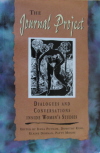
This was another VPL Booksale find. It’s a collection of journal entries from Women’s Studies classes at Langara College.
I found it interesting from a public/private space perspective. On the one hand, the journals were kept as a class assignment (for completion marks, not grades); the entries were written with the understanding that the instructor would read them. On the other hand, the idea of publishing them as an anthology came after the fact, so a wider audience was not anticipated. In this sense, I guess you could say they were more comparable to letters than to traditional diary entries in that the writers knew for certain that at least one person would be reading their words.
One thing that I found problematic with the selection of pieces is that the majority of them seemed to be written by women who had suffered physical/sexual/emotional abuse. My difficulty with this is that emphasizing worst-case scenarios makes it easy for those women who have not experienced such extreme discrimination to distance themselves and deny that there’s a problem with patriarchy. But just because you haven’t personally been abused or no one’s ever told you that you’re stupid or you’ve never faced extreme poverty (or whatever) doesn’t mean that there aren’t systemic problems with society. I would have liked to have seen more pieces like the one by the woman who was told that she couldn’t be the “head of household” because she was a SAHM. That’s the kind of systemic discrimination that you’ll probably never even be aware exists until it happens to you. It will never be a cause du jour. Yet, it’s addressing those kinds of issues, the ones that seem trivial (but aren’t), that leads to real change.
The Journal Project was published in 1995. The journals were traditional paper notebooks. It was interesting, in the context of my research, to read what they thought journals had the power to do.
[J]ournal writing itself assists social change. When our thoughts are spoken or recorded, they become part of the revolution. Writing it down is powerful and dangerous. –Dana Putnam
I wonder if any of the women are still journaling. I wonder if any of them are blogging.
5, er 10, Reasons Why I Blog
- For my #1 Fan.
- Writing posts is more productive (for a writer) than endlessly tweaking site design (which is what I mostly did with my old Web 1.0 website).
- I’m optimistic that this blog is more interesting than the aforementioned old website.
- Even sporadic journal entries add up over time. Who knows? It might turn into… something. Or not. As the case may be. It’s the possibility that’s intriguing.
- It encourages me to write more than I would otherwise.
- It’s good practice for figuring out what I am and am not comfortable writing about.
- It’s satisfying to keep track of the books I read and taking photos of the food I make entertains me. (The flower photos are an homage to Georgia O’Keeffe and Imogen Cunningham.)
- It’s far easier to write one interesting blog entry than it is to write 5 or 6 interesting emails. So if I owe you an email, here’s something for you to read whilst I procrastinate.
- People (relatives) who don’t know me that well (read: at all) could perhaps get to know me better should they ever express a desire to do so.
- I’m writing my thesis on blogging, so I’d be a big ignoramus/hypocrite if I did not have one myself. 😀
Debbie’s Latest Comic
Hee hee. Or, you could decide to write your thesis on blogging, that way blog-reading becomes research and you don’t have to feel guilty. 😉 Good to know I’m not the only one who thinks this way.
Blogging: Motivations & Responsibilities
In class on Tuesday, at one point the discussion turned to blogs and why people blog, the consequences of blogging (is it okay to mention other people in your stories?), and what a blog is (does it have to be personal to be a blog?).
As a writer, I find it hard to separate “why blog?” from “why write?” Telling one’s own stories and writing about issues from one’s personal viewpoint are nothing new to writers. The same material you find in personal blogs is also found in memoirs, autobiographies, columns, editorials, personal essays, etc.
What’s different about personal blogging is not the content, but the fact that anyone can do it, that bloggers don’t generally have editors, and the accessibility of it (anyone can read it).
So I suppose in any discussion of personal blogging, you have to start from the premise that there are two kinds of bloggers: writers and non-writers. For the writers, writing is the essence of blogging—it’s another format to try, a way to hone their craft, etc. They blog because blogging is writing. They wrote before blogs existed and if blogs vanished tomorrow, they’d still write.
But for non-writers blogging (writing) is a means to an end. It might, for example, be a way to keep in touch with family or meet friends or promote a product/service. For non-writers, blogging is just a vehicle that might get them to whatever their goal is. Their motivations are entirely different from those of writers.
A couple other things: I found the comment about thinking a blog had to be personal interesting because it’s such a reversal of traditional thinking (if anything to do with blogs can be “traditional” haha). My research into blogs indicates that a lot of early bloggers think that personal blogs (online diaries) aren’t really blogs at all; to their minds, blogs are only blogs if they have traditional “links plus commentary” posts. Also, most mainstream media attention has focused on issues-oriented, alternative media-type blogs written by male bloggers, not personal blogs (even though the majority of bloggers are teenage girls keeping online diaries).
Of course, even if you’re just posting links, you’re personalizing. The links you choose and what you say about them say something about you, even if you never say anything about your personal life per se. On a related note, sometimes bloggers will make explicit what they will/won’t write about on their blogs. One common off-limits subject is politics. I always thought this was strange because everything is political. (You know: “The personal is political.”) You don’t have to explicitly state who you vote for to involve politics. I don’t know how you’d write about anything substantive without involving what you agree with/believe in—and that’s politics.
One more thing: in The Subject of Semiotics, Kaja Silverman discusses Laura Mulvey’s “Visual Pleasure and Narrative Cinema” and she says this:
Laura Mulvey argues that the classic film text distinguishes sharply between the male and the female subjects, and that it does so on the basis of vision. The former of these is defined in terms of his capacity to look (i.e. as a voyeur) and the latter in terms of her capacity to attract the male gaze (i.e. as an exhibitionist). This opposition is entirely in keeping with the dominant cultural roles assigned to men and women, since voyeurism is the active or “masculine” form of the scopophilic drive, while exhibitionism is the passive or “feminine” form of the same drive. (222-223)
Okay, so why is this interesting. Well, first, one of the comments made in class with respect to motivations for blogging was that if a blogger wouldn’t write if s/he wasn’t blogging, then s/he was motivated by exhibitionism. Second: this is entirely circumstantial, but it does seem to me that women are far more likely to blog about highly personal subjects than men are. So you could go the direct route and say women are acting in keeping with their culturally-defined role and acting as exhibitionists in keeping personal blogs. But, I think that would be missing an important point. It’s not men who are reading these uber-personal blogs; it’s other women. And the uber-personal information shared is not designed to attract the male gaze; rather, much of the content would probably have the opposite effect. So… it’s more like using the voyeur/exhibitionist dichotomy as a means of resistance against the cultural norm.
*
Some posts I had clipped on the motivations and responsibilities of writers/bloggers (emphasis added):
Writers write for their ideal reader, for their loved ones, for themselves or for no one. All this is true. But it is also true that today’s literary writers also write for those who read them.
…
It is because all writers have a deep desire to be authentic that even after all these years I still love to be asked for whom I write. But while a writer’s authenticity does depend on his ability to open his heart to the world in which he lives, it depends just as much on his ability to understand his own changing position in that world.There is no such thing as an ideal reader, free of narrow-mindedness and unencumbered by social prohibitions or national myths, just as there is no such thing as an ideal novelist. But a novelist’s search for the ideal reader – be he national or international – begins with the novelist’s imagining him into being, and then by writing books with him in mind. —Orhan Pamuk via MoorishGirl
*
I find that I don’t care as much about story or plot or action as I do about getting inside someone’s head. Usually the author’s head. In this case, inside the subject’s head. But that’s what’s interesting to me. The chance to get a glimpse of an inner monologue, to see how someone else’s wheels turn.
…
In effect, this is what blogs let you do, or at least I’d like to think so. I started blogging almost exactly 4 years ago, right before I started law school. I just wanted a place to store thoughts, and a way to force myself to write every day. But I found that once I started, it’s hard to stop. I got addicted to the instant connection with people out there in the world, the immediate feedback, the feeling like someone out there cares about what you’re thinking. And as I started reading other people’s blogs, I found that sometimes, even if you can’t articulate why you’re reading, you start to get hooked. A blog — a good blog — lets you inside someone’s head, and if you like being there, it can become awfully compelling. —Jeremy Blachman
*
I think it’s the first book that uses a blog as a narrative vehicle, and in doing so Jeremy explores a question I find pretty compelling — how do we know who to trust? What makes someone authentic, believeable, truthful? … In the book, there’s an active tension between the blog persona and the “real” persona (as evidenced by emails).
…
Blogs are private, and public. As a vehicle for an unreliable narrator the blog is very interesting, and I am not sure the cultural conversation about blogs has really started to embrace the complexity of the way people are exploring, sharing, and creating their identities online. I think the book begins that conversation in an interesting way. —Sherry Fowler
*
I am interested in the question of what the implied promises are between blogger and blog reader. … I agree that there is a pact of sorts, in almost any writing, between writer and reader. I aspire to be a good blogger, and I have some ideas about what that means. I’ve never put them down explicitly, though. Let’s see if I can unpack them.
…
The Blog Author promises to:* write truthfully
* write as un-self-consciously as possible — avoid contrivances
* write about subjects that move her
* write about things about which she has personal knowledge, direct experience, some investment
* tell her own story, not other people’s stories
* avoid complaining
* not use the blog as a prop or a crutch or a shield
* not use the blog to avoid having direct conversations with specific people
* post thoughts, and leave them up. Disclose edits, and if I change my mind, annotate and link rather than delete or modify the original posts. —Sherry Fowler
*
Does it really matter whether or not this video was truly created by a teenager or not? And if it does matter, what does it say about our own obligations to remain honest on our personal sites? …
Personally, I’m of the belief that the theory of caveat emptor applies to anything available on the internet — let the reader beware, everything may not be as it seems. That said, I do see an argument which says that for those of us who have loyal readers who visit our sites daily, common decency mandates that we not betray their trust by being dishonest about who we are. But does that mean I have to be forthcoming about everything?
What say you — do we, as authors/artists/citizen journalists/whatever, have an obligation to (a) reveal all and/or (b) reveal honestly? —Karen Walrond
 The Remainder Table