Tag Archives: Books

10: Anonymous Lawyer

Anonymous Lawyer by Jeremy Blachman
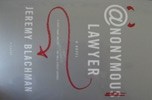
Anonymous Lawyer

I started reading Jeremy’s eponymous law school blog sometime in 2003. It was one of only two law school blogs that I read to the very end (the other was Sua Sponte). The two blogs were pretty much polar opposites. JCA at Sua Sponte was serious, earnest, ever-stressed. Jeremy was funny, irreverent, and seemingly unfazed by anything. His was the law school blog I wish I could have written.

In 2004, Jeremy started writing the Anonymous Lawyer blog, anonymously. I read it for a while (I don’t remember where I saw the link–I was reading a lot of law blogs at the time). There was a lot of speculation in the comments as to who Anonymous Lawyer was. A lot of people thought AL was a real person (despite the “fictional” disclaimer). I thought that the writer was a law student (based on the content). It had that “just enough knowledge” feel, you know? It was funny, but after a while, the schtick got a bit repetitive and I stopped reading it. A few months later, there was an article in the NY Times “outing” Jeremy as the writer behind AL. I wasn’t surprised.

Fast forward: Jeremy gets a book deal, graduates, passes the bar (even though he didn’t study, or so he claims), writes book. Book is published. Book signings ‘n’ stuff. Book is optioned. Jeremy goes to LA to work on pilot. etc. etc.

So, right, the book. Well, it’s been out for a while, but I waited for the paperback. I really bought it because of Jeremy’s personal blog, not the AL blog. I think AL the book is better than AL the blog. It has a plot. It’s funny. And it’s just long enough. It’s a fluffy, quick read. I think it could make a funny TV series. I’d watch. The pilot, at least 😉

9: Contemporary Verse 2 (Winter 2005)

Contemporary Verse 2: The Canadian Journal of Poetry and Critical Writing, 27.3 (Winter 2005) “The Poetics of Space: Where Poetry Lives”*

CV 2 (Winter 2005)

*I realize an issue of CV2 is not actually a book.

This is another thing I picked up at the VPL book sale last fall. CV2 is exclusively a poetry journal. The first part of the issue is interviews with several poets. Each interview is followed by poems by that author. The remainder of the issue is miscellaneous poems.

The interview format is interesting and I think gives the journal a more general appeal, i.e. anyone interested in the writing process might enjoy the interviews. It’s like a poetry lesson in a way since the interview is followed by a selection of the poems that have been discussed.

My favorite of the interviewees’ poems were Fiona Tinwei Lam’s. Her selections were from Intimate Distances. (Love that title.)

From “beach” (p. 59):

I try to tempt you there with castles carefully
tipped out of plastic buckets,
festoon the grainy cakes with twigs and pebbles—
but you topple them all
then trudge away.

I also liked Julia McCarthy’s prose poem, “Out of the Ordinary,” which starts:

Everyday I pray for boredom, for nothing to happen. I want a dull life as though underwater, but even there things are sharper and the greenery, sublime. (p. 70)

This was one of the journals that really impressed me back in the day. Reading this issue now, it made me happy to realize that the poetry we publish in TC is just as good as much of the work here.

Random fact: Dorothy Livesay, the founder of CV2, lived at the long-term care facility where I worked for a time. I was enough of a creative writing nerd to be thrilled by being in her presence. Every time I saw her I was like, “Squee! Dorothy Livesay!” I don’t know if anyone else knew who she was.

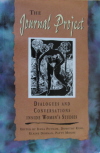
8: The Journal Project

The Journal Project: Dialogues and Conversations Inside Women’s Studies edited by Dana Putnam, Dorothy Kidd, Elaine Dornan & Patty Moore

The Journal Project

This was another VPL Booksale find. It’s a collection of journal entries from Women’s Studies classes at Langara College.

I found it interesting from a public/private space perspective. On the one hand, the journals were kept as a class assignment (for completion marks, not grades); the entries were written with the understanding that the instructor would read them. On the other hand, the idea of publishing them as an anthology came after the fact, so a wider audience was not anticipated. In this sense, I guess you could say they were more comparable to letters than to traditional diary entries in that the writers knew for certain that at least one person would be reading their words.

One thing that I found problematic with the selection of pieces is that the majority of them seemed to be written by women who had suffered physical/sexual/emotional abuse. My difficulty with this is that emphasizing worst-case scenarios makes it easy for those women who have not experienced such extreme discrimination to distance themselves and deny that there’s a problem with patriarchy. But just because you haven’t personally been abused or no one’s ever told you that you’re stupid or you’ve never faced extreme poverty (or whatever) doesn’t mean that there aren’t systemic problems with society. I would have liked to have seen more pieces like the one by the woman who was told that she couldn’t be the “head of household” because she was a SAHM. That’s the kind of systemic discrimination that you’ll probably never even be aware exists until it happens to you. It will never be a cause du jour. Yet, it’s addressing those kinds of issues, the ones that seem trivial (but aren’t), that leads to real change.

The Journal Project was published in 1995. The journals were traditional paper notebooks. It was interesting, in the context of my research, to read what they thought journals had the power to do.

[J]ournal writing itself assists social change. When our thoughts are spoken or recorded, they become part of the revolution. Writing it down is powerful and dangerous. –Dana Putnam

I wonder if any of the women are still journaling. I wonder if any of them are blogging.

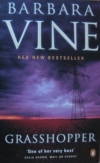
7: Grasshopper

Grasshopper by Barbara Vine

Grasshopper

I picked this up at Pulpfiction Books, a cool new/used bookstore at Main & Broadway.

Once upon a time, I was in a writing class where the instructor insisted that only murder was high stakes enough for mysteries & suspense novels. It was a silly thing to say and I recall scoffing when she said it. This memory resurfaced as I finished Grasshopper and contemplated what I would write about it. I was going to say that there’s no murder in Grasshopper, but technically there is. However, it’s just a mcguffin.

The reviews at Amazon are mixed. Some people hated this book. A lot said it wasn’t a “typical” Barbara Vine book. I’m not sure what they were expecting. None of the BV books I’ve read would be what I’d call typical mysteries. They’re more “regular” stories with suspenseful elements to them. Which is why I like them. I was tired of formulaic whodunnits. The people who seemed most disappointed seemed to expect a “shocking twist” ending. I guess it would be a let down if that’s what you expected.

BV’s books tend to be dark, psychological explorations, rather than thrillers. I think she’s interested in what motivates people to do the things they do. This one, I think, was less dark than others I’ve read, perhaps because it was clear from the outset that the ending would be a (mostly) happy one. The ending doesn’t tie up all the loose ends, though, which is good.

It definitely kept me turning the pages and, when I got to the last page, I experienced that little pang of sadness that you do when you’ve become attached to the characters in a book and you have to let them go. That kind of surprised me because none of the characters were particularly likable. But I suppose that was precisely it; their unpleasant qualities made them seem like real human beings and I got used to them being around.

So, to sum up: no murder(s) to speak of and no particularly likable characters. And yet, I quite enjoyed it.

6: Star Gazing

Star Gazing: Charting Feminist Literary Criticism by Andrea Lebowitz

06_img_2146.JPG

This was mentioned in my Methods class. At only 69 pages, it’s closer to a booklet than a book, but as far as the yearly book tally goes, it counts!

I got a few good ideas for my thesis from it.

On collaborative work:

[A]nother constant of feminist literary criticism is the success of collaborative work. Feminist literary criticism has put to rest the cliche that good writing must be the work of one person. (p. 6)

And the Other:

[F]eminists have questioned the binary opposites of our culture which see so many things as opposed and mutually exclusive … This type of thinking sees one thing as ‘other’ and inferior to its binary opposite. (p. 7)

Oh, and interestingly: Lebowitz writes that “the two most important precursors” to feminist literary criticism are Virginia Woolf and Simone de Beauvoir. A Room of One’s Own and The Second Sex “have formed the basis of feminist literary critics’ thinking about gender and writing.” (p. 11) I guess this is not particularly surprising, but what’s interesting about it is that I went through that whole de Beauvoir / Woolf phase and I’ve read AROOO and parts of TSS (it’s long!). I mean, it’s sort of vindicating that some of the stuff I read during that time fits with what I’m doing now. Now that everything is starting to tie together, it feels like there really is a point to it all.

Once I wrote up a list of “books that changed my life.” Meet the Austins (the book that hooked me on Madeleine L’Engle) was on it, as was Writing Down the Bones (the book that got me started writing again). Also on the list: de Beauvoir’s Memoirs of a Dutiful Daughter.

But I digress. On alternative/indie press:

[Feminists] have created alternative publishing and distribution networks and have founded many presses, journals and magazines. Some of these address an academic audience, while others speak for and from alternative cultural spaces. (p. 15)

On the novel:

[A]re there limits to what stories the novel can tell? … Does its structure, plot, narrative and closure keep women from writing stories other than the old familiar plots? (p. 19)

vs. “sub-literary” forms:

[L]etters, diaries, journals, sketches … have been widely used by women … studies into secondary forms have raised another fundamental question about evaluation. Why are some forms seen as superior? Conversely what makes a form inferior? (p. 20)

[I]dentity is not determined and fixed once and for all, but is rather in process. More fluid and fragmentary forms may offer ways of expressing this condition. … In autobiography and life writing more generally, the author is often not expressing a life already shaped and complete as she is using the writing as a way to express and make a life. (p. 21)

[I]t is not sufficient to use the old forms for new knowledge. We cannot simply reverse male stories, literary forms or critical criteria. Rather, language and form have become places for revision and experimentation. Most notably the private, fragmentary and intimate forms of expression have found a place alongside the public, completed and logical modes of expression. (p. 41)

Ooh. Well, that gives me something to chew on for a while.

5: Reasons for Moving

Reasons for Moving (manuscript) by Stephanie Eden Lenz

Reasons for Moving

This is the second novel my close personal friend* and co-editor Eden has completed.

She finished her first novel, Whited Sepulchers, in July 2000 (that date makes me =-O). She started RFM shortly thereafter and she was also shopping WS around for a while, but then she had two kids and the books went on the backburner.

Lately she’s been re-editing WS in preparation for sending it out again. In January, she picked up RFM and finished the first draft in 16 days. 60+k in just over two weeks. Bravo! It’s so good to see her writing fiction again. She’s going to write an editorial about the experience for the March issue of TC.

I need to re-read WS (it’s on my List), but from what I recall, RFM is very different in content and style.

RFM is set in the early ’90s in a college town in Pennsylvania. The narrator, Seth, who is 20 at the time of the story, was an abused child who left home after a traumatic event some three years earlier. Since then, he’s been hitchhiking around the country and doing what he has to to get by. He winds up on this college campus and, finding he blends in with the students, starts following them to classes. It’s winter and basically he’s looking for a warm place to hang out. He ends up following a girl to a small poetry writing seminar where the instructor spots him before he can escape. Soon he’s writing poetry, rooming with the classmate he followed that first day, and perhaps most surprisingly, setting down some roots. Through both the poetry and the personal connections he makes, he finally starts to work through his traumatic past, stop the destructive cycle he’s been on since he left home, and begins to look toward the future for the first time in his life.

*Is that phrase trademarked yet? 😉

4: The Orchid Thief

The Orchid Thief: A True Story of Beauty and Obsession by Susan Orlean

The Orchid Thief

I picked this up at the VPL Book Sale (for $1, I think). It’s the book that the movie Adaptation was based on. Adaptation is a weird and wonderful movie, so I was curious about the book.

As the sub-title indicates, this is a true story, an expansion of an earlier New Yorker article. Of course, the book has none of the meta-ness of the movie (which is all about the difficulty in adapting the book to a screenplay). The story starts out being about John Laroche—the orchid thief—who is on trial for taking endangered orchids from a state preserve, but grows into a story about Florida orchid enthusiasts in general and their passion for the plants. Passion is the overarching theme.

I have to say this is a rare instance where I liked the movie better than the book.

Orlean’s a really good writer—her descriptions are vivid—and this is the type of New Yorker article that I’d really enjoy, but the book gets a bit wandery. It’s like she wanted to include every orchid and every character she met and I started to suffer from sensory overload about midway through the book.

The movie has more of a cohesive narrative—but, heh, now I can see where the difficulty in adapting it to a screenplay came from. So, haha, ironically, reading the book will probably make my next watching of the movie even more entertaining! So I guess it was pretty awesome on that level.

I Said It First

So last night we had AC360 on and he did a segment on the current annoying trend for everyone and their dog to go into “rehab” to mend their public image after they’ve committed one transgression or another. The thing is, I commented on this a while ago—it’s now almost a rite of passage for celebs and (especially) pseudo-celebs to party a little too much, do a few dumb things, and then go, “Hee hee! I’m off to rehab!”, which seems to trivialize genuine alcoholism, drug addiction, etc. Of course, no one was listening to me because I’m not on TV.

Then just now I’m catching up on my many Bloglines feeds and I run across this Maud Newton post about John Steinbeck, East of Eden and Journal of a Novel, which a number of people seem to have referenced. But wait! Sound familiar? As a matter of fact, I wrote about this first! Yep, I scooped Maud Newton. Oh yes, I did. 😀 Muahahaha.

(Note to self: this writing stuff down business can be very gratifying!)

3: The Namesake

The Namesake by Jhumpa Lahiri

The Namesake

Another book picked up at The Book Shop last summer. Interestingly, once I started reading it, I realized I’d read part of this as an excerpt in The New Yorker in the summer of 2003 and remembered how much I’d liked it.

This book was awesome. I loved it.

I mean, the main metaphor throughout the book is the main character’s name. Heh. So an obsession with names can be turned into a book. 😉 Another interesting detail: it’s written in present tense, which I noticed on some level but didn’t consciously think about until I was about halfway through the book. And then I sort of went, “Hmm, this pretty much disproves the theory that you can’t carry off present tense in a novel.” So there, haters.

What else? Her descriptions are amazing. Don’t read this book when you’re hungry. What sucked me in right from the beginning, I think, was that this book begins the month/year I was born—the MC’s lifespan exactly matches my own. I guess we’re getting into an era now where I’m going to see this more often, as writers who are my age become established, but it stood out because I’m so used to reading books by older authors (who tend to write about their own generations).

What was unexpected (given the emphasis on the first/second generation immigrant aspect of the story in reviews & such) was how much I identified with the circumstances of the book. I also grew up the child of parents who moved far away from where they grew up. In their case, it was only cross-continent, but our visits were even more infrequent (and shorter) than the ones in this story, so I get that whole tenuous relationship with relatives who are really just names to you, turning friends into family, trying to figure out what/where “home” really is thing.

This book doesn’t have a traditional plot so it isn’t something that’s going to appeal to everyone. I glanced at the Amazon reviews and a lot of the more negative reviews were comments along the lines of “nothing happens,” which is true in a way, but I think misses the point. I will definitely be checking out her collection of short stories, Interpreter of Maladies.

2: Ricochet River

Ricochet River by Robin Cody

Ricochet River

I heard about this book when there was a controversy over the author rewriting certain passages so the book banning crowd would stop trying to prevent its use in schools. I wrote about it here. Now, I can understand the author wanting his book to be picked up for school reading lists. This is a first novel with regional appeal published by a small press in the early ’90s. If schools hadn’t taken an interest in it, it would almost certainly be long out of print.

I, of course, read the original version, not the revised version. Every summer we go to Penticton where there is this great used bookstore called The Book Shop. So many books. You should go! Anyhow, last summer I ran across this book at The Book Shop and I had to get it, if only to see what was so controversial about it.

Sigh. Yeah, I don’t know. People are whack when it comes to sex. There are two sexual passages in this 266-page book. Both are appropriate to the context of this story and these characters and would be perfectly fine for high schoolers to read. As for the drinking & driving and language choices—it’s a period piece. I think all too often people forget how things were in the not-so-distant past. Would be better to use these things as points for discussion rather than getting all revisionist and sweeping them under the carpet.

This is a coming-of-age story set in 1959-60 in a small Oregon town. I liked the West Coasty-ness of it; the setting was very authentic. The narrative voice was engaging. Storytelling (i.e. the characters telling stories to each other) plays a significant role in the book and this is, I think, what sets this story apart from others in its genre, but at times this device bogs the story down. The story itself is a quiet one with no dramatic plot developments—except for the ending. On the one hand, an ending in this vein was inevitable. On the other hand, what happens is perhaps a bit too surreal. But perhaps not. I think the author was going for a sort of magical realism thing, tying the events of the story to the myths & legends of the storytelling. If there had been a tighter linking between the two streams all along it would have both evened out the pacing and made the ending a better fit. Nevertheless, it was a pretty good first novel.