Tag Archives: Fiction

A wave of ill-informed goodwill

In “Formal Theories of Mass Behaviour”, William McPhee noted that a disproportionate share of the audience for a hit was made up of people who consumed few products of that type. (Many other studies have since reached the same conclusion.) A lot of the people who read a bestselling novel, for example, do not read much other fiction. By contrast, the audience for an obscure novel is largely composed of people who read a lot. That means the least popular books are judged by people who have the highest standards, while the most popular are judged by people who literally do not know any better. An American who read just one book this year was disproportionately likely to have read “The Lost Symbol”, by Dan Brown. He almost certainly liked it.

This explains why bestselling books, or blockbuster films, occasionally seem to grow not just more quickly than products which are merely very popular, but also in a wholly different way. As a media product moves from the pool of frequent consumers into the ocean of occasional consumers, the prevailing attitude to it—what Hollywood folk call word of mouth—can become less critical. The hit is carried along by a wave of ill-informed goodwill.

The Economist

[It also explains why the fact people who haven’t  read a book since high school are enthusiastic about your manuscript isn’t persuasive to editors.]

Thinking, Drafting and Re-drafting

The coming into existence of the paper-and-print book has many accomplishments, two of which, it seems to me, were scarcely foreseeable in 1455. They are entirely remarkable. One was to enable the emergence and wide appreciation of novels and short-stories: forms in which authors spend months and years on a work, thinking, drafting and re-drafting, so that they can reach all the way down into the subjects they treat. The other has been the possibilities for readers to enter into relationships—quite intimate relationships—with books, with authors, with fictional characters.

Keith Oatley

8 & 9: Jack & Reading In

Jack: A Life with Writers by James King

Jack: A Life with Writers

Jack is a biography of Jack McClelland, who ran McClelland & Stewart (Canadian publisher that his father founded) for many years (1950s – 80s). McClelland championed Canadian literature and started the New Canadian Library series. As biographies go, this is a pretty entertaining one. You learn (if you didn’t already know!) how close to bankruptcy publishing firms have always operated as well as all sorts of gossip about famous Canadian writers. Be prepared for the usual sexism of the era.

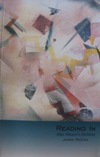
Reading In: Alice Munro’s Archives by JoAnn McCaig

Reading In: Alice Munro's Archives

Reading In is an exploration of Alice Munro’s archives, that is, the papers (primarily business letters) she has donated to the University of Calgary. It’s based on McCaig’s PhD dissertation. Here’s the fascinating part: Prior to publishing the book, McCaig published an article based on her research. Munro (& others) gave their permission for letters to be quoted in the article, however Munro was displeased with the article and subsequently denied McCaig permission to further quote or paraphrase her letters. This means that the book is a truncated version of what McCaig originally intended it to be.

Bizarre, right? Why would a university pay an author for her papers but not make her sign a standard agreement giving researchers permission to quote from the materials as necessary? Don’t universities do this? If they don’t, what’s the purpose of buying this stuff then? In any case, copyright issues with quoting aside, I really don’t see how legally Munro could deny McCaig permission to paraphrase the letters she donated to a university library. It’s like how there is no expectation of privacy with respect to stuff you put in the garbage. She can’t have an expectation of privacy with respect to stuff the public can access.

Reading In had an interesting premise, but I had difficulty with some of the conclusions that McCaig came to. As noted above, Munro only donated her business correspondence. Because the collection is an incomplete record, I think it’s difficult to draw any overarching conclusions about a correspondence or the relationship it documents. Munro obviously kept her personal correspondence (which may include some letters from people she also exchanged business letters with) and there’s also evidence that she likely retained letters that contained editorial suggestions. And of course there’s no record of conversations that took place on the phone or in person (which would seem pertinent when you’re talking about the nature of a relationship). So, ultimately, I’m thinking that perhaps the more valuable discoveries to be made in such an archive will be smaller—more contained—findings that rely less on assumptions.

6 & 7: Anne of Green Gables & The Selected Journals of L.M. Montgomery

Anne of Green Gables by L.M. Montgomery

Anne of Green Gables

Hey! A children’s—and Canadian—classic I actually read as a child. Quel shock!

[Note: If you want to read Anne for pleasure, I don’t recommend this (the Norton) version. It’s great if you’re analyzing the text for an English class (there are lots of assorted extras—essays and such—included), but the footnotes were really weird and distracting. There were all these definitions of common words (e.g. “dinner-time” and “bewitched” !!!) and expressions. I couldn’t figure out who they were targeted at. Surely the target audience of the Norton version (university students) of a book written for 10-year-olds has the sophistication to figure out the gist of words/expressions they’re not familiar with from the context. The only thing I could think of that made sense was perhaps it was aimed at an ESL audience who wouldn’t be familiar with English idioms. But that didn’t really explain including the definitions of words that could be looked up in a dictionary.]

Re-reading a book is often as much about the memories of past readings it’s tied up with as the contents of the book itself. My first encounter with L.M. Montgomery was via a boxed set of the first three Anne books that I received as a 10th birthday gift. Because I actually owned them, I re-read those three books over and over, but my most distinct memory of reading them is the first time: in August heat on the upper bunk of our camper as we made our way home from Ontario where I’d spent the summer.

One odd thing I remember is that whenever I re-read AoGG, I always started with chapter 4. Re-reading the book now I’m not sure why I did that. Maybe I found them too slow-paced or perhaps too focused on the grown-ups (chapter 1 starts with Rachel Lynde!). Another uber-geeky memory: the public library didn’t have the other books in the Anne series so I ordered them through inter-library loan. Don’t ask me how I knew to do this. I must’ve asked about them and the librarian suggested it.

Because they were all library books, I never re-read any of the other Montgomery books until one summer in undergrad when I decided to work my way through her entire oeuvre (holy geek summer project, batman!). So the remainder of the Montgomery books I have date from that summer.

Another weird thing: though once I read the Emily books, I preferred her to Anne (because Emily was the real writer), I don’t have a distinct memory of reading Emily of New Moon for the first time, the way I do with Anne of Green Gables. Probably because I just read it in the usual places (you know: in bed when I was supposed to be asleep, under my desk when I was supposed to be doing schoolwork, on the way home from school when I was supposed to be paying attention to where I was walking…) I do know when it was, though, because I wrote it down in my journal. In the same entry I wrote that was going to be a writer when I grew up. I was 12.

Which leads me to…

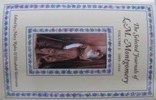
The Selected Journals of LM Montgomery, Volume I: 1889 – 1910, edited by Mary Rubio & Elizabeth Waterston
The Selected Journals of L.M. Montgomery

I was enthusiastic about reading this, the first volume of Montgomery’s journals. I like reading artists’ and writers’ journals/memoirs/biographies just in general, but having read most of Montgomery’s fiction, I was curious to see “behind the scenes” in her writing process and in particular, how her self-representation matched her fictional representation, particularly in the Emily books.

To be clear: Emily writes about writing: her process, her failures, her successes. So, I guess I went into this expecting a real-life version of Emily’s journal (not the same events/people, obviously, but the same style). What I got was cognitive dissonance, because Maud hardly writes about writing at all. Mostly she writes about her friends and relatives, school and work—the everyday stuff that anyone who’s kept a journal has written about. She doesn’t even mention AoGG until she announces that it is going to be published!

While it’s fun to guess at who she modeled various characters after and to recognize stories and anecdotes that she recycled into her fiction, the fact that she doesn’t write more about writing is perplexing. From the beginning, she intended for the journals to be published after her death (because she anticipated that she would by then be a famous writer), and clearly, as the Emily books demonstrate, she knew people are interested in a writer’s writing process. So why isn’t it there?

My theory is this: a few years before she wrote the Emily books, Maud apparently took all her old journals and transcribed them into new notebooks, ostensibly so all her journals would be in books of a uniform size. There is speculation, however, that she didn’t just copy her old journals word for word (as she claimed), but that in fact, she edited them at this time (she was famous by then and knew for sure that her journals would be published). Thus, my (completely unprovable!) theory is that when she did this she excised all the writing-about-writing parts and then used those in the Emily books. I think that she did this because then she could use those experiences as Emily’s without having to deal with Emily = Maud speculation. Of course, that happened anyway ;-).

Links:

4: Roughing It in the Bush

Roughing It in the Bush by Susanna Moodie

Roughing It in the Bush

Roughing It in the Bush is often cited as an early Canadian classic. At the same time, its Canadian-ness has also been questioned. For one thing, Moodie started writing about Upper Canada (now Ontario) in the 1830s, thirty-plus years before confederation (so maybe it’s not an early Canadian book, but a late British North American colonial book). As well, Susanna Moodie was an immigrant who wrote about her experiences from that perspective (so maybe she should be thought of as an English ex-pat writer, not a Canadian writer). Of course, “what does it mean to be Canadian?” is the quintessential Canadian-dilemma, so I think she qualifies on that count 😉 Really, I think she can be thought of as either—or both. Just depends on what you’re looking for.

Roughing It is an account of the middle-class Moodies’ first years in North America. Susanna and her husband John were woefully unprepared for life in the “bush,” which made for lots of good material for Susanna to write about. Although it’s supposed to be non-fiction, it seems pretty clear that the character “Susanna Moodie” is a lot ditzier than the writer Susanna Moodie was, i.e. that the stories were embellished to make them more funny and entertaining. While the writer Susanna Moodie was writing by candlelight and sending her stories and poems to magazines and newspapers (when she could afford stamps), the character “Susanna Moodie” was busy acting clueless and getting into scrapes to provide fresh material.

Which… you know… sounds a lot like a present-day memoir! Actually, my immediate reaction after I finished reading the book was that if Moodie were around today she’d be a blogger. Think about it: the book is a collection of anecdotes and poems and other ephemera, with the occasional chapter contributed by her husband or brother (guest posts!). Throw in a fish-out-of-water scenario, add a dash of hyperbole and a pinch of drama,  and voila! Recipe for a successful personal blog. And of course, she was a mother, so you might even call her the first Canadian mommyblogger 😉

Links:

3: Swann

Swann by Carol Shields

Swann

A few years back I read Shields’s short story compilation Dressing Up for the Carnival (I guess before I started these book posts). It was definitely a remainder table book; I remember picking it up because I kept hearing about Shields, but had never read anything of hers. Maybe I wasn’t sure if I’d like her writing or not?

Here’s the title story in Dressing Up for the Carnival and some reviews (January Magazine and The New York Times).

Anyhow, it turned out I liked Dressing Up for the Carnival more than I expected, so I picked up The Stone Diaries, her Governor General’s Award and Pulitzer Prize-winning novel, on a used-bookstore excursion. It’s still on my to-be-read shelf, but…

I took an English course this summer and the first thing we read was Swann (sometimes titled Swann: A Mystery). Swann is about farmwife Mary Swann and how she is “discovered” and turned into a minor poet worthy of academic analysis. Despite the sometimes-subtitle, Swann is more wry and cutting than mysterious. (There is a mystery, but it’s a rather transparent one.) Although it’s a novel, it’s really a critique of the literary and academic publishing worlds. The book is also kind of experimental—each section is told in a different way. The first section is most novelistic; the final section is written like it’s a screenplay. I think the execution may turn people off (as in this reader review), but I think the choices Shields made were very deliberate and it’s interesting to consider why she made them. Anyhow, I thought Swann was funny (and true), but I’m not sure I would have appreciated it as much if I wasn’t an insider, so to speak. Here’s an excerpt.

More links:

4: Halfway House

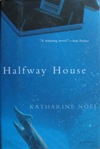
Halfway House by Katharine Noel

Halfway House

I actually finished reading this in late October—you know, back when I was still looking forward to spending November focusing on NaNo. AYKB, between TC stuff and offline chaos, that did not happen, and this post kept getting shuffled to the bottom of my to-do list. And now it’s the end of the year, and it’s still there, the last thing needing to be scratched off before 2008 ends.

So… here we go. I guess it’s somehow fitting that it’s taken me so long to get around to writing this review, given how long it took me to read the book. Looking back, I see I knocked a couple books off quite quickly right after I turned in the final draft of my thesis, but this one took me weeks to get through. I’m not really sure why; it wasn’t that the book was a slog or difficult or anything like that. For whatever reason, I just seemed content to read a single chapter at a time. That kind of a reading approach doesn’t always work out, of course; with a lot of books you’d end up having to flip back to refresh your memory each time because you couldn’t remember what happened up to your bookmark. But Halfway House had the stickiness necessary to be a satisfying slow read; whenever I picked it up, I didn’t have any problem continuing on as if I had just put it down.

Halfway House is Katharine Noel’s debut novel. Essentially it is the story of what happens to an “ordinary” family (mother/father/daughter/son) after the daughter develops a mental illness (bipolar disorder). I say “ordinary,” because I didn’t find them that ordinary to begin with: Pieter, the father/husband, is a professional musician and Jordana, the mother/wife, is the daughter of his friend/mentor. They first meet when she is a child and he is dating someone else; she crushes on him and they end up together, so she’s like 15 years younger than him. The kids (Angie & Luke) are exceptional athletes (swimmers), especially Angie, and she is also a brilliant student. There’s an expectation that she, at least, will attend an Ivy League school. (And… if you think $35k for a year‘s tuition is reasonable, you’re not ordinary. That is all.)

So, it’s very much about how easily a seemingly perfect family unit can fall apart when one thing (albeit a big thing) changes. At first, they try to go along as before, but it eventually becomes clear that—even if the right combination of meds is found—Angie is not going to simply recover and resume her before-life where she left off. Pieter and Jordana’s marriage falters and they separate. Luke ends up going to school in the Midwest, where he meets an actual ordinary girl ;-). In reality, of course, the cracks were already there; Angie’s break just widened them.

There was a lot packed into this book; maybe not all of it needed to be there, but I didn’t mind it. The writing is great; the descriptions are vivid and the characters do seem authentic. It felt like a world that had been percolating in someone’s mind for a long time. (My first thought was “MFA thesis” and after doing my usual post-read investigation, I think that might be right.) Still… I think one of the reasons I didn’t feel an urge to read this book faster is that I never really found myself attaching to any of the characters. Everything seemed to be taking place at arm’s length; there was a distance between reader and characters, rather than the immediacy one tends to expect with fiction. It felt like we (author and readers) were analyzing the characters rather than engaging with them. But maybe this is just a reflection of New Englander reticence?

A Midsummer Tale!

Guess I should remember to publicize my own contest. 😉

AMT is a creative non-fiction contest. Please, resist the urge to make up crap and call it non-fiction. I know it’s hard, Margaret B. Jones, but you can do it! As per usual, the word limit is 3k, and stories must take place in the summer. This year’s theme is:

The theme of the June 2008 A Midsummer Tale contest is: Snapshots. Photographs can trigger memories of events you thought you had forgotten. Has it been a while since you’ve looked at the dusty albums or boxes that hold your family photos? This year’s AMT contest is a chance for you to dig through your yellowing snapshots and reminisce. Choose one old photo and write about the events surrounding it.

Official announcement here. General contest rules. And the AMT specifics.

Now go tell me a story!

1: Casino Royale

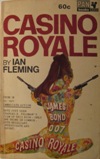
Casino Royale by Ian Fleming

Casino Royale

So in December, one of the movie channels had a Bondathon—all the Bond movies except for the Pierce Brosnan ones and the latest one with Daniel Craig. They were all blurring together by the end, especially since various actors appeared as different characters in different movies. But watching them all like that got me curious about the books. So I headed on out to Pulpfiction Books to see if they had any. And hey, they did! So I grabbed Casino Royale—the very first book—and On Her Majesty’s Secret Service.

I figured CR would be typical, well, pulp fiction. As it turns out, Ian Fleming (no relation 😉 ) was a better writer than I expected, though his style is quite dry and analytical. Everything is described in excruciating detail. This does work, though, because of who/what Bond is supposed to be. However, I could see readers finding it boring. What especially stood out for me was that the book had none of the humor of the movies. Instead, Bond’s kind of a morose character. He’s described as looking like Hoagy Carmichael. He drives a Bentley.

Another thing that was different from the movies was that Bond doesn’t believe in mixing women and business (women are for after business is complete): “…he wanted to sleep with her but only when the job had been done.” (p.40) And there was only one female interest in CR (Vesper Lynd). Bond sees Lynd as somewhat of a nitwit to begin with, but at the end it is revealed that she was in fact not. Also, in addition to being sexist (which I expected, obviously), Bond is somewhat racist (has a tendency to stereotype people).

There is one scene late in the book that is most definitely in the latest movie.

He does actually use the Bond, James Bond line (p. 50):

“My name’s Felix Leiter,” said the American. “Glad to meet you.”
“Mine’s Bond — James Bond.”

Bond’s drink: “Three measures of Gordon’s, one of vodka, half a measure of Kina Lillet. Shake it very well until it’s ice-cold, then add a large thin slice of lemon-peel” (p.51). Later, after Bond learns Vesper Lynd’s given name, he asks if he can name his drink after her.

I think I understand Baccarat now. Banco!

22: Man Walks into a Room

Man Walks into a Room by Nicole Krauss

Man Walks into a Room

Sneaking in one last book for 2007. Appropriately, it is actually a remainder table find 🙂

Man Walks into a Room is Nicole Krauss’s first (or debut, as the literati like to say) novel. Krauss is married Jonathan Safran Foer. Foer is, aykb, a literary darling. I haven’t read any of his work (though I might have to now) because having read MWiaR, I have to wonder why he gets all the attention.

Loved this book.

One of the dust jacket blurbs says, “Man Walks into a Room is that rare thing: an evocative, finely written first novel that is a true work of fiction.” —A.M. Homes. (In that respect, it reminded me of Eden and her first novel, which she really needs to find a publisher for!)

Samson Greene is a 36-year-old literature professor with a wife and a life in New York city until the removal of a benign brain tumor causes him to lose the last 24 years of his memory. MWiaR is about his reaction to that loss, but it is also an exploration of mind and memory, loneliness and intimacy:

…then and there it occurred to him that maybe the emptiness he’d been living with all this time hadn’t really been emptiness at all, but loneliness gone unrecognized. How can a mind know how alone it is until brushes up against some other mind? A single mark had been made, another person’s memory imposed onto his mind, and now the magnitude of his own loss was impossible for Samson to ignore. (pp. 192-193)

Near the end of the book, there was a riff on WASPy nicknames like Pip and Chip and Kick. Would’ve been a throwaway bit, except one of the names was Apple. Had to check the dates to see if she was poking fun at Gwyneth Paltrow, but no, Gwyneth’s daughter wasn’t born until 2004. I guess she was just prescient 😉

Some links: