Tag Archives: Fiction

20: The Last Good Day

Gail Bowen, The Last Good Day
The Last Good Day

I was looking for a fun weekend afternoon read and grabbed this off the to-read shelf. I think I got it from a pile of books my mom was discarding. (Free!)

I really wanted to like this book. The narrator sounded cool (55yo female university professor/amateur sleuth). It’s set in Saskatchewan! I don’t think I’ve ever read a book set in Saskatchewan that wasn’t CanLit. And the reviews on the back cover are glowing: “a treat from first page to final paragraph” (Globe & Mail), “Bowen is a national treasure” (Ottawa Citizen), etc. Apparently it was also shortlisted for the Arthur Ellis Award for best novel.

Really?! Did we read the same book? Because I actually thought it was really bad. I love Canadianisms as much as the next Canadian, but some of the CanCon here seemed soooo deliberate. Like, “Hey, I think I’ll stick in a priest with a West Indies accent (even though said character doesn’t actually have a speaking role—or a name, for that matter) because, aykb, Canada’s a multicultural society!” Or the completely random mention of a character carrying a Zeller’s bag. (Groan.)

[digression] Been thinking about this, because I think this is an important thing to remember when writing fiction. Random mentions feel like you’re working off a checklist (or namedropping). Stuff should have a reason for being there. If you’re going to mention a priest with a West Indies accent (interesting detail), then he should play a role in the story (he doesn’t). If you’re going to mention a Zeller’s bag (rather than a plain old plastic bag), then the fact it’s a Zeller’s bag should be significant (it isn’t). OTOH, the references to the RCMP felt perfectly natural, because there was a legitimate reason for them to be there. Good lesson here I think. I know I’ve been guilty of no-reason namedropping. But I think it’s important to note that it’s not just brand names—any detail can come across as awkward if it stands out and doesn’t serve a purpose. [/digression]

It was also excessively telly. Early in the book, a character dies. The narrator has been acquainted with this person for less than 24 hours, and has had exactly one 10-minute conversation with him (in which he confides his deepest, darkest secret — and… can I just say, unrealistic much? — yes, I always go around confiding my intimate secrets to complete strangers). Anyhow, after he dies, narrator goes on and on and on about how shattered she was by his death. Now granted, she witnessed his car driving into a lake and attempted a rescue (hint: it’s easier to break a window in a sinking car than to try to open a door!), so that would be somewhat disturbing. But she didn’t know the guy. The significance that the narrator kept saying this had on her seemed all out of proportion with what we had been shown of these characters.

The telliness also meant the characters were flat and uninteresting. There were a lot of characters, but none of them were fleshed out. Nobody felt real. The “Winners’ Circle” was annoying (I mean, honestly. On principle, who wouldn’t hate a group of law school students who named themselves the Winners’ Circle and still referred to themselves by that name 25 years later? How irritating must they be?). I couldn’t work up an iota of sympathy for these people.

The inciting incident basically made no sense. A work-related transgression (by guy who dies early in book) was blown out of proportion by a character who we don’t actually get to know first-hand (making the reasoning behind what she did in response to her discovery even less understandable). And then his reaction (driving his car into a lake, amongst other things) to that is also way beyond realistic.

But here’s the thing that drove me absolutely batty: this book was published in 2004. In the book, the characters are happily using email and have GPS in their cars. So, it is set in present day. However, when they are told that a character has moved to Vancouver to work at a law firm there, but are suspicious as to whether this is true or not, not one person thinks to use Google to check out the story. Isn’t that the first thing you would do? I mean, all medium-to-large law firms have websites! Generally with all the lawyers listed. Now, granted, some small ones don’t. But then there’s also the Law Society website, which lists all practicing and non-practicing lawyers in the province! Seriously, this story would take like two minutes to check out. I just could not get past this.

Maybe the characters couldn’t either, as they seemed inclined to take themselves out. Yes, the number of suicides (3*) in this novel outnumber the murders (1). So not only was it a frustrating read (Gooooooogle!), it was also depressing. Not exactly what I look for in a mystery. (ymmv, of course. I could not find one negative review of this book, so I am definitely in the minority.)

*Technically, that includes a murder-suicide, but as it was a pact between the two individuals, it was essentially a double-suicide.

19: The Mirror and the Veil

Viviane Serfaty, The Mirror and the Veil: An Overview of American Online Diaries and Blogs.

The Mirror and the Veil

The Mirror and the Veil was another book I read for my Directed Reading course this summer. Here’s Serfaty’s explanation of the title:

[The computer screen] operat[es] as a paradoxical, twofold metaphor, that of a veil and that of a mirror. … The screen, which mediates Internet access, thus establishes a dialectical relationship between disclosure and secrecy, between transparency and opacity. There is no such thing as private content on the Internet; the pretence of privacy is de facto shattered to pieces, since anyone can gain access to any site the world over, yet the diarists feel protected by the very size of the Internet. (p.13)

The most valuable thing about this book for me was Serfaty’s discussion of her methodological approach and her reasoned justification for taking the approach that she did because it gives me a precedent for the approach I plan to take with my thesis.

Serfaty discusses the privacy issues with respect to researching diaries and discusses the literary and the social scientific approaches to such research. The literary approach rests on the assumption that the protagonist is a fictional construct (to a certain extent): “personal writings on the Internet are not be viewed as ‘slice-of-life’ documents or faithful reflections of reality. Attention is instead focused on the internal logic of the text, seen as a self-contained, self-referential artifact.” (p.10) The social scientific approach, on the other hand, requires the researcher to look beyond the text and make contact with the diarists.

Serfaty finds this problematic for a number of reasons. It requires the researcher to engage in participant observation, which is difficult and modifies the behavior of the observed (exactly my concern). Also, the exchange of correspondence between researcher and diarist creates “an intimate pact” that isn’t a very scientific approach to research. Familiarity with the diarist is likely to lead to further problems: either breaching the diarist’s trust, or conversely, being reluctant to expose unflattering aspects of the diarist’s life. Serfaty’s approach was thus to carefully avoid any interaction with the diarists she studied.

Another key issue is anonymity (or the lack thereof). The AoIR approach is to use pseudonyms. However, as Serfaty points out (and as I have reiterated many times) URLs of the blogs must be cited, making pseudonyms moot. Serfaty takes the approach that while blogs are often personal and intimate, they are not private. “Anyone who engages in self-representational writing on the Internet is not producing private material, but is engaging instead in ‘public acts deliberately intended for public consumption'” (p. 12).

On a less serious note, she quotes these very bloggy moments from “The Importance of Being Earnest” (Oscar Wilde):

Miss Prism: I really don’t see why you keep a diary at all.
Cecily: I keep a diary in order to enter all the wonderful secrets of my life. If I didn’t write them down, I should probably forget all about them.

Cecily: I am afraid you must be under some misconception. Ernest proposed to me exactly ten minutes ago. [shows diary]
Gwendolen: [examines diary through her lorgnette carefully] It is certainly very curious, for he asked me to be his wife yesterday afternoon at 5:30. If you would care to verify the incident, pray do so. [produces diary of her own.] I never travel without my diary. One should always have something sensational to read in the train.

Algernon: Do you really keep a diary? I’d keep anything to look at it. May I?
Cecily: Oh no. You see, it is simply a very young girl’s record of her own thoughts and impressions, and consequently meant for publication. When it appears in volume form I hope you will order a copy.

If Oscar were around today, I bet he’d blog. Funniest play ever, I tell ya. Must go read it again.

3 Cheers and a Tiger!

The fall contest is underway!

The theme of the September 2007 “Three Cheers and a Tiger” contest is “Mentors.” The word limit is 1800 words. So, between now and 5pm Eastern US time on Sunday September 23, 2007, write a science fiction and/or fantasy story about a Mentor in 1800 words or less, and submit it according to the rules, which you can find here.

Great way to sharpen up those speedwriting skillz just in time for NaNoWriMo!

November 29, 1918 – September 6, 2007

Madeleine L’Engle died yesterday. She was 88.

Something to think about: L’Engle’s career didn’t really take off until the 1960s, when she was already over 40. A Wrinkle in Time was finally published (after many rejections) in 1962. She continued to publish prolifically into her 80s.

ETA: I made a Madeleine L’Engle category. (Includes my three-part review of the elusive Ilsa.)

Also found this in an old writing file:

Back in the day, I kept my Madeleine L’Engle books on a separate shelf and called them my “special books.” Every time I went into a new library, I’d look to see if there were any books listed that I hadn’t heard of and every time I entered a bookstore, I’d head to the Ls to see if they had any books I hadn’t read.

But I never wrote her a letter.

In fact, the idea didn’t even occur to me until I was out of university and found her book A Circle of Quiet. In the book, she writes about finding an apartment on West End Avenue. She wrote the address. I thought, I wonder if she still lives there? Curious, I headed to the library and looked her up in the NY phone book (on microfiche!) It was listed, not under her name, but under that of her late husband, Hugh Franklin. Imagine that. A reasonably well-known actor and a writer with a listed phone number. So now, I had her address. I even had her phone number. I could write her a letter. I could call. But I didn’t.

I tried to write a letter, but it just came out sounding dumb. You’re my favorite author! I’ve read everything of yours that I could get my hands on! Why is Ilsa out of print? Will you ever write about Vicky as an adult? etc. I couldn’t bring myself to send something so dorky. Eventually I deleted it from my hard drive.

And that was the closest I got to writing a fan letter.

ETA Part 2: Since nearly every tribute I’ve seen begins and ends with A Wrinkle in Time, I thought I’d add this: Madeleine L’Engle’s bibliography and my personal L’Engle collection:

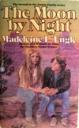
Austin Family. This is my favorite series; The Moon by Night is my favorite of her fiction books.

Meet the Austins, 1960 The Moon By Night, 1963 The Young Unicorns, 1968
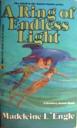
A Ring of Endless Light, 1980 Troubling a Star, 1994

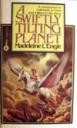
Murry – O’Keefe Family. My favorites are A Swiftly Tilting Planet and The Arm of the Starfish.

A Wrinkle in Time, 1962 A Wind in the Door, 1973 Many Waters, 1986 A Swiftly Tilting Planet, 1978
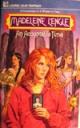
The Arm of the Starfish, 1965 Dragons in the Waters, 1976 A House Like a Lotus, 1984 An Acceptable Time, 1989

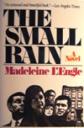
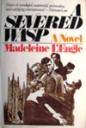
Katherine Forrester. The Small Rain was her first novel.

The Small Rain, 1945 A Severed Wasp, 1982

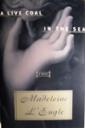
Camilla Dickinson.

Camilla, 1965 A Live Coal in the Sea, 1996

Miscellaneous Fiction.

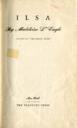
Ilsa, 1946 And Both Were Young, 1949 A Winter’s Love, 1957
The Love Letters, 1966 The Other Side of the Sun, 1971 Certain Women, 1992

Autobiographical. A Circle of Quiet is my favorite of her non-fiction books. Must-read for writers.

A Circle of Quiet, 1972 The Summer of the Great Grandmother, 1974 The Irrational Season, 1977 Two-Part Invention, 1988

Miscellaneous Non-Fiction. Miracle on 10th Street is a mixture of non-fiction & fiction. Contains two Austin family stories: The 24 Days Before Christmas and A Full House.

Reflections on Faith and Art, 1980 Miracle on 10th Street, 1998

10: Anonymous Lawyer

Anonymous Lawyer by Jeremy Blachman

Anonymous Lawyer

I started reading Jeremy’s eponymous law school blog sometime in 2003. It was one of only two law school blogs that I read to the very end (the other was Sua Sponte). The two blogs were pretty much polar opposites. JCA at Sua Sponte was serious, earnest, ever-stressed. Jeremy was funny, irreverent, and seemingly unfazed by anything. His was the law school blog I wish I could have written.

In 2004, Jeremy started writing the Anonymous Lawyer blog, anonymously. I read it for a while (I don’t remember where I saw the link–I was reading a lot of law blogs at the time). There was a lot of speculation in the comments as to who Anonymous Lawyer was. A lot of people thought AL was a real person (despite the “fictional” disclaimer). I thought that the writer was a law student (based on the content). It had that “just enough knowledge” feel, you know? It was funny, but after a while, the schtick got a bit repetitive and I stopped reading it. A few months later, there was an article in the NY Times “outing” Jeremy as the writer behind AL. I wasn’t surprised.

Fast forward: Jeremy gets a book deal, graduates, passes the bar (even though he didn’t study, or so he claims), writes book. Book is published. Book signings ‘n’ stuff. Book is optioned. Jeremy goes to LA to work on pilot. etc. etc.

So, right, the book. Well, it’s been out for a while, but I waited for the paperback. I really bought it because of Jeremy’s personal blog, not the AL blog. I think AL the book is better than AL the blog. It has a plot. It’s funny. And it’s just long enough. It’s a fluffy, quick read. I think it could make a funny TV series. I’d watch. The pilot, at least 😉

Million Writers Award

Squee!

For the second year in a row, one of Toasted Cheese’s nominations for the Million Writers Award has made it to the “semi-finals”! “Pillaged” by Gina Sakalarios-Rogers has been chosen as one of the Notable Stories of 2006. TC’s other nominations were “Desert Creatures” by Anna Evans and “Roller Coaster” by Terri Moran.

The Million Writers Award honors and promotes the best fiction published in online literary journals and magazines. The top ten stories will be announced May 23, 2007. Voting on the top story of the year will begin May 23, 2007, and will end June 23, 2007.

7: Grasshopper

Grasshopper by Barbara Vine

Grasshopper

I picked this up at Pulpfiction Books, a cool new/used bookstore at Main & Broadway.

Once upon a time, I was in a writing class where the instructor insisted that only murder was high stakes enough for mysteries & suspense novels. It was a silly thing to say and I recall scoffing when she said it. This memory resurfaced as I finished Grasshopper and contemplated what I would write about it. I was going to say that there’s no murder in Grasshopper, but technically there is. However, it’s just a mcguffin.

The reviews at Amazon are mixed. Some people hated this book. A lot said it wasn’t a “typical” Barbara Vine book. I’m not sure what they were expecting. None of the BV books I’ve read would be what I’d call typical mysteries. They’re more “regular” stories with suspenseful elements to them. Which is why I like them. I was tired of formulaic whodunnits. The people who seemed most disappointed seemed to expect a “shocking twist” ending. I guess it would be a let down if that’s what you expected.

BV’s books tend to be dark, psychological explorations, rather than thrillers. I think she’s interested in what motivates people to do the things they do. This one, I think, was less dark than others I’ve read, perhaps because it was clear from the outset that the ending would be a (mostly) happy one. The ending doesn’t tie up all the loose ends, though, which is good.

It definitely kept me turning the pages and, when I got to the last page, I experienced that little pang of sadness that you do when you’ve become attached to the characters in a book and you have to let them go. That kind of surprised me because none of the characters were particularly likable. But I suppose that was precisely it; their unpleasant qualities made them seem like real human beings and I got used to them being around.

So, to sum up: no murder(s) to speak of and no particularly likable characters. And yet, I quite enjoyed it.

5: Reasons for Moving

Reasons for Moving (manuscript) by Stephanie Eden Lenz

Reasons for Moving

This is the second novel my close personal friend* and co-editor Eden has completed.

She finished her first novel, Whited Sepulchers, in July 2000 (that date makes me =-O). She started RFM shortly thereafter and she was also shopping WS around for a while, but then she had two kids and the books went on the backburner.

Lately she’s been re-editing WS in preparation for sending it out again. In January, she picked up RFM and finished the first draft in 16 days. 60+k in just over two weeks. Bravo! It’s so good to see her writing fiction again. She’s going to write an editorial about the experience for the March issue of TC.

I need to re-read WS (it’s on my List), but from what I recall, RFM is very different in content and style.

RFM is set in the early ’90s in a college town in Pennsylvania. The narrator, Seth, who is 20 at the time of the story, was an abused child who left home after a traumatic event some three years earlier. Since then, he’s been hitchhiking around the country and doing what he has to to get by. He winds up on this college campus and, finding he blends in with the students, starts following them to classes. It’s winter and basically he’s looking for a warm place to hang out. He ends up following a girl to a small poetry writing seminar where the instructor spots him before he can escape. Soon he’s writing poetry, rooming with the classmate he followed that first day, and perhaps most surprisingly, setting down some roots. Through both the poetry and the personal connections he makes, he finally starts to work through his traumatic past, stop the destructive cycle he’s been on since he left home, and begins to look toward the future for the first time in his life.

*Is that phrase trademarked yet? 😉