
Memory is a dream machine. Nonfiction isn’t “true.” It’s a framing device to foreground contemplation, or at least it is in the nonfiction I love the most — nonfiction at the highest reaches of literary art. I want to redefine nonfiction upward — taking nonfiction’s limits and reframing them so that nonfiction can be a serious investigation of what’s “true,” what’s knowledge, what’s “fact,” what’s memory, what’s self, what’s other. I don’t want a nonfiction full of “lies.” I want a nonfiction that explores our shifting, unstable, multiform, evanescent experience in and of the world.
Tag Archives: Nonfiction
A part of the story
[C]reative nonfiction writers do not make things up; they make ideas and information that already exist more interesting and, often, more accessible.
…
In creative nonfiction, writers can be poetic and journalistic simultaneously. Creative nonfiction writers are encouraged to utilize literary and even cinematic techniques, from scene to dialogue to description to point of view, to write about themselves and others, capturing real people and real life in ways that can and have changed the world. What is most important and enjoyable about creative nonfiction is that it not only allows but also encourages the writer to become a part of the story or essay being written. The personal involvement creates a special magic that alleviates the suffering and anxiety of the writing experience; it provides many outlets for satisfaction and self-discovery, flexibility and freedom.
Searches for Truths
Members of the OnFiction group have (if I may speak for all of us) been a bit dissatisfied with the idea that non-fiction is true and fiction is untrue. We prefer to see fiction in terms of its subject matter: exploration of how selves make their sometimes problematic ways through the social world.
…
Uncertainty about what really happened is an issue that rightly exercises historians and journalists. But the deeper issue, raised by [Frederic] Bartlett though not mentioned by [Daniel] Mendelsohn, is that when remembering or, indeed, when trying to make sense of anything for the first time, we are constantly engaged in an “effort after meaning” (Bartlett, p. 20). In his refusal to write an autobiography, Freud wasn’t worrying about truth and untruth, but about truth and lying.
…
Fiction, then, in which one searches for truths other than those of mere actuality, as if from the inside, may be the real expression of the human effort after meaning.
8 & 9: Jack & Reading In
Jack: A Life with Writers by James King

Jack is a biography of Jack McClelland, who ran McClelland & Stewart (Canadian publisher that his father founded) for many years (1950s – 80s). McClelland championed Canadian literature and started the New Canadian Library series. As biographies go, this is a pretty entertaining one. You learn (if you didn’t already know!) how close to bankruptcy publishing firms have always operated as well as all sorts of gossip about famous Canadian writers. Be prepared for the usual sexism of the era.
Reading In: Alice Munro’s Archives by JoAnn McCaig
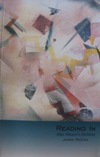
Reading In is an exploration of Alice Munro’s archives, that is, the papers (primarily business letters) she has donated to the University of Calgary. It’s based on McCaig’s PhD dissertation. Here’s the fascinating part: Prior to publishing the book, McCaig published an article based on her research. Munro (& others) gave their permission for letters to be quoted in the article, however Munro was displeased with the article and subsequently denied McCaig permission to further quote or paraphrase her letters. This means that the book is a truncated version of what McCaig originally intended it to be.
Bizarre, right? Why would a university pay an author for her papers but not make her sign a standard agreement giving researchers permission to quote from the materials as necessary? Don’t universities do this? If they don’t, what’s the purpose of buying this stuff then? In any case, copyright issues with quoting aside, I really don’t see how legally Munro could deny McCaig permission to paraphrase the letters she donated to a university library. It’s like how there is no expectation of privacy with respect to stuff you put in the garbage. She can’t have an expectation of privacy with respect to stuff the public can access.
Reading In had an interesting premise, but I had difficulty with some of the conclusions that McCaig came to. As noted above, Munro only donated her business correspondence. Because the collection is an incomplete record, I think it’s difficult to draw any overarching conclusions about a correspondence or the relationship it documents. Munro obviously kept her personal correspondence (which may include some letters from people she also exchanged business letters with) and there’s also evidence that she likely retained letters that contained editorial suggestions. And of course there’s no record of conversations that took place on the phone or in person (which would seem pertinent when you’re talking about the nature of a relationship). So, ultimately, I’m thinking that perhaps the more valuable discoveries to be made in such an archive will be smaller—more contained—findings that rely less on assumptions.
4: Roughing It in the Bush
Roughing It in the Bush by Susanna Moodie

Roughing It in the Bush is often cited as an early Canadian classic. At the same time, its Canadian-ness has also been questioned. For one thing, Moodie started writing about Upper Canada (now Ontario) in the 1830s, thirty-plus years before confederation (so maybe it’s not an early Canadian book, but a late British North American colonial book). As well, Susanna Moodie was an immigrant who wrote about her experiences from that perspective (so maybe she should be thought of as an English ex-pat writer, not a Canadian writer). Of course, “what does it mean to be Canadian?” is the quintessential Canadian-dilemma, so I think she qualifies on that count 😉 Really, I think she can be thought of as either—or both. Just depends on what you’re looking for.
Roughing It is an account of the middle-class Moodies’ first years in North America. Susanna and her husband John were woefully unprepared for life in the “bush,” which made for lots of good material for Susanna to write about. Although it’s supposed to be non-fiction, it seems pretty clear that the character “Susanna Moodie” is a lot ditzier than the writer Susanna Moodie was, i.e. that the stories were embellished to make them more funny and entertaining. While the writer Susanna Moodie was writing by candlelight and sending her stories and poems to magazines and newspapers (when she could afford stamps), the character “Susanna Moodie” was busy acting clueless and getting into scrapes to provide fresh material.
Which… you know… sounds a lot like a present-day memoir! Actually, my immediate reaction after I finished reading the book was that if Moodie were around today she’d be a blogger. Think about it: the book is a collection of anecdotes and poems and other ephemera, with the occasional chapter contributed by her husband or brother (guest posts!). Throw in a fish-out-of-water scenario, add a dash of hyperbole and a pinch of drama, and voila! Recipe for a successful personal blog. And of course, she was a mother, so you might even call her the first Canadian mommyblogger 😉
Links:
- Susanna Moodie ebooks @ Project Gutenberg
- Susanna Moodie’s Wikipedia entry
- Susanna Moodie archive @ Trent University
A Midsummer Tale!
Guess I should remember to publicize my own contest. 😉
AMT is a creative non-fiction contest. Please, resist the urge to make up crap and call it non-fiction. I know it’s hard, Margaret B. Jones, but you can do it! As per usual, the word limit is 3k, and stories must take place in the summer. This year’s theme is:
The theme of the June 2008 A Midsummer Tale contest is: Snapshots. Photographs can trigger memories of events you thought you had forgotten. Has it been a while since you’ve looked at the dusty albums or boxes that hold your family photos? This year’s AMT contest is a chance for you to dig through your yellowing snapshots and reminisce. Choose one old photo and write about the events surrounding it.
Official announcement here. General contest rules. And the AMT specifics.
Now go tell me a story!
November 29, 1918 – September 6, 2007
Madeleine L’Engle died yesterday. She was 88.
Something to think about: L’Engle’s career didn’t really take off until the 1960s, when she was already over 40. A Wrinkle in Time was finally published (after many rejections) in 1962. She continued to publish prolifically into her 80s.
ETA: I made a Madeleine L’Engle category. (Includes my three-part review of the elusive Ilsa.)
Also found this in an old writing file:
Back in the day, I kept my Madeleine L’Engle books on a separate shelf and called them my “special books.” Every time I went into a new library, I’d look to see if there were any books listed that I hadn’t heard of and every time I entered a bookstore, I’d head to the Ls to see if they had any books I hadn’t read.
But I never wrote her a letter.
In fact, the idea didn’t even occur to me until I was out of university and found her book A Circle of Quiet. In the book, she writes about finding an apartment on West End Avenue. She wrote the address. I thought, I wonder if she still lives there? Curious, I headed to the library and looked her up in the NY phone book (on microfiche!) It was listed, not under her name, but under that of her late husband, Hugh Franklin. Imagine that. A reasonably well-known actor and a writer with a listed phone number. So now, I had her address. I even had her phone number. I could write her a letter. I could call. But I didn’t.
I tried to write a letter, but it just came out sounding dumb. You’re my favorite author! I’ve read everything of yours that I could get my hands on! Why is Ilsa out of print? Will you ever write about Vicky as an adult? etc. I couldn’t bring myself to send something so dorky. Eventually I deleted it from my hard drive.
And that was the closest I got to writing a fan letter.
ETA Part 2: Since nearly every tribute I’ve seen begins and ends with A Wrinkle in Time, I thought I’d add this: Madeleine L’Engle’s bibliography and my personal L’Engle collection:
Austin Family. This is my favorite series; The Moon by Night is my favorite of her fiction books.

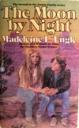

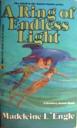

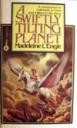
Murry – O’Keefe Family. My favorites are A Swiftly Tilting Planet and The Arm of the Starfish.




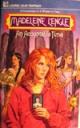
Katherine Forrester. The Small Rain was her first novel.
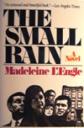
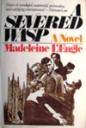
Camilla Dickinson.

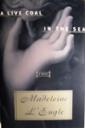
Miscellaneous Fiction.


Autobiographical. A Circle of Quiet is my favorite of her non-fiction books. Must-read for writers.


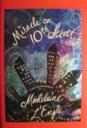
Miscellaneous Non-Fiction. Miracle on 10th Street is a mixture of non-fiction & fiction. Contains two Austin family stories: The 24 Days Before Christmas and A Full House.

A Midsummer Tale
The 2007 A Midsummer Tale Creative Non-Fiction Contest (blind-judged by me) is now open.
This year’s theme is: The Beach. Deadline for entries is June 21, 2007.
Have a question? Post here. Have a great beach story to tell? Enter it!
NaNo Story Decision
Okay. So I think I’ve decided which project it will be.
I’ve pulled out a story that I outlined around the time we started Toasted Cheese, then never really did anything with. It has a vivid setting, lots of characters, and a twisty, messy plot (I know! A plot!)! I don’t have a lot invested in it, so I think it’s something I can have fun with. I had a lot of fun with NaNo last year, and while I contemplated doing the memoir, somehow I don’t see that being a “fun” project. Fiction’s just easier anyhow. No worries about hurting anyone’s feelings or keeping your facts straight. Not so much with non-fiction.
Anyhow. Story doesn’t have a title. Guess that’s the next thing to contemplate.
To memoir or not to memoir, that is the question
Don’t you just love it when someone else articulates something you’ve been thinking about / trying to say? Tayari Jones again, on whether writing a memoir is the right thing to do:
She concludes:
I don’t know. I think I prefer the safe realm of fiction.
!!! I’ve thought a great deal about writing a memoir. This is always where I end up. Fiction does feel safe to me. I can write about more significant, weightier subjects in fiction than I can in memoir. The distance of fiction allows me to get nearer to the truth, if that makes any sense.
Writing a memoir would mean writing about my family, my childhood. That’s the key to the whole thing. Without that, there’s no point. But when I write personal non-fiction, even if I’m just testing it out, in a Word doc, I find myself hedging when it comes to my family. Who they are is crucial to who I am, hence I must write about them, if I am to write my story.
But the good daughter in me balks at hurting anyone. No one in my story is evil. There is no big bad.
It would be much easier if there was.
 The Remainder Table