Category Archives: Reading

18: The Glass Cell

The Glass Cell by Patricia Highsmith
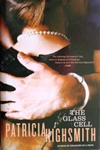
Hmm, I haven’t read any Highsmith since 2005? How did that happen? Hmm. Well, I picked up two at The Book Shop this summer so I can now rectify that. (Although, I have to say there’s something to be said for consuming a favorite author’s work slowly, especially when you know their ouevre is finite.)

In the The Glass Cell, the MC is an ordinary guy who is wrongly convicted of a crime. The first half of the book covers his six years in prison; the second half what happens when he returns “home” (i.e. to where his wife now lives). This being Highsmith, I don’t think I’m being spoilery by saying there is no cheesy TV movie–style happy ending. What happens is pretty much what you expect to happen when you’re not expecting a happy ending.

TGC is billed as a psychological thriller, but that’s not really accurate. It works as a psychological study, but it’s lacking the sense of suspense (I was never surprised or on the edge of my seat, er, pillow) that Highsmith’s more well-known books have. It’s not thrilling. It is sad. It was almost like reading long-form journalism (where you already know the outcome, but you’re reading to see how the MC went from A to B), rather than a novel. If you’re looking for cheery escapism, this is not your book.

Discover an Unknown

The e-book is good news for some. Big-name authors and novels that are considered commercial are increasingly in demand as e-book readers gravitate toward best sellers with big plots. Unlike traditional bookstores, where a browsing customer might discover an unknown book set out on a table, e-bookstores generally aren’t set up to allow readers to discover unknown authors, agents say. Brand-name authors with big marketing budgets behind them are having the greatest success thus far in the digital marketplace.

It’s a different story for debut fiction writers and those with less commercial potential, who might have print runs of 10,000 copies or less. [It’s] difficult to sell a debut novel about small-town life because many editors are no longer committing to new writers with the expectation that their story-telling skills will evolve with the second, third and fourth books. In the past, many literary authors were able to build careers because of such patience.

Jeffrey A. Trachtenberg

Revelling in the novel

Crimes novels/detective fiction … are the only kind of “genre” that has ever won me over, and I think it’s because these are novels that wear themselves on their sleeves. The same mechanics are present as in any novel, but their workings are much less subtle, and I think that when we revel in detective fiction that we are revelling in the novel in general.

Kerry Clare

Love is

But I did not want to finish this book. Some of the books I’d read had told me that love is fleeting; some of the other books I’d read had told me that love is eternal. But they were wrong. Love isn’t either of those things. Love is not wanting the thing you love to ever end.

—Brock Clarke, Exley
via Bookslut

17: Heart and Soul

Heart and Soul by Maeve Binchy

This was also from the spring library book sale. It’s a hardcover (most of the library books are). To be honest, it felt weird to be reading Maeve Binchy in hardcover. Every other Binchy I’ve read has been a mass market paperback, and that definitely feels like how they should be read.

Back in the day (high school/university), I read a lot of Binchy, but I haven’t read any in a long time.

The first Binchy I read was Light a Penny Candle (her first novel). I have a strong memory of sitting at the kitchen counter reading the mass market paperback version, completely addicted. This would be when LaPC was fresh in paperback (1983/4, Amazon tells me). My mom was reading it and I picked it up. I don’t even think she was finished reading it, but I just couldn’t put it down. Totally engrossing. Re-read it a bunch of times.

Heart and Soul wasn’t like that at all. It was pleasant, but that’s about it. She still makes you believe in her characters and their world, but the story is lacking.

First, there are too many characters. Each gets a chapter or so of attention, so there’s not enough time to get attached to anyone.

Second, it relies too much on prior knowledge. The book is chock-full of cameos from Binchy’s prior books. I could tell that, by the way she mentioned the characters and because some of the names were vaguely familiar, but I read her previous books too long ago for them to have any real meaning for me.

Third, there’s no conflict. Oh, there’s some faux-conflict, but it’s all essentially misunderstandings. Everyone’s nice! It all works out in the end! I think she can’t be mean to her characters anymore. And that’s a problem. Writers need to be able to be mean to their characters.

In conclusion, I know it’s in part nostalgia for a time when all did was devour paperbacks, but I think her early books were much better than this one. I should re-read Light a Penny Candle to confirm.

Quirky Choices

The idea that as a literary person there are a certain set of books you must read because they are important parts of the literary conversation is constantly implied, yet quite ridiculous. Once you get done with the Musts — the Franzens, Mitchells, Vollmanns, Roths, Shteyngarts — and then get through the Booker long list, and the same half-dozen memoirs everyone else is reading this year (crack addiction and face blindness seem incredibly important this year), you have time for maybe two quirky choices, if you are a hardcore reader. Or a critic. And then congratulations, you have had the same conversations as everyone else in the literary world.

Jessa Crispin

Or, you could join me on the Dark Side aka the Side that Consists Almost Entirely of Quirky Choices (I’ll allow you one or two Must reads, if you’re hardcore). Come on, I dare ya. It’s toasty warm and cheesy over here…

Reading as fast as you can

As we sit over a hardcover copy of Harry Potter and the Half Blood Prince, Will and I try to articulate what we love about this series and about The Hunger Games. It is difficult to express the emotionally charged relinquishing of reality and the fervor and flush that comes with truly inhabiting a fictional world.  “Just the idea of the book,” he shrugs, stumped. “Just the story.”

With imaginative and driving plots that are both similar and alien to your everyday world, in the really good books, the characters are rich and complicated, but when they are not, it doesn’t really matter.  They are doing, and you are reading as fast as you can.

Of course, one of the reasons you can read this fast is that the language doesn’t always delight your synapses or persuade you to kick off your shoes and stay awhile.  When I’m reading Collins’ writing, I’m not savoring a sentence like I do when I’m reading Michael Chabon.  The plainspoken pulse of The Hunger Games doesn’t beg a reread like the poetry of The God of Small Things, or set you still like a scene of Cormac McCarthy’s.  But I’m not reading Mockingjay for those reasons.

Carolyn Ross

16: Not in the Flesh

Not in the Flesh by Ruth Rendell

This was also from the library book sale. Yes, I read two Ruth Rendells in a row. Mysteries are just so cozy and comforting. Even with all the dead bodies 😉

Not in the Flesh had a weird juxtaposition with An Unkindness of Ravens. AUoR was all about typewriters; NitF was all about computers! As in, transferring records to them, getting used to using them, etc. Just kind of funny.

This was also an Inspector Wexford mystery, so had many of the same characters from AUoR. The main plot involves the finding of two long-dead bodies (not at the same time. first one, then later the other). Despite a large cast of quirky characters, the plot in this one wasn’t that difficult to figure out.

There was also a side plot about Somali immigrants and female genital mutilation, but unlike the social  issue in AUoR (feminism), which was integrated into the plot, this wasn’t tied into the main plot at all as far as I could see.

That Narrative

It’s a grey ethical area for writers. Memoirists are vampires and thieves, you might say: vampires and thieves with shards of ice in their hearts. However much [Candia] McWilliam may want us to think about her story in terms of the sentences, of course we are also interested in the sense. In a prurient (or perhaps hope-filled) desire to read about how a famous novelist hit the bottle and rock bottom and then somehow got her life together again. Yes, of course that’s a deliberately clichéd version of her story and an unfair reflection of McWilliam’s rich writing. But it would be naïve to suggest the book won’t be read for that narrative.

Charlotte Higgins