Category Archives: Reading

15: The Untelling

The Untelling by Tayari Jones

The Untelling

I’ve been reading Tayari’s Blog for over two years now. IIRC, I found it through a guest post she had made at another blog. Tayari’s published two novels (The Untelling is her second) and is working on a third. Leaving Atlanta is her first novel. She teaches creative writing, and is currently assistant professor at Rutgers-Newark (she moves around a lot!).

Tayari’s blog is one of my favorites. It’s a great writing-about-writing blog. But extra-appealing because she’s my age and is doing the academic thing, too. I’ve wanted to read her novels since I started reading it. So what took me so long? Well, apparently bookstores here don’t carry them :-S (I haven’t seen Laila Lalami‘s Hope and Other Dangerous Pursuits either). Yes, I could have ordered from Amazon or Chapters. But my to-read bookshelf is already overflowing (because I have no resistance when I see a book I want in person) without also ordering books online (where would it stop?!). I tell myself I can buy books online if I whittle down the to-read pile, but just when I think I’m getting there, I go on a used bookstore (or remainder table) spree and eek! it’s overflowing again. (Oh, but you know I wouldn’t have it any other way.)

/digression

Anyhow, happily I did stumble across The Untelling in The Book Shop this summer and of course snapped it up. The Untelling‘s mc is Ariadne (called Aria). When Aria was not-quite 10, her family was in a car accident in which her father and baby sister died. Unsurprisingly, this tragedy has affected Aria enormously, and her relationships with her mother and her older sister continue to be strained. In the now of the story (mid-’90s), Aria is in post-university limbo. She’s 25, living with her best friend Rochelle in a somewhat sketchy neighborhood (starting to be gentrified, but not quite there yet), and teaching literacy to people studying for their GEDs. Rochelle is engaged and will soon move out. Aria daydreams about her boyfriend Dwayne moving in when Rochelle moves out, even though Dwayne doesn’t like the neighborhood.

And then she tells people something that turns out not to be true. She thinks it’s the truth; only later she finds out she is mistaken and must figure out how to “untell” it. This is complicated by why she was mistaken and the post-traumatic stress and guilt she’s still suffering from. (I know that’s a little vague, but I’m trying not to be spoilerish.)

One thing I really liked about reading this was seeing so many things Tayari has mentioned in her blog pop up in the story. For example, she’s written about having this word processor—one of those typewriter-like devices that saved a few lines so you could check your typing before the words actually went on the page—and one of those shows up in the story. (One of the girls on my residence floor in first year had one—was v. jealous at the time. Haha!)

Now I want to read Leaving Atlanta.

November 29, 1918 – September 6, 2007

Madeleine L’Engle died yesterday. She was 88.

Something to think about: L’Engle’s career didn’t really take off until the 1960s, when she was already over 40. A Wrinkle in Time was finally published (after many rejections) in 1962. She continued to publish prolifically into her 80s.

ETA: I made a Madeleine L’Engle category. (Includes my three-part review of the elusive Ilsa.)

Also found this in an old writing file:

Back in the day, I kept my Madeleine L’Engle books on a separate shelf and called them my “special books.” Every time I went into a new library, I’d look to see if there were any books listed that I hadn’t heard of and every time I entered a bookstore, I’d head to the Ls to see if they had any books I hadn’t read.

But I never wrote her a letter.

In fact, the idea didn’t even occur to me until I was out of university and found her book A Circle of Quiet. In the book, she writes about finding an apartment on West End Avenue. She wrote the address. I thought, I wonder if she still lives there? Curious, I headed to the library and looked her up in the NY phone book (on microfiche!) It was listed, not under her name, but under that of her late husband, Hugh Franklin. Imagine that. A reasonably well-known actor and a writer with a listed phone number. So now, I had her address. I even had her phone number. I could write her a letter. I could call. But I didn’t.

I tried to write a letter, but it just came out sounding dumb. You’re my favorite author! I’ve read everything of yours that I could get my hands on! Why is Ilsa out of print? Will you ever write about Vicky as an adult? etc. I couldn’t bring myself to send something so dorky. Eventually I deleted it from my hard drive.

And that was the closest I got to writing a fan letter.

ETA Part 2: Since nearly every tribute I’ve seen begins and ends with A Wrinkle in Time, I thought I’d add this: Madeleine L’Engle’s bibliography and my personal L’Engle collection:

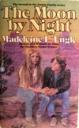
Austin Family. This is my favorite series; The Moon by Night is my favorite of her fiction books.

Meet the Austins, 1960 The Moon By Night, 1963 The Young Unicorns, 1968
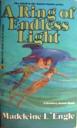
A Ring of Endless Light, 1980 Troubling a Star, 1994

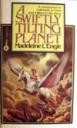
Murry – O’Keefe Family. My favorites are A Swiftly Tilting Planet and The Arm of the Starfish.

A Wrinkle in Time, 1962 A Wind in the Door, 1973 Many Waters, 1986 A Swiftly Tilting Planet, 1978
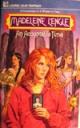
The Arm of the Starfish, 1965 Dragons in the Waters, 1976 A House Like a Lotus, 1984 An Acceptable Time, 1989

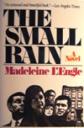
Katherine Forrester. The Small Rain was her first novel.

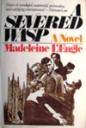
The Small Rain, 1945 A Severed Wasp, 1982

Camilla Dickinson.

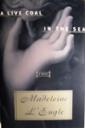
Camilla, 1965 A Live Coal in the Sea, 1996

Miscellaneous Fiction.

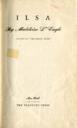
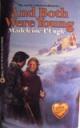
Ilsa, 1946 And Both Were Young, 1949 A Winter’s Love, 1957
The Love Letters, 1966 The Other Side of the Sun, 1971 Certain Women, 1992

Autobiographical. A Circle of Quiet is my favorite of her non-fiction books. Must-read for writers.

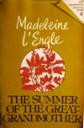
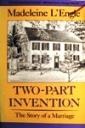
A Circle of Quiet, 1972 The Summer of the Great Grandmother, 1974 The Irrational Season, 1977 Two-Part Invention, 1988

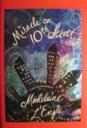
Miscellaneous Non-Fiction. Miracle on 10th Street is a mixture of non-fiction & fiction. Contains two Austin family stories: The 24 Days Before Christmas and A Full House.

Reflections on Faith and Art, 1980 Miracle on 10th Street, 1998

14: S is for Silence

S is for Silence by Sue Grafton

S is for Silence

So I finished the final paper of my coursework (thesis, here I come) and wanted to read something fast and fun. The Kinsey Millhone series is a holdover from another era; I read some of the early books when they first came out (A, B, etc.) and while I haven’t kept up with the series, I’ll read them if they fall into my lap. My mom passed this one on to me.

S is set in 1987; Kinsey is 37. Out of curiosity, I looked up when A is for Alibi was first published—1982 (hmm, that really was another era!). Since Kinsey was 32 in the first book, this means that the initial book of the series was set in the present, but now the series is set firmly in the past. Nothing against setting stories in the past, but this is kind of weird for a series, don’t you think? To have it be contemporary to begin with, but become historical? I mean, this book reads very differently to me now than A did when I read it in the early 80s.

I imagine there are two reasons Grafton might have decided to do this. One, had the books remained contemporary, Kinsey would now be 57. While she certainly could still be a PI at 57, it seems likely that other aspects of her life would have changed in that period of time. Like she might not be living in a garage apartment, her landlord (who was 80-something in A) would probably not be still living, and Chardonnay might no longer be her drink of choice. And we all know that genre books like to maintain their worlds once they’ve been established. Two: the Internet & cell phones. Kinsey is still using payphones, answering machines, and doing research at the library. And while I can see plenty of reasons why an author might want to set a story pre-Internet & cell phone, in a series this long, I think it would have been more interesting for readers to see Kinsey adapt to these changes (as real PIs have had to do if they have been in business over the past 25 years).

In S, Kinsey investigates a cold case. A woman hires her to investigate her mother’s disappearance in 1953. The story flips between Kinsey’s 1987 world and flashbacks to 1953 (various characters). Since Kinsey is not a party to the 1953 flashbacks, the reader always knows more than she does. I’m not thrilled with this device. In a detective story, I think it’s best if we stick to the detective’s PoV—this is the only way the reader can play along (and isn’t that what a detective story is about?). Also not thrilled with the ending; while not quite a deus ex machina, the baddy turns out to be peripheral character (it is foreshadowed, but it still seems lame). It’s a soap opera ending, the easy way out. Overall, the story was kind of plodding. The flashbacks contributed to this, I think, but also the overly long description. Everything was described in great detail! (Were the earlier books like this? I don’t remember.) Too much. And I like description.

Random tidbit: Grafton’s pet word is “ease”: people are forever easing onto stools, cars easing out of driveways, etc. etc.

13: Dispatches from the Edge

Dispatches from the Edge: A Memoir of War, Disasters, and Survival by Anderson Cooper

Dispatches From the Edge

Ok, so it’s no surprise I read this. We all know I heart AC. (I just know if I’d have been rich & gone to Yale, we’d have met in the dorms and become BFFs! As it is, I’ll have to make do with those twinny moments when he says the exact thing I just said except he’s on TV and people actually hear him.) The only surprising thing is how long it took me to buy it. I meant to buy it as soon as it came out in paperback, but then I got distracted with all that directed-reading reading and visits from-and-to friends & rellies over the summer. All good, but how could I have forgotten AC? And then on a bookstore foray I saw it. eep! Immediately book was purchased so it could be read on vacay. Yes! I bought a full price new book! Second one this year! Possibly a record! (j/k)

So anyway… if you’ve read his Details columns or his posts on the AC360 Blog, then the writing style will be familiar. If you like it there, you’ll like it here and vice versa. I like the contrast of the simplicity of the writing with the chaoticness of the situations, but I realize that won’t work for everyone. When I looked at the Amazon reviews, I noticed some people think his emotions seem too subdued, but I disagree, because that uber-quiet/shutdown reaction is exactly how I get when I’m really upset (if I’m ranting/raving, I’m fine). The other nitpick is (of course) that he doesn’t discuss his present day personal life. I think those people are missing the point of this book, which is really about how his career has been a way for him to deal with the deaths of his father (when he was 10) and his brother (when he was 21). So the book flips back-and-forth between his present-day reporting and the past, making connections between the two. It’s a memoir, not an autobiography. Memoir doesn’t have to be all-inclusive; it can focus on certain events or elements of one’s life.

Because AC was only 10 when his father died, his love for his dad is that of a 10-year-old—uncomplicated by adult conflict—and it makes you think about both the good and the bad of that. Because we’re so close in age and I also have one brother (I know he has two much older half-brothers, but they aren’t mentioned here), it was hard not to do the “what if…” thing. Without the extraordinary circumstances of the deaths of two of his immediate family, he probably wouldn’t have obtained a fake press pass and headed off to a war zone. In fact, he could have led a very comfortable life without doing much of anything (or at least anything of substance—as we know many children of the very rich do). But I think not only was he on a quest to make sense of his losses, but he also had an awareness of mortality that most people in their twenties don’t have, since there was a history of early deaths on his father’s side of the family. So that probably pushed him to take more risks than the average person—and also to not wait till some magical future date to do the things he wants to (like so many people do).

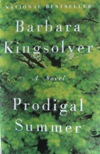
12: Prodigal Summer

Prodigal Summer by Barbara Kingsolver

Prodigal Summer

I read Kingsolver’s epic, The Poisonwood Bible, around the time it first came out (summer of 2000, I think). I recall that it was a good read, but I certainly didn’t have that “best. book. ever!” response that so many people seemed to have at the time. Then there was the time that someone told me a writing prompt response I wrote sounded like Prodigal Summer (having now read PS, I don’t see the connection). That was years ago too. I guess I wasn’t enthralled enough with TPB to immediately seek out PS upon hearing this comment, but I did remember it when I saw the book on the shelf at The Bookshop last summer. And then it sat on my shelf for a year…

But when I finally picked it up, I read it in a couple days; it was a quick read. I think I liked it better than TPB. I say I think because TPB is a bit vague for me, plotwise, but going on gut reaction. PS immediately hooked me in a way that TPB didn’t. I read it in big gulps. And it was funny, reading PS right after writing this:

(The fact that I read the TNITL for fun should in itself have been a strong indication that I should have majored in English, but I was too busy cutting off my nose to spite my face at the time to realize this.)

because PS is the type of book that makes me happy that I majored in biology. You know, because a degree in something other than writing/English gives me something to write about. Also, it makes for quirky cocktail conversation. Like so:

Acquaintance: What’s your undergrad in?

Me: Biology.

Acquaintance: !!!

Or, alternatively: Me too! (Yes, apparently I am not alone in my weirdness.)

But I digress. PS starts out as three separate stories, but as the book progresses, we find out that all three are more or less connected. In Predators, we meet Deanna, who has parlayed her master’s degree into a job for the Forest Service (essentially discouraging hunters from poaching wildlife). In Moth Love, we have Lusa, who gave up her postdoctoral grant to marry tobacco farmer Cole and is struggling to adjust to life as an outsider in a small community. And finally, in Old Chestnuts, we have retired schoolteacher Garnett and his neighbor/nemesis Nannie. Deanna’s thing is coyotes, Lusa loves moths, Garnett’s trying to revive the American chestnut, and Nannie grows organic apples.

The book is all about sex, not in the porn sense, but in the cycle-of-life sense. The story functions as a polemic for Kingsolver. Characters frequently launch into long “as you know, Bob” monologues on the evils of hunting or pesticides or tobacco farming. If you’re a left-coasty granola (*cough*), this is pretty standard stuff, but where the story’s set (Appalachia), her views are probably less de rigueur.

I liked that the secondary characters always remained a bit of mystery (as people do) and that everything wasn’t tied up neatly in a bow at the end (life goes on…). Initially I wasn’t sure about the headhopping between chapters—just when you get hooked on Deanna’s story, it leaps to Lusa, etc. and at first I found myself reading fast so I could get back to the first storyline (and then the second & so on) because at first it’s like three separate stories. But as the three stories became entwined, the headhopping starts to make sense—they’re three different PoVs within the same setting. So in the end, I thought the strategy worked.

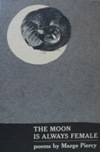
11: The Moon is Always Female

The Moon is Always Female by Marge Piercy

The Moon is Always Female

Ack. I actually finished reading this ages ago. It’s been sitting on my desk looking at me for most of the summer, as a reminder to write a post about it. Meanwhile, I’ve been otherwise occupied reading books for my directed reading course (and by extension, my thesis). But that project is nearing completion, and it’s time for some just-for-fun reading to finish off the summer. Before starting something new, here are my two cents on The Moon is Always Female.

Marge Piercy is one of the poets I first came into contact with when reading The Norton Introduction to Literature when undoubtedly I should have been doing something else. Like reading that Poli Sci textbook I never realized I owned until an hour before the final exam. (The fact that I read the TNITL for fun should in itself have been a strong indication that I should have majored in English, but I was too busy cutting off my nose to spite my face at the time to realize this.) The poem was “To have without holding.” The first stanza (p. 40):

Learning to love differently is hard,
love with the hands wide open, love
with the doors banging on their hinges,
the cupboard unlocked, the wind
roaring and whimpering in the rooms
rustling the sheets and snapping the blinds
that thwack like rubber bands
in an open palm.

Heh. I just noticed the first comment under “Most Helpful Customer Reviews” at Amazon is from my close personal friend Eden. How apropos, since I picked this up when I saw it at my favorite used bookstore last summer because of the many times she’s mentioned it. Let’s see what she had to say:

Piercy’s poems in this collection touch my every emotion. They make me laugh, cry, consider, ache, scream and everything in the spaces between. I “had” to read this for a contemporary lit course in college over ten years ago. Problem was, I couldn’t stop reading it. It was the first book I couldn’t bring myself to sell back. It’s exceptional, from the words on the pages to the typeface itself. Favorite include: “For the young who want to” “For strong women” “Poetry festival lover” and of course “The moon is always female.” After reading it, you will feel like you know Piercy. And you will also better know yourself.

Hmm, thanks for doing my work for me, E! I’d also add that it’s the kind of collection that it’s nice to leave out where you can pick it up and randomly re-read a poem or two when the mood strikes you. “For the young who want to” is one of my favorite poems (by any poet) and I never tire of re-reading it. The last stanza (p. 85):

The real writer is one
who really writes. Talent
is an invention like phlogiston
after the fact of fire.
Work is its own cure. You have to
like it better than being loved.

10: Anonymous Lawyer

Anonymous Lawyer by Jeremy Blachman

Anonymous Lawyer

I started reading Jeremy’s eponymous law school blog sometime in 2003. It was one of only two law school blogs that I read to the very end (the other was Sua Sponte). The two blogs were pretty much polar opposites. JCA at Sua Sponte was serious, earnest, ever-stressed. Jeremy was funny, irreverent, and seemingly unfazed by anything. His was the law school blog I wish I could have written.

In 2004, Jeremy started writing the Anonymous Lawyer blog, anonymously. I read it for a while (I don’t remember where I saw the link–I was reading a lot of law blogs at the time). There was a lot of speculation in the comments as to who Anonymous Lawyer was. A lot of people thought AL was a real person (despite the “fictional” disclaimer). I thought that the writer was a law student (based on the content). It had that “just enough knowledge” feel, you know? It was funny, but after a while, the schtick got a bit repetitive and I stopped reading it. A few months later, there was an article in the NY Times “outing” Jeremy as the writer behind AL. I wasn’t surprised.

Fast forward: Jeremy gets a book deal, graduates, passes the bar (even though he didn’t study, or so he claims), writes book. Book is published. Book signings ‘n’ stuff. Book is optioned. Jeremy goes to LA to work on pilot. etc. etc.

So, right, the book. Well, it’s been out for a while, but I waited for the paperback. I really bought it because of Jeremy’s personal blog, not the AL blog. I think AL the book is better than AL the blog. It has a plot. It’s funny. And it’s just long enough. It’s a fluffy, quick read. I think it could make a funny TV series. I’d watch. The pilot, at least 😉

9: Contemporary Verse 2 (Winter 2005)

Contemporary Verse 2: The Canadian Journal of Poetry and Critical Writing, 27.3 (Winter 2005) “The Poetics of Space: Where Poetry Lives”*

CV 2 (Winter 2005)

*I realize an issue of CV2 is not actually a book.

This is another thing I picked up at the VPL book sale last fall. CV2 is exclusively a poetry journal. The first part of the issue is interviews with several poets. Each interview is followed by poems by that author. The remainder of the issue is miscellaneous poems.

The interview format is interesting and I think gives the journal a more general appeal, i.e. anyone interested in the writing process might enjoy the interviews. It’s like a poetry lesson in a way since the interview is followed by a selection of the poems that have been discussed.

My favorite of the interviewees’ poems were Fiona Tinwei Lam’s. Her selections were from Intimate Distances. (Love that title.)

From “beach” (p. 59):

I try to tempt you there with castles carefully
tipped out of plastic buckets,
festoon the grainy cakes with twigs and pebbles—
but you topple them all
then trudge away.

I also liked Julia McCarthy’s prose poem, “Out of the Ordinary,” which starts:

Everyday I pray for boredom, for nothing to happen. I want a dull life as though underwater, but even there things are sharper and the greenery, sublime. (p. 70)

This was one of the journals that really impressed me back in the day. Reading this issue now, it made me happy to realize that the poetry we publish in TC is just as good as much of the work here.

Random fact: Dorothy Livesay, the founder of CV2, lived at the long-term care facility where I worked for a time. I was enough of a creative writing nerd to be thrilled by being in her presence. Every time I saw her I was like, “Squee! Dorothy Livesay!” I don’t know if anyone else knew who she was.

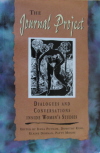
8: The Journal Project

The Journal Project: Dialogues and Conversations Inside Women’s Studies edited by Dana Putnam, Dorothy Kidd, Elaine Dornan & Patty Moore

The Journal Project

This was another VPL Booksale find. It’s a collection of journal entries from Women’s Studies classes at Langara College.

I found it interesting from a public/private space perspective. On the one hand, the journals were kept as a class assignment (for completion marks, not grades); the entries were written with the understanding that the instructor would read them. On the other hand, the idea of publishing them as an anthology came after the fact, so a wider audience was not anticipated. In this sense, I guess you could say they were more comparable to letters than to traditional diary entries in that the writers knew for certain that at least one person would be reading their words.

One thing that I found problematic with the selection of pieces is that the majority of them seemed to be written by women who had suffered physical/sexual/emotional abuse. My difficulty with this is that emphasizing worst-case scenarios makes it easy for those women who have not experienced such extreme discrimination to distance themselves and deny that there’s a problem with patriarchy. But just because you haven’t personally been abused or no one’s ever told you that you’re stupid or you’ve never faced extreme poverty (or whatever) doesn’t mean that there aren’t systemic problems with society. I would have liked to have seen more pieces like the one by the woman who was told that she couldn’t be the “head of household” because she was a SAHM. That’s the kind of systemic discrimination that you’ll probably never even be aware exists until it happens to you. It will never be a cause du jour. Yet, it’s addressing those kinds of issues, the ones that seem trivial (but aren’t), that leads to real change.

The Journal Project was published in 1995. The journals were traditional paper notebooks. It was interesting, in the context of my research, to read what they thought journals had the power to do.

[J]ournal writing itself assists social change. When our thoughts are spoken or recorded, they become part of the revolution. Writing it down is powerful and dangerous. –Dana Putnam

I wonder if any of the women are still journaling. I wonder if any of them are blogging.

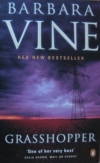
7: Grasshopper

Grasshopper by Barbara Vine

Grasshopper

I picked this up at Pulpfiction Books, a cool new/used bookstore at Main & Broadway.

Once upon a time, I was in a writing class where the instructor insisted that only murder was high stakes enough for mysteries & suspense novels. It was a silly thing to say and I recall scoffing when she said it. This memory resurfaced as I finished Grasshopper and contemplated what I would write about it. I was going to say that there’s no murder in Grasshopper, but technically there is. However, it’s just a mcguffin.

The reviews at Amazon are mixed. Some people hated this book. A lot said it wasn’t a “typical” Barbara Vine book. I’m not sure what they were expecting. None of the BV books I’ve read would be what I’d call typical mysteries. They’re more “regular” stories with suspenseful elements to them. Which is why I like them. I was tired of formulaic whodunnits. The people who seemed most disappointed seemed to expect a “shocking twist” ending. I guess it would be a let down if that’s what you expected.

BV’s books tend to be dark, psychological explorations, rather than thrillers. I think she’s interested in what motivates people to do the things they do. This one, I think, was less dark than others I’ve read, perhaps because it was clear from the outset that the ending would be a (mostly) happy one. The ending doesn’t tie up all the loose ends, though, which is good.

It definitely kept me turning the pages and, when I got to the last page, I experienced that little pang of sadness that you do when you’ve become attached to the characters in a book and you have to let them go. That kind of surprised me because none of the characters were particularly likable. But I suppose that was precisely it; their unpleasant qualities made them seem like real human beings and I got used to them being around.

So, to sum up: no murder(s) to speak of and no particularly likable characters. And yet, I quite enjoyed it.