Category Archives: Reading

2006 Books Read – #11

Girlbomb: A Halfway Homeless Memoir by Janice Erlbaum

Girlbomb

This came to me as a “just because” gift from Eden. Isn’t she sweet? 😉 Okay, thoughtful. That’s better. Wouldn’t want to ruin her rep!

No expectations this time around; I knew nothing about the book except for what was on the book jacket.

Like Running With Scissors, Girlbomb is a memoir of the author’s teen years. Like Augusten Burroughs, Erlbaum ends up almost-but-not-quite homeless as a result of poor parenting. In her case, she leaves home (and ends up in a shelter) when her mother gets back together with an abusive husband.

Erlbaum, like Burroughs, has a good sense of humor about her experience. Unlike Burroughs, who quit attending school somewhere around the 6th grade, no matter how chaotic her “home” life got, Erlbaum kept going to school and ultimately graduated. I suppose some people will find this incredible, but it made sense to me. I think it goes to what I was saying in my RWS review: of course, high school is inane, but it does provide order / structure, which would be comforting if the rest of your life is in chaos.

Ultimately, I found Girlbomb a more relatable memoir than RWS. Although the events portrayed were more extreme than than anything I personally experienced, they also had the ring of familiarity. I sympathized with the author’s actions and motivations, rather than being frustrated by them. And the people, while not always likable, at least had some redeeming qualities—more “normal” human fallibility, less outright crazy.

2006 Books Read – #10

Running With Scissors by Augusten Burroughs

Running With Scissors

Disclaimer: It’s quite possible that six years of reading submissions has left me fed up with Outrageous Antics as plot devices. Yes, I know, this is a memoir.

This was another book I expected to like more than I did. I mean, I liked it, but I didn’t love it. Maybe there was too much build-up (I read somewhere that this & Dry were Anderson Cooper’s favorite books). I don’t know. It wasn’t as funny as I expected. It was more like, enough already, pull yourselves together, people. I mean, I went through one year (I was 11) when I was kind of messy—I think it was more of an experiment than anything—letting the clothes pile up on the second bed and stuff like that. But it always felt so good to clean it up. I mean, maybe that’s why I’d let things slide a bit, because putting them back in order was so satisfying.

Anyhow, point: I’m pretty sure if I’d been stuck living with this incredibly annoying family (OMG, soooo annoying! Not wacky at all. Just irritating. Trying way too hard to Be Eccentric, IMO. I wanted to give them all a good smack.), I’d have come to the end of my rope with the unhygienic living conditions damn quick and would have been doing dishes, laundry, and home repairs in order to maintain my own sanity. I certainly couldn’t have just rolled with it. I’d have lived in a tent in the backyard if necessary.

So essentially I read this twitching with frustration at the inertia.

Anyhow. Props to Burroughs for not taking the “woe is me” road (which he certainly could have just with his insane mother and ass of a father). His take is matter-of-fact, even lighthearted (probably the reason the book has been called funny, but it’s not really the same thing). Burroughs seems to be saying (to use the cliche du jour): it is what it is. No after-school special syrupy life lessons here. That was refreshing.

2006 Books Read – #9

Middlesex by Jeffrey Eugenides

Middlesex

I’d been wanting to read this since I first heard about it. And it was good: a well-written, entertaining story. But at the same time, it wasn’t quite as satisfying as I expected—I think because, although it’s ostensibly a first-person narrative, I felt detached from the narrator.

Partly the detachment stems from the fact that the story is told in flashback, and since a good deal of it the narrator couldn’t realistically know (the history of his parents & grandparents), he has to be making it up based on what he does know. So you have a doubly fictional narrative, if that makes sense.

Also, the narrator is 41 as he’s telling the story, but the story essentially ends when he’s a teenager—aside from a brief “and this is what’s happened since then” bit at the end. So there’s that lack of immediacy too.

I do think that this detachment was intentional, that the story was meant to have a sort of clinical feel to it, and not just in the overtly with the biology “lessons,” but also in the overall treatment. And I do think the tone suited the narrator. Still…

The tone almost seemed at odd with the frothy multi-generational saga and many over-the-top (more farcical than melodramatic) plot developments. Almost like some dude in a lab coat narrating in a monotone while wacky hijinx ensue on the other side of a one-way window. (Which is not all that far off from what actually happens…)

And yet, I can’t say that this clash wasn’t intentional. It’s quite possible that it was. I’m just not sure that it entirely works.

Then again, it could be that I’m just leaning toward more focused stories these days and this is a little too “epic” for my current taste.

2006 Books Read – #7 & #8

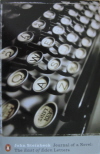
East of Eden & Journal of a Novel: The East of Eden Letters by John Steinbeck

East of Eden Journal of a Novel

I’d read EoE before, but it was a long time ago, summer of ’92, I think. I picked up an already cheap Penguin at Book Warehouse for $1 because the back cover had been slashed when they opened the box. Anyhow, it was long enough that, while I remembered the general gist of the story, I was vague on the details. I’d been wanting to re-read it for a while, partly because I had the book playing a role in one of my stories and I wanted to make sure it would fit. And then last summer I found a copy of JoaN at The Book Shop and grabbed it, knowing immediately that reading them together would be the perfect way to re-visit EoE.

Of course, part of EoE is a modern version of Cain & Abel, but I’d forgotten how much of Steinbeck’s own family history was in it—if indeed I actually recognized it as such the first time I read it. There are really two separate story threads—the Trasks & the Hamiltons. And JoaN makes it clear that EoE was written in part as a letter to Steinbeck’s sons. Would a book like this get published today? (Would it have been published then if Steinbeck hadn’t already made a name for himself?) On one hand, the Hamilton part is superfluous—you’d still have a complete story without it (as in the movie). On the other hand, they’re the reason he’s telling the story. So.

I read the two books alternately, so I kept at approximately the same point in both throughout. “Approximately” because there were obviously changes between the first draft of EoE and the published version that meant the two books didn’t line up exactly.

Steinbeck wrote the journal on the left-hand pages of a notebook and the novel on the right-hand pages. The journal, written as a letter to his editor, was his warm-up for the day. One thing I never figured out— he writes throughout of having the pages typed and also sent to NY, to his editor. So was he ripping them out of the notebook at the end of each day? That doesn’t sound right. Maybe he just handed the notebook over to the typist, she typed fast so he could have it back by the next morning, and they sent the typed pages to the editor.

I was surprised by how fast he wrote this, his longest novel. Essentially the first draft was written Feb – Oct 1951. Nine months! So you’d think he was this perfect writer who sat down every day and wrote like a machine, right? Wrong. He was a huge procrastinator. For example, he wrote in pencil (crazy!) and he was completely anal-retentive about his pencils. They had to be a certain kind, he spent time sharpening them at the beginning of the day so he wouldn’t have to stop while writing, gave them to his kids when they got too short, etc.

And his journals were filled with same crap that goes through my head before I start writing. Which, honestly, is really comforting. There is, in fact, a point to the “pointless” blathering we writers do before getting down to “real” writing. The mundanity of life is important and so is explaining to yourself what you want to with your project. Of course, the flip side is that you actually do have to start working on your real project at some point.

As for the Steinbeck’s epic, I suppose I am a true “Cal” in that, not only do I sympathize with the cynical Cal, I can’t even imagine anyone identifying with the angelic Aron. But I suppose someone must.

2006 Books Read – #6

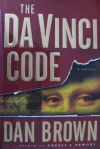
The DaVinci Code by Dan Brown

The DaVinci Code

Confession.

I read The Da Vinci Code.

Here’s how it happened. We were at my parents’ place back in June and they mentioned that they’d seen the movie and asked if I’d read the book. I said no and made my standard joke about probably being the only person on the planet who hadn’t read it.

Then: “We have it,” Dad said. “You can borrow it.”

I was cornered. I couldn’t use the excuse that Dan Brown didn’t need any more money. I was uncomfortably overcome with the feeling that I was being a terrible literary snob by not reading it.

So I read it.

I hear Brown teaches creative writing. I hope he’s a “do as I say, not as I do” type, because he has numerous annoying habits including, but not limited to: overuse of exclamation points, overuse of italics, extremely short chapters, an almost complete reliance on “as you know, Bob” dialogue, and a need to end every chapter with a “cliffhanger.” I wasn’t thrilled with the “Matlock”-style confession from the implausible villain, either.

I do enjoy a good page-turner. But this book… yawn. I was ahead of the characters in figuring out a lot of the clues (zzz), found the shocking revelations not all that shocking (powerful men revised history to suit their own purposes? No!), and thought the ending was incredibly lame: after all his conspiracy-theorizing, he lets the church off the hook, pins the whole thing on rogue academic (WTF?) and goes “haha!” (use best Nelson* voice) at his readers and declines reveal the Big Secret (probably because he couldn’t come up with anything good enough) that his characters had spent the entire book searching for.

But here’s what really bugged the crap out of me: there are precisely two female characters in the entire story, and one of them doesn’t come into play until late in the book. (Oh, wait, there was another bit player who was female. But she was just there long enough for a male character to kill her. Typical.) So mostly one. And that female character is referred to as “Sophie,” (despite the fact she’s an agent of the French police) while the male characters are all referred to by their last names. Arghhh!!! He couldn’t call her by her last name too? That was too great a leap? Really?

And, of course, there are the usual cliches: male lead protects female lead, male/female leads fall in love at the end (but by the next book in the series, he’ll have moved on to someone new and she’ll never be heard from again, natch). Now granted, Brown’s chauvinism is of the ingrained sort epidemic in our society, but given that the major theme of the book was the “sacred feminine,” you’d think that someone (his editor, if not he himself) would have taken pains to work on the more obvious indicators.

*from The Simpsons

2006 Books Read – #5

The Best American Short Stories of the Eighties edited by Shannon Ravenel

The Best American Short Stories of the Eighties

Whew!

This is an uber-anthology consisting of two stories from each of the Best American anthologies from 1980-1989. I picked it up because the author names are mostly well-known ones that you see bandied about a lot, but I hadn’t read any of these stories before.

I actually started reading it last year, got about halfway through and set it aside. This isn’t a knock on the quality of the stories. The problem is that it’s an anthology. I couldn’t finish a story and immediately jump into the next one. I had to give each story time to settle between readings. This made for a much slower read than a novel or even a short story collection. And I get a little antsy when I’m reading the same book for a really long time, hence the break.

Onto the content: There’s no question that these stories are good. But that said, I didn’t like all of the stories equally well. There was one story I couldn’t get through (basically, I found the style annoying). I connected with more of the later stories than the earlier ones (they were arranged chronologically).

Some of the stories (particularly “The Way We Live Now” – Susan Sontag and “The Management of Grief” – Bharati Mukherjee) felt like historic records of moments in time. I found reading “The Management of Grief” (about the aftermath of Air India) especially poignant, given that the trial only took place last year and the defendants were acquitted.

The stories that will stay the longest with me are probably “Helping” by Robert Stone and “The Management of Grief.” I’ll definitely look for other work by Mukherjee.

So what’s in it?

  • From 1980, “The Old Forest” by Peter Taylor & “The Emerald” by Donald Barthelme
  • From 1981, “The Shawl” by Cynthia Ozick & “A Working Day” by Robert Coover
  • From 1982, “Cathedral” by Raymond Carver & “Exchange Value” by Charles Johnson
  • From 1983, “Deaths of Distant Friends” by John Updike & “Sur” by Ursula K. LeGuin
  • From 1984, “Nairobi” by Joyce Carol Oates & “In the Red Room” by Paul Bowles
  • From 1985, “Sarah Cole: A Type of Love Story” by Russell Banks & “Fellow-Creatures” by Wright Morris
  • From 1986, “Gryphon” by Charles Baxter & “Health” by Joy Williams
  • From 1987, “The Way We Live Now” by Susan Sontag & “The Things They Carried” by Tim O’Brien
  • From 1988, “Dede” by Mavis Gallant & “Helping” by Robert Stone
  • From 1989, “The Management of Grief” by Bharati Mukherjee & “Meneseteung” by Alice Munro

Truth

Excellent post on truth in writing, be it fiction or non:

A more useful criteria would begin with the understanding that all good writing seeks the truth, whether that’s a metaphorical or an objective truth, and it should be judged accordingly. Deciding if a book is “true” or not should never stop at the title page; a good reader should never suspend his or her critical faculties. This is precisely why reading is such a mentally interactive experience, why writing is — in my opinion — an essentially higher art than other, more passive media. While reading a book, one must constantly be engaged in trying to hear dialogue, visualize surroundings, judge character and background. A good book, in turn, challenges a reader; makes him or her rethink what they are sure they know and believe.

In which I find out that I'm not a real person

Literary fiction is like haute couture; real people may not buy it but it’s what’s featured in the pages of the New York Times and defines your line.

It makes my head hurt, both that there are people who write who don’t know what literary fiction (otherwise known as plain old literature) is and also that literary fiction is continually disparaged as being something that “real” people don’t read.

*sigh*

2006 Books Read – #4

Contentment: wisdom from around the world by Gillian Stokes

Contentment

This book was given to me as a gift a while ago and it’s been sitting on my shelf since then. I read it this morning while waiting for the Vancouver part of the Olympics closing ceremony. I wanted to read something fast to up my book count for this year 😉 It took me about an hour to read with one eye on the TV. Which is funny, because a good part of the book is about concentrating on whatever you’re doing, not multi-tasking or having the TV on in the background. Haha!

So, the book itself is like a coffeetable book, except smaller. Thick paper, some nice art prints, attractive layout. The content consists of quotes mixed with the author’s musings. What makes her an expert, I don’t know. There’s no bio or anything. But the advice seems sound (if mostly common sense) and the quotes are pretty good.

There’s a Thomas Jefferson quote that made me laugh because Lawrence Lessig uses it in The Future of Ideas to bolster the Creative Commons concept. (Yes, I am a nerd.)

It did disturb me somewhat that someone gave me this book now when I’m probably more content than I’ve ever been (I think sometimes people read snarky/cynical as unhappy?). But no doubt I’m reading too much into what is, after all, just a gifty-book. What I thought about most while reading this: Hmm, how many words is this? How do you pitch a piece o’ fluff like this? Wonder what the profit on something like this is… 😉